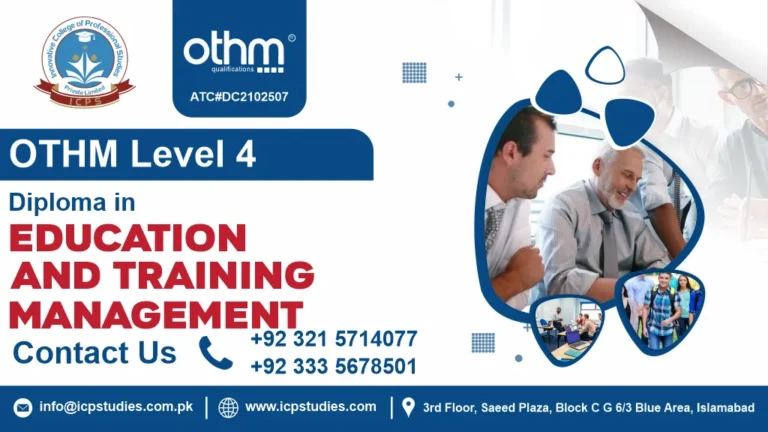
OTHM Level 5 Extended Diploma in Education and Training Management

Ofqual-regulated qualification

Assignment Based

Flexible Study Options

Career Development

Course Detail

Mandatory Units

12

Awarding Body

OTHM

Credit Hours

240

TQT

2400

GLH

1200

Course Overview


The OTHM Level 5 Extended Diploma in Education and Training Management is designed for individuals seeking to develop advanced knowledge and professional skills in educational leadership, training management, and learning development. This career-focused certification provides a strong understanding of how educational programmes are planned, organised, delivered, and evaluated to achieve effective learning outcomes. It supports the development of essential management competencies required to work in educational institutions, training centres, academic departments, and professional learning environments.

This diploma focuses on key areas of education and training management, including leadership and management practices, curriculum planning, teaching and learning strategies, assessment methods, quality assurance, staff development, and the effective management of educational resources. Learners develop the ability to manage training activities, support teaching professionals, improve learning experiences, and implement strategies that promote educational quality and organisational performance.

The OTHM Level 5 Extended Diploma in Education and Training Management is suitable for aspiring education managers, training coordinators, academic professionals, and individuals seeking career advancement in the education and training sector. Upon successful completion, learners can explore opportunities in educational management, training administration, academic coordination, curriculum development, and learning and development management, while progressing towards further relevant professional certifications and advanced management studies.

Innovative College of Professional Studies (Private) Limited is an OTHM-approved training centre, delivering professional qualifications to support Learners’ career advancement.

Study Units

  • Understand the fundamental principles, concepts, and theories of education and training and their application in different learning environments.
  • Analyse educational philosophies, learning theories, and teaching approaches that influence effective teaching and training practices.
  • Evaluate the roles and responsibilities of educators, trainers, and educational managers in supporting learner development and achievement.
  • Apply effective teaching, learning, and assessment principles to improve learner engagement and educational outcomes.
  • Understand the importance of inclusive education, ethical practices, quality assurance, and continuous improvement in education and training management.
  • Understand the key principles and processes involved in designing effective education and training programmes to meet identified learning needs.
  • Analyse learner requirements, organisational objectives, and industry expectations when planning educational and training provision.
  • Develop structured curricula, learning materials, and training activities that support learner engagement and achievement.
  • Apply appropriate teaching methods, assessment strategies, and learning resources to create inclusive and effective educational experiences.
  • Evaluate the effectiveness of education and training provision and recommend improvements to enhance learning quality and organisational performance.
  • Understand the key principles and strategies for engaging learners in different educational and training environments.
  • Analyse learner needs, interests, motivations, and individual learning preferences to improve participation.
  • Apply effective teaching techniques, communication methods, and interactive learning activities to promote learner engagement.
  • Develop inclusive learning environments that encourage collaboration, active participation, and equal learning opportunities.
  • Evaluate learner engagement strategies and recommend improvements to enhance motivation, participation, and overall learning outcomes.
  • Understand the principles and processes of effective work planning, resource allocation, and performance management within an area of responsibility.
  • Analyse organisational objectives, workload requirements, and available resources to develop practical work plans and priorities.
  • Apply effective delegation and task allocation strategies to ensure responsibilities are distributed according to staff capabilities and operational needs.
  • Monitor individual and team performance against agreed targets, deadlines, and organisational standards.
  • Evaluate work outcomes, identify performance gaps, and implement appropriate improvements to enhance productivity and operational effectiveness.
  • Understand the key principles, methods, and criteria used to evaluate education and training programmes.
  • Analyse teaching effectiveness, learner achievement, curriculum relevance, and training delivery against established objectives.
  • Apply appropriate evaluation techniques to collect and interpret feedback from learners, educators, and relevant stakeholders.
  • Assess the quality, effectiveness, and impact of educational provision to identify strengths and areas requiring improvement.
  • Develop evidence-based recommendations and improvement strategies to enhance teaching standards, learner satisfaction, and organisational performance.
  • Understand the principles of continuous professional development (CPD) and reflective practice within education and training environments.
  • Analyse personal strengths, professional competencies, and development needs to identify opportunities for improvement.
  • Apply reflective techniques to evaluate teaching practices, professional experiences, and educational management responsibilities.
  • Develop structured professional development plans aligned with career goals, organisational expectations, and changing educational requirements.
  • Evaluate the impact of professional development activities on teaching effectiveness, leadership capabilities, and the quality of education and training provision.
  • Understand major educational theories, learning principles, and pedagogical approaches that influence teaching and training practices.
  • Analyse how behavioural, cognitive, constructivist, and social learning theories inform effective educational planning and delivery.
  • Apply relevant learning theories and instructional principles to design engaging, inclusive, and learner-centred educational experiences.
  • Evaluate the effectiveness of different teaching methods, learning strategies, and assessment approaches across diverse educational environments.
  • Integrate established educational principles into professional practice to improve learner achievement, teaching effectiveness, and training quality.
  • Understand the fundamental concepts, principles, and importance of lifelong learning in personal, academic, and professional development.
  • Analyse different approaches to continuous learning, self-directed development, and skills enhancement throughout an individual’s career.
  • Identify factors that influence lifelong learning, including motivation, accessibility, changing workplace demands, and technological developments.
  • Apply lifelong learning strategies to support professional growth, adaptability, and continuous improvement in education and training environments.
  • Evaluate the role of lifelong learning in developing employability, professional competence, and organisational learning culture.
  • Understand the principles and practices of effective resource management within educational institutions and training organisations.
  • Analyse human, financial, physical, and digital resource requirements to support educational objectives and operational priorities.
  • Apply resource planning, budgeting, allocation, and monitoring techniques to ensure efficient use of educational resources.
  • Evaluate resource utilisation, identify shortages or inefficiencies, and recommend improvements to enhance institutional performance.
  • Develop effective resource management strategies that support teaching quality, learner achievement, organisational sustainability, and continuous improvement.
  • Understand the principles, processes, and organisational requirements involved in developing effective operational plans.
  • Analyse organisational objectives, available resources, operational priorities, and performance targets when preparing area-specific plans.
  • Develop practical operational plans that establish clear objectives, responsibilities, timelines, resource requirements, and performance indicators.
  • Apply appropriate monitoring and evaluation methods to assess operational progress, resource utilisation, and achievement of planned targets.
  • Evaluate operational plan effectiveness, identify areas for improvement, and recommend corrective actions to enhance organisational efficiency and performance.
  • Understand the principles, styles, and responsibilities of effective leadership within an organisational area of responsibility.
  • Analyse organisational goals, team capabilities, and operational priorities to establish clear leadership direction.
  • Apply appropriate leadership and communication strategies to motivate staff, delegate responsibilities, and support team performance.
  • Evaluate team progress, manage workplace challenges, and make informed decisions to achieve organisational objectives.
  • Develop leadership approaches that promote accountability, professional development, collaboration, and continuous improvement within the organisation.
  • Understand the principles, models, and importance of reflective practice in continuous professional development.
  • Analyse personal performance, professional experiences, and competency gaps to identify areas for improvement.
  • Apply reflective techniques to evaluate professional decisions, workplace practices, and leadership effectiveness.
  • Develop structured professional development plans based on identified learning needs, career objectives, and organisational expectations.
  • Evaluate the impact of continuous professional development on professional competence, workplace performance, and career progression.

Entry Requirments

  • Age: 18 years of age or above.
  • Education: A relevant Level 4 certification or an equivalent educational qualification is recommended.
  • Experience: Previous experience in teaching, training, education, academic administration, or learning and development is beneficial but not necessarily mandatory.
  • English Proficiency: Adequate reading, writing, speaking and listening skills.
Professional Woman Presenting Rightward

Who Should take this Course?

The OTHM Level 5 Extended Diploma in Education and Training Management is suitable for individuals seeking to strengthen their educational management skills and pursue professional opportunities in academic administration, training coordination, and education leadership.

  • Education Professionals: Enhance knowledge of educational management, teaching practices, and effective learning strategies.
  • Teachers and Trainers: Develop professional skills in training delivery, learner development, and educational programme management.
  • Education Managers: Strengthen leadership abilities and improve the management of educational operations and resources.
  • Training Coordinators: Develop expertise in organising training programmes, managing learning activities, and evaluating training effectiveness.
  • Academic Coordinators: Improve curriculum planning, academic administration, and coordination of educational activities.
  • Learning and Development Professionals: Advance skills in workforce training, professional development, and organisational learning.
  • Educational Entrepreneurs: Gain management knowledge to establish, organise, and improve education and training services.
  • Graduates and Aspiring Education Leaders: Build a strong foundation in education and training management to pursue professional opportunities in academic leadership and educational administration.

Future Progression

Frequently Asked Questions

The main purpose is to prepare learners to manage education and training activities effectively, lead educational teams, improve learning provision, and support organisational development.

Learners develop educational leadership, strategic planning, resource allocation, curriculum design, team management, learner engagement, performance monitoring, and professional development skills.

Yes. Teachers and trainers can strengthen their professional competencies, improve teaching and learning strategies, develop assessment practices, and gain a better understanding of educational management.

Successful learners may explore career opportunities such as:

  • Education Manager
  • Training Coordinator
  • Academic Coordinator
  • Learning and Development Officer
  • Education Programme Manager
  • Training Centre Manager
  • Curriculum Development Coordinator
  • Educational Administration Officer

Resource management helps educational organisations use staff, budgets, facilities, technology, and learning materials effectively. It supports efficient programme delivery, improves learning environments, and contributes to organisational performance.

Yes. The programme develops essential leadership and management competencies, including team supervision, work allocation, operational planning, performance monitoring, decision-making, and organisational improvement.

Similar Posts