
Environmental Impact Assessment vs Environmental Audit: What Is the Difference?
Environmental protection is an essential part of responsible project planning, business operations and sustainable development. Organisations involved in construction, manufacturing, infrastructure, energy and industrial activities must understand how their decisions affect the natural environment. Two important tools used to manage these responsibilities are Environmental Impact Assessment (EIA) and Environmental Audit.
Although both approaches support environmental protection and sustainable development, they serve different purposes. An Environmental Impact Assessment identifies and evaluates the potential environmental consequences of a proposed project before major decisions are made. In comparison, an Environmental Audit examines the actual environmental performance of an existing organisation, facility, project or operation to determine whether environmental requirements and management commitments are being followed.
Understanding the difference between Environmental Impact Assessment and Environmental Audit helps project developers, environmental consultants, engineers and environmental management professionals select the appropriate assessment method. It also supports better environmental decision-making, regulatory compliance, pollution prevention and continuous improvement.
What is Environmental Impact Assessment (EIA)?
Environmental Impact Assessment (EIA) is a systematic process used to identify, predict and evaluate the potential environmental effects of a proposed project or development before implementation. It ensures that environmental considerations are integrated into project planning and decision-making. EIA helps developers and decision-makers understand environmental risks, compare alternative approaches and establish appropriate measures to prevent, minimise or compensate for adverse environmental impacts.
An EIA examines different environmental components to understand how proposed activities may affect natural resources, ecosystems and surrounding communities. Key areas of assessment include:
- Air Quality: Evaluating potential atmospheric pollution and emissions.
- Water Resources: Assessing possible impacts on surface water and groundwater.
- Soil Quality: Identifying risks of soil contamination, erosion and land degradation.
- Biodiversity: Examining potential effects on wildlife, vegetation and natural habitats.
- Noise and Vibration: Evaluating noise pollution and vibration-related impacts.
- Waste Management: Assessing potential waste generation, handling and disposal requirements.
- Human Health: Identifying possible environmental risks to workers and surrounding communities.
- Natural Resources: Evaluating the consumption of water, energy and other resources.
- Socio-economic Conditions: Examining potential changes in land use, livelihoods and community well-being.
Purpose of Environmental Impact Assessment
The primary purpose of EIA is to provide an evidence-based foundation for determining how a proposed project may affect the environment and what measures are necessary to manage those effects. It supports responsible development by identifying environmental concerns early and incorporating suitable mitigation measures into project planning.
Its main objectives include:
- Identifying Environmental Impacts: Recognising potential positive and negative environmental effects before project implementation.
- Predicting Environmental Changes: Estimating the scale, duration, geographical extent and significance of potential impacts.
- Evaluating Project Alternatives: Comparing alternative locations, designs, technologies and operational approaches.
- Developing Mitigation Measures: Recommending actions to avoid, minimise, restore or compensate for adverse environmental effects.
- Supporting Informed Decisions: Providing reliable environmental information to developers, regulatory authorities and other stakeholders.
- Encouraging Public Participation: Involving affected communities and interested stakeholders in relevant environmental decision-making processes.
Key Stages of the EIA Process
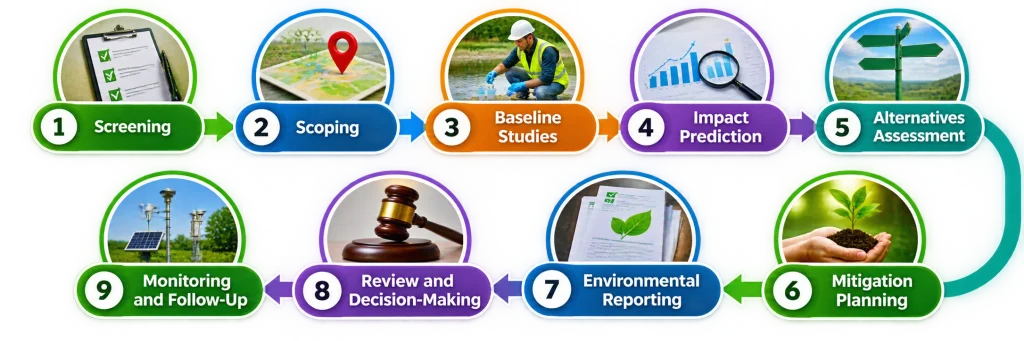
Environmental Impact Assessment generally follows a structured process to ensure that potential environmental impacts are properly identified, evaluated and managed. Although specific procedures may vary according to project requirements and applicable regulatory frameworks, the main stages include:
- Screening: Determines whether a proposed project requires an environmental assessment and identifies the appropriate level of assessment.
- Scoping: Identifies significant environmental issues, assessment boundaries and information requirements.
- Baseline Environmental Studies: Collects information about existing environmental conditions, including air, water, soil, biodiversity and surrounding communities.
- Impact Prediction and Evaluation: Identifies and predicts potential environmental effects associated with construction, operation and, where relevant, decommissioning.
- Alternatives Assessment: Evaluates alternative locations, designs, technologies and methods to identify environmentally responsible options.
- Mitigation Planning: Establishes measures to avoid, minimise, restore or compensate for adverse environmental effects.
- Environmental Reporting: Presents assessment findings, supporting evidence, proposed mitigation measures and recommendations.
- Review and Decision-Making: Allows relevant authorities or decision-makers to evaluate the environmental findings and determine the appropriate outcome.
- Monitoring and Follow-Up: Evaluates actual environmental performance and the implementation and effectiveness of mitigation measures.
The main outcome of the EIA process is an Environmental Impact Assessment report containing assessment findings, recommendations and proposed mitigation measures. Where required, these findings are supported by an Environmental Management Plan (EMP) outlining environmental controls, responsibilities and monitoring arrangements.
What is an Environmental Audit?
An Environmental Audit is a systematic, documented and objective examination of an organisation’s environmental activities, operational practices, management systems and overall performance. It evaluates whether existing operations meet applicable environmental requirements, organisational policies, permit conditions and established environmental management criteria. Unlike EIA, which focuses on predicting the potential impacts of proposed developments, an environmental audit examines actual environmental performance and identifies areas requiring improvement.
Environmental audits are particularly useful in manufacturing, construction, energy, transportation and waste management industries. They commonly examine the following areas:
- Air Emissions: Evaluating emission sources and the effectiveness of pollution control systems.
- Wastewater Management: Reviewing industrial wastewater treatment and effluent discharge practices.
- Waste Management: Assessing hazardous and non-hazardous waste handling, storage and disposal.
- Chemical Management: Examining chemical storage, handling and safety procedures.
- Resource Consumption: Reviewing energy and water usage.
- Environmental Compliance: Checking permits, approval conditions and applicable environmental obligations.
- Environmental Monitoring: Reviewing monitoring records and environmental performance data.
- Management Systems: Evaluating Environmental Management Plans, employee responsibilities and environmental procedures.
Purpose of an Environmental Audit
The main purpose of an environmental audit is to determine whether an organisation manages its environmental responsibilities effectively and meets established audit criteria. It also helps identify operational weaknesses, environmental risks and opportunities for improving environmental performance.
Key objectives include:
- Checking Environmental Compliance: Verifying compliance with applicable environmental legislation, permit conditions and organisational requirements.
- Evaluating Environmental Performance: Reviewing emissions, waste generation, resource consumption and pollution prevention practices.
- Identifying Environmental Risks: Detecting operational weaknesses and potential sources of environmental damage.
- Reviewing Management Systems: Assessing the implementation and effectiveness of environmental policies, procedures and controls.
- Identifying Non-Conformities: Recording gaps between actual practices and established environmental requirements.
- Recommending Corrective Actions: Developing practical recommendations to address identified problems and improve environmental performance.
Environmental Audit Process
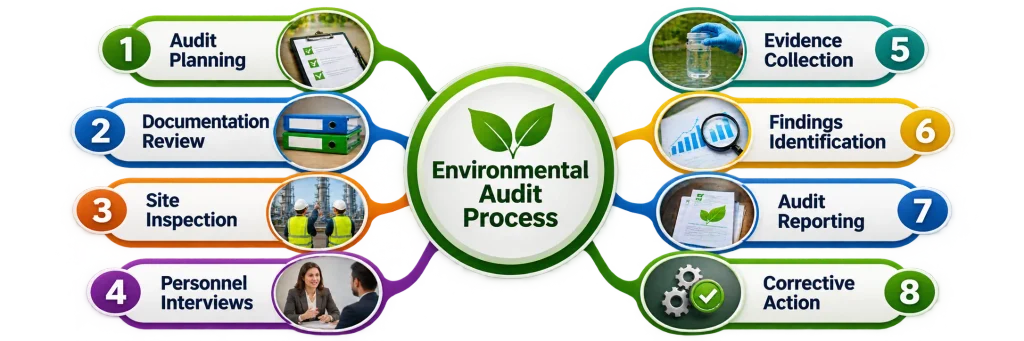
An effective environmental audit follows a structured process to ensure that findings are objective, reliable and supported by appropriate evidence. The process involves reviewing documentation, inspecting operational activities, evaluating compliance and recommending corrective measures.
The main stages of an environmental audit include:
- Audit Planning and Scope Definition: Establishing audit objectives, scope, criteria, facilities, departments and activities to be examined.
- Documentation Review: Examining environmental policies, permits, monitoring reports, inspection records, incident reports and Environmental Management Plans.
- Site Inspections: Inspecting waste storage areas, emission control equipment, drainage systems, chemical storage facilities and wastewater treatment operations.
- Personnel Interviews: Discussing environmental responsibilities and operational procedures with managers, employees and contractors.
- Evidence Collection and Evaluation: Gathering objective evidence through observations, document reviews, interviews, sampling and verification activities.
- Identification of Findings: Comparing actual operational practices with established audit criteria and documenting non-conformities or weaknesses.
- Audit Reporting: Preparing a report containing the audit scope, methodology, findings, supporting evidence, identified risks and recommendations.
- Corrective Actions and Follow-Up: Assigning responsibilities, implementing corrective measures and monitoring progress to prevent recurring environmental problems.
Environmental Impact Assessment vs Environmental Audit: Key Differences
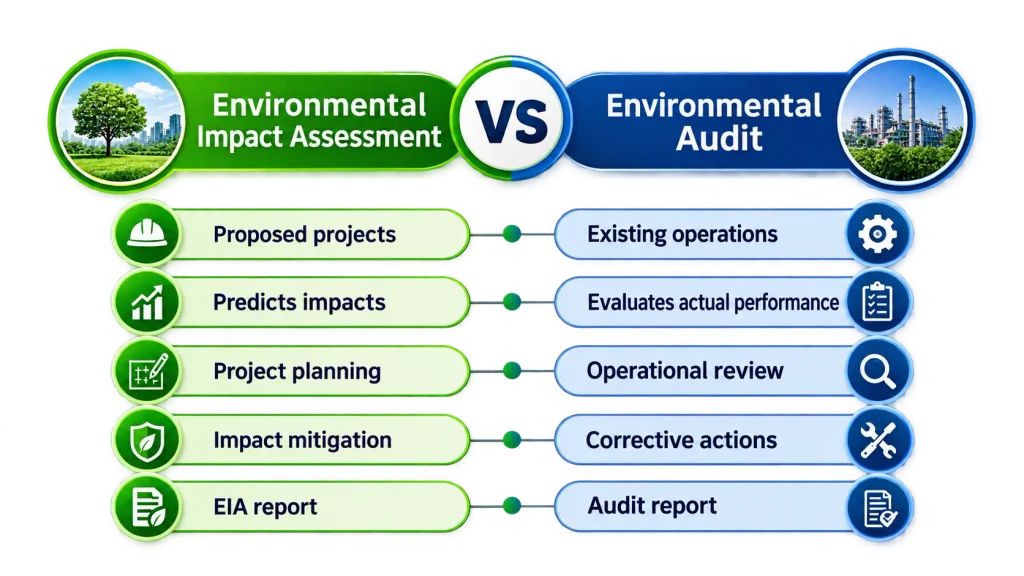
The main difference between Environmental Impact Assessment and Environmental Audit is the stage at which they are used and the questions they are designed to answer.
EIA asks: What environmental effects could this proposed project cause?
An environmental audit asks: How well is this existing operation managing its actual environmental impacts and meeting its requirements?
The following comparison highlights their major differences.
| Comparison factor | Environmental Impact Assessment | Environmental Audit |
|---|---|---|
| Main purpose | Predicts and evaluates potential environmental impacts | Examines actual environmental performance and compliance |
| Primary focus | Proposed projects and developments | Existing organisations, facilities and operations |
| Timing | Generally before project approval or implementation | During operational activities or at defined audit intervals |
| Main objective | Prevent or minimise potential environmental damage | Identify compliance gaps and improve environmental performance |
| Assessment approach | Baseline studies, impact prediction and alternatives analysis | Document reviews, inspections, interviews and evidence verification |
| Environmental data | Existing conditions and predicted future impacts | Actual operational conditions and performance records |
| Key activities | Screening, scoping, impact assessment and mitigation planning | Audit planning, inspections, evidence collection and reporting |
| Main output | EIA report and associated environmental recommendations | Environmental audit report and corrective action recommendations |
| Decision-making | Supports project planning and approval decisions | Supports management decisions and compliance improvement |
| Stakeholder involvement | May involve public consultation and stakeholder participation | Usually involves management, employees, auditors and relevant stakeholders |
| Environmental performance | Predicts potential effects and proposes controls | Evaluates actual performance against defined criteria |
| Follow-up | Monitoring environmental effects and mitigation implementation | Verifying corrective actions and improving environmental controls |
Are EIA and Environmental Audits Used at Different Stages?
Yes. Environmental Impact Assessment (EIA) is generally conducted during the planning and approval stages of a proposed development, whereas environmental auditing is commonly used during construction, operation and ongoing environmental management. Although their timing differs, both approaches contribute to effective environmental protection throughout a project’s lifecycle.
Their applications at different stages include:
- EIA: Identifies and evaluates potential environmental impacts before project implementation.
- Environmental Management Plan: Establishes mitigation measures and monitoring arrangements before construction begins.
- Environmental Monitoring: Tracks actual environmental conditions and the effectiveness of mitigation measures.
- Environmental Audit: Reviews operational performance and verifies whether environmental controls are being implemented effectively.
Practical Examples of EIA and Environmental Audit
Environmental Impact Assessment (EIA) and Environmental Auditing can be better understood through practical workplace situations. Both approaches contribute to environmental protection, but they are applied at different stages of project development and operation. The following examples demonstrate how EIA evaluates potential environmental impacts, while environmental audits examine actual performance and the effectiveness of environmental controls.
Example 1: Construction of a New Industrial Facility
A company plans to establish a manufacturing facility near a residential area. Before construction begins, an EIA evaluates potential environmental impacts, including air pollution, groundwater contamination, soil degradation, noise and increased traffic. Appropriate mitigation measures and environmental monitoring arrangements are recommended.
Once the facility becomes operational, an environmental audit examines whether environmental controls and management procedures are being implemented effectively.
- Environmental Impact Assessment: Evaluates potential effects on air quality, groundwater, soil, surrounding communities and local infrastructure.
- Impact Mitigation: Recommends pollution prevention measures, suitable site arrangements, wastewater treatment facilities and environmental monitoring.
- Environmental Audit: Inspects emission control equipment, wastewater treatment systems, chemical storage facilities and monitoring records.
- Corrective Action: Identifies operational weaknesses, such as inadequate maintenance of wastewater treatment equipment, and recommends improvements.
Example 2: Development of a Highway Project
A construction company proposes a highway through an environmentally sensitive area. An EIA evaluates potential effects on natural habitats, vegetation, soil stability, water resources and nearby communities. The assessment also considers alternative routes and appropriate mitigation measures to minimise environmental damage.
During construction, environmental auditing helps determine whether the contractor is following the established environmental management procedures and implementing the required controls.
- Environmental Impact Assessment: Evaluates habitat disturbance, vegetation removal, soil erosion, noise pollution and surface water contamination.
- Alternative Assessment: Examines alternative highway routes and construction methods to reduce environmental impacts.
- Environmental Audit: Reviews waste disposal, dust suppression, fuel storage, erosion control and environmental monitoring practices.
- Compliance Verification: Checks whether construction activities follow applicable environmental approval conditions and management requirements.
Example 3: Existing Manufacturing Plant
An established manufacturing plant has been operating for several years and requires an evaluation of its environmental performance. An environmental audit examines operational activities, resource consumption, pollution control systems and compliance records to identify weaknesses and opportunities for improvement. If the organisation plans a major expansion, an EIA or another applicable environmental assessment may also be required to evaluate the potential impacts of the proposed development.
- Environmental Audit: Reviews existing emissions, wastewater management, energy consumption and waste segregation practices.
- Performance Evaluation: Examines environmental monitoring records, operational procedures and pollution prevention measures.
- Risk Identification: Identifies weaknesses in environmental controls and areas requiring corrective action.
- Environmental Impact Assessment: Evaluates potential environmental consequences of the proposed expansion, including additional resource consumption, emissions and waste generation.
Practical Applications of EIA and Environmental Audit
| Industry | EIA Application | Environmental Audit Application |
|---|---|---|
| Construction | Predicting habitat and pollution impacts | Reviewing site environmental controls |
| Manufacturing | Assessing proposed facility impacts | Inspecting emissions and waste management |
| Transportation | Evaluating highway development impacts | Checking construction environmental practices |
| Energy | Assessing potential project impacts | Reviewing operational environmental performance |
What is the Relationship Between EIA, Environmental Auditing and ISO 14001?
Environmental Impact Assessment (EIA), environmental auditing and ISO 14001 are closely connected approaches that support effective environmental management. Although each serves a different purpose, they work together to help organisations identify environmental impacts, manage operational risks, monitor compliance and improve environmental performance. ISO 14001 provides an internationally recognised framework for establishing, implementing, maintaining and continually improving an Environmental Management System (EMS).
Their individual roles and contributions include:
- Environmental Impact Assessment (EIA): Identifies and evaluates potential environmental impacts of proposed projects and helps establish appropriate mitigation measures.
- Environmental Audit: Examines actual environmental performance, verifies compliance with defined requirements and identifies weaknesses requiring corrective action.
- ISO 14001 Environmental Management System: Provides a structured framework for identifying environmental aspects, evaluating impacts, establishing operational controls, monitoring performance and reviewing compliance obligations.
Environmental audits can evaluate whether an organisation’s Environmental Management System is effectively implemented and achieving its intended objectives. Similarly, EIA findings can provide valuable information for developing environmental controls and management plans. However, completing an environmental audit does not automatically establish ISO 14001 certification. Certification requires an appropriate assessment against the standard by a competent certification body.
Why are EIA and Environmental Audits Important for Environmental Management?
Environmental Impact Assessment (EIA) and Environmental Audits play important roles in promoting responsible environmental management and sustainable organisational practices. EIA helps identify potential environmental problems before project implementation, while environmental audits evaluate existing operations to identify weaknesses, verify compliance and recommend improvements. Together, they support better environmental decisions, effective risk management and continuous improvement.
Their combined benefits include:
- Improved Environmental Protection: Identifies potential environmental impacts and helps organisations prevent or minimise environmental damage.
- Better Regulatory Compliance: Helps organisations understand, monitor and fulfil applicable environmental responsibilities.
- Effective Pollution Prevention: Supports the identification and control of air, water and soil pollution.
- Reduced Environmental Risks: Enables early impact prediction and verification of operational controls to minimise environmental risks.
- Improved Resource Management: Identifies opportunities to reduce energy consumption, water usage and waste generation.
- Stronger Decision-Making: Provides environmental information to support project planning, operational management and strategic decisions.
- Continuous Improvement: Uses audit findings and environmental monitoring results to strengthen environmental controls and improve overall environmental performance.
Which is more Important: Environmental Impact Assessment or Environmental Audit?
Neither Environmental Impact Assessment (EIA) nor Environmental Audit is universally more important, as both serve different but complementary purposes in environmental management. The choice depends on the project stage, environmental risks, regulatory requirements and organisational objectives. EIA is particularly important during the planning of proposed developments, while environmental auditing focuses on evaluating existing operations and improving environmental performance.
The importance of each approach can be understood through its specific applications:
- Environmental Impact Assessment: Identifies and predicts potential environmental impacts before a proposed project is implemented.
- Environmental Audit: Evaluates existing environmental performance and identifies compliance gaps and operational weaknesses.
- Project Planning: EIA helps decision-makers consider environmental risks before approving or starting development activities.
- Operational Management: Environmental audits help organisations assess whether environmental controls and management procedures are working effectively.
- Environmental Improvement: Both approaches support pollution prevention, risk reduction and responsible resource management.
For example, a company planning a new industrial facility may require an EIA to evaluate potential environmental impacts before construction. Once operations begin, environmental audits can assess the effectiveness of pollution controls, waste management practices and environmental procedures. Using both approaches at appropriate stages supports effective environmental protection and continuous improvement.
How Can Environmental Management Professionals Develop Expertise in EIA and Environmental Auditing?
Environmental management professionals need a combination of technical knowledge, analytical abilities and practical skills to evaluate environmental impacts, manage risks and assess organisational environmental performance. Developing expertise in Environmental Impact Assessment (EIA) and environmental auditing enables professionals to support responsible decision-making, improve environmental compliance and promote sustainable operational practices.
Key areas of professional development include:
- Environmental Policies and Governance: Understand environmental policies, legislation, regulatory frameworks and governance principles.
- Environmental Impact Assessment: Develop skills in identifying, predicting and evaluating potential environmental impacts.
- Environmental Risk Assessment: Identify environmental aspects, assess associated risks and recommend appropriate control measures.
- Environmental Management Plans: Develop, implement and review Environmental Management Plans (EMPs).
- ISO 14001 Environmental Management Systems: Understand environmental management system principles, implementation and continual improvement.
- Environmental Compliance: Evaluate organisational compliance and assess the effectiveness of environmental controls.
- Environmental Monitoring: Develop knowledge of pollution control, environmental monitoring and performance measurement.
- Environmental Reporting: Strengthen skills in environmental documentation, audit reporting and improvement strategies.
Advanced professional learning can help environmental officers, engineers, consultants and sustainability professionals develop the expertise required to address complex environmental challenges. Combining theoretical understanding with practical applications enables professionals to conduct effective assessments, identify operational weaknesses and recommend appropriate environmental improvements.
Conclusion
Environmental Impact Assessment and Environmental Audit are two essential approaches that promote environmental protection, responsible development and effective environmental management. EIA identifies and predicts potential environmental impacts before a project begins, whereas environmental auditing evaluates actual operational performance, identifies compliance gaps and recommends corrective actions.
Understanding both approaches enables environmental management professionals to strengthen environmental planning, prevent pollution, manage environmental risks and improve regulatory compliance. Integrating environmental assessment, monitoring, auditing and continuous improvement helps organisations minimise environmental impacts, enhance sustainability and maintain responsible environmental performance.