
Environmental Management Careers in Pakistan: Sectors, Skills and Opportunities
Environmental challenges are becoming increasingly important for Pakistan’s economic development, industrial growth and public wellbeing. Climate change, air pollution, water scarcity, deforestation, industrial waste and the increasing pressure on natural resources have created a growing need for professionals who understand environmental protection and sustainable resource management.
As organisations, government departments and development projects increasingly consider environmental risks in their operations, environmental management careers in Pakistan are becoming an important professional pathway. Businesses need people who can monitor environmental performance, support regulatory compliance, assess environmental impacts and develop practical sustainability strategies.
For graduates, environmental science professionals and individuals working in engineering, health and safety or sustainability, this field offers several potential career directions. These include environmental consultancy, industrial compliance, renewable energy, waste management, water resource management, biodiversity conservation and climate change adaptation.
Pakistan’s environmental sector also provides opportunities to work with public authorities, private companies, engineering consultancies, international development organisations and non-governmental organisations.
This article explores the main environmental management career opportunities in Pakistan, the industries that employ environmental professionals, the qualifications and skills employers may seek, and the future developments influencing the sector.
Environmental Management Careers in Pakistan
Environmental management is the systematic process of identifying, evaluating and controlling the environmental impacts associated with human activities, business operations and development projects.
It involves planning and implementing measures to protect natural resources, reduce pollution, improve resource efficiency and support sustainable development.
An environmental management professional helps organisations understand how their activities affect the environment and identifies practical measures to minimise negative impacts.
For example, an environmental officer working at a manufacturing facility may monitor wastewater discharge, review waste disposal procedures, conduct workplace environmental inspections and maintain records required for environmental compliance.
Similarly, an environmental consultant working on an infrastructure project may assess potential impacts on surrounding communities, water resources, air quality and biodiversity.
What does an environmental management professional do?
The responsibilities depend on the organisation, industry and job position. However, common responsibilities include:
- Monitoring environmental performance and identifying areas requiring improvement.
- Supporting environmental assessments for construction and industrial projects.
- Evaluating air emissions, wastewater discharge and solid waste management practices.
- Preparing environmental reports, inspections and compliance documentation.
- Identifying environmental risks and recommending control measures.
- Supporting environmental audits and management system implementation.
- Promoting sustainable resource consumption and pollution prevention.
- Assisting organisations with environmental policies and sustainability objectives.
- Supporting climate change adaptation and environmental protection initiatives.
Why is environmental management important in Pakistan?
Environmental management is particularly relevant to Pakistan because environmental risks affect several essential sectors, including agriculture, energy, water resources, manufacturing, infrastructure and public health.
The country’s National Climate Change Policy and National Adaptation Plan provide important policy frameworks for addressing climate vulnerabilities and integrating climate considerations into development planning.
These priorities create professional relevance for individuals with knowledge of environmental planning, climate risk assessment, resource management and environmental compliance. mocc.gov.pk+2
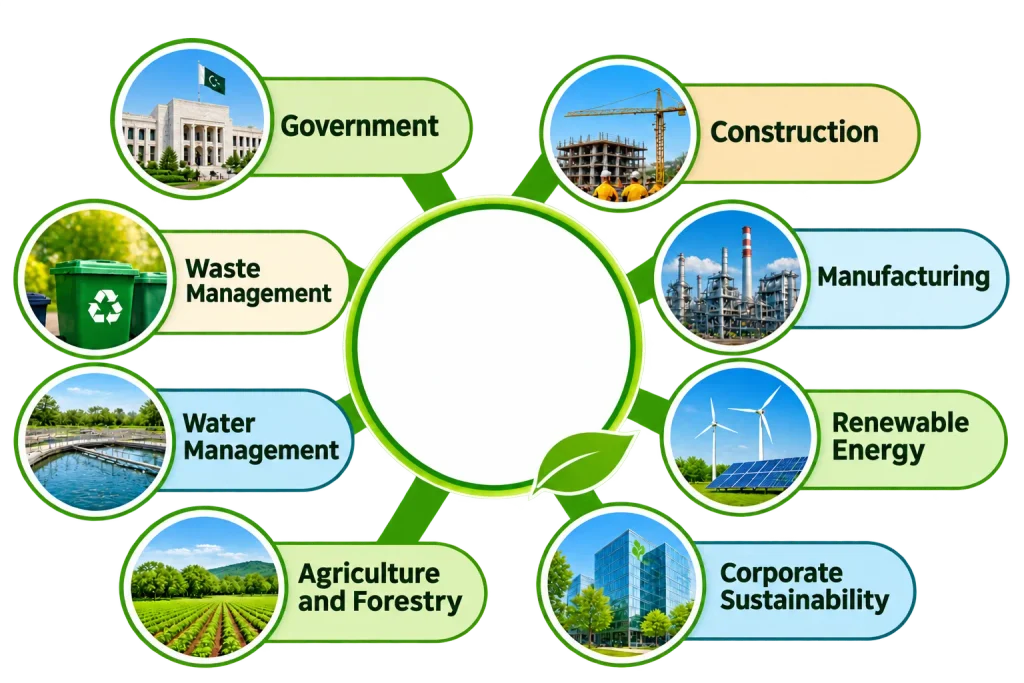
Key Sectors Offering Environmental Management Careers in Pakistan
Environmental management professionals can work across multiple industries. Some roles focus on regulatory compliance, while others involve sustainability planning, environmental assessment, technical monitoring or conservation.
The following sectors represent important career pathways.
1. Government Environmental Departments and Regulatory Authorities
Government departments and environmental regulatory authorities are important employers for environmental professionals in Pakistan.
These organisations are responsible for environmental protection, regulatory oversight, pollution control, environmental assessment and the development of environmental policies.
The Pakistan Environmental Protection Agency (Pak-EPA), provincial environmental protection agencies and the Ministry of Climate Change and Environmental Coordination are relevant institutions within this professional landscape.
Potential job roles include:
- Environmental Officer.
- Environmental Inspector.
- Environmental Protection Specialist.
- Environmental Research Officer.
- Climate Change Officer.
- Environmental Policy Analyst.
- Environmental Monitoring Officer.
Typical responsibilities may involve reviewing environmental documentation, conducting inspections, monitoring pollution levels, supporting environmental awareness programmes and evaluating compliance with applicable environmental requirements.
Professionals interested in government careers should monitor official recruitment announcements, public service commission advertisements and the National Jobs Portal.
2. Construction, Infrastructure and Engineering
Construction and infrastructure development can create significant environmental impacts, particularly where projects affect land, water resources, vegetation, air quality and nearby communities.
Environmental professionals help construction companies and engineering consultancies identify these impacts and implement appropriate mitigation measures.
Potential job roles include:
- Environmental Engineer.
- Environmental Coordinator.
- Environmental Site Officer.
- EIA Specialist.
- Environmental Compliance Officer.
- Environmental Management Consultant.
Typical responsibilities include:
- Reviewing environmental requirements before construction begins.
- Supporting Initial Environmental Examination (IEE) and Environmental Impact Assessment (EIA) processes.
- Preparing or implementing Environmental Management Plans (EMPs).
- Monitoring construction-related dust, noise and waste.
- Assessing environmental risks associated with excavation and land development.
- Coordinating environmental inspections and reporting.
For example, an environmental officer working on a motorway project may monitor construction waste, dust emissions, water usage and measures designed to protect nearby communities and ecosystems.
3. Manufacturing and Industrial Operations
Manufacturing industries require environmental management to control pollution, manage industrial waste and improve the efficiency of production processes.
Industries such as textiles, cement, chemicals, food processing, pharmaceuticals, steel and paper manufacturing may require environmental expertise.
Potential career opportunities include:
- Industrial Environmental Officer.
- Environmental Compliance Manager.
- Pollution Control Specialist.
- Environmental Auditor.
- Sustainability Coordinator.
- Environmental Management Systems Officer.
Professionals in these roles may be responsible for:
- Monitoring industrial wastewater and emissions.
- Evaluating waste generation and disposal procedures.
- Supporting environmental inspections and audits.
- Identifying opportunities to reduce energy and water consumption.
- Maintaining environmental compliance records.
- Developing pollution prevention strategies.
- Supporting implementation of environmental management systems.
For example, an environmental management professional in a textile factory may evaluate water consumption, wastewater treatment performance, chemical storage and waste segregation.
This sector is particularly relevant to professionals who combine environmental knowledge with industrial operations and compliance management.
4. Renewable Energy and Sustainable Power Generation
Renewable energy is another important area for environmental management professionals.
Pakistan has considerable potential for solar, wind and hydropower development. These projects require technical planning, environmental assessments and ongoing monitoring to manage their potential environmental and social impacts.
Career opportunities may include:
- Renewable Energy Environmental Officer.
- Environmental Project Coordinator.
- Sustainability Specialist.
- Environmental Assessment Consultant.
- Climate and Energy Analyst.
- Environmental Compliance Manager.
Responsibilities may include:
- Assessing the environmental impacts of renewable energy projects.
- Supporting environmental approval processes.
- Monitoring construction and operational activities.
- Evaluating land use and biodiversity considerations.
- Supporting environmental reporting.
- Identifying resource efficiency opportunities.
For instance, a solar power development project may require an environmental professional to assess site conditions, land disturbance, drainage, construction waste and end-of-life panel management considerations.
5. Waste Management and Recycling
Urban growth, industrial development and changing consumption patterns create continuing challenges involving municipal solid waste, hazardous waste, wastewater and recycling.
Environmental professionals can contribute to waste management planning, pollution prevention and resource recovery.
Potential positions include:
- Waste Management Officer.
- Environmental Waste Consultant.
- Recycling Programme Coordinator.
- Waste Treatment Specialist.
- Environmental Operations Manager.
- Hazardous Waste Management Officer.
Typical responsibilities include:
- Developing waste segregation procedures.
- Monitoring waste collection and disposal.
- Supporting recycling and material recovery initiatives.
- Reviewing hazardous waste handling procedures.
- Evaluating waste treatment facilities.
- Developing waste minimisation programmes.
- Maintaining waste management documentation.
For example, a waste management officer working with a municipal organisation may support the development of recycling programmes and evaluate methods for improving waste collection and disposal.
6. Water Resource Management and Wastewater Treatment
Water resource management is particularly important in Pakistan because water availability, agricultural demand, urbanisation and industrial activities place pressure on water systems.
Environmental professionals working in this sector help organisations monitor water quality, manage wastewater and improve water conservation practices.
Possible career roles include:
- Water Quality Officer.
- Environmental Water Specialist.
- Wastewater Treatment Officer.
- Water Resource Management Consultant.
- Environmental Monitoring Specialist.
- Water Conservation Coordinator.
Their responsibilities may include:
- Monitoring surface water and groundwater quality.
- Evaluating industrial wastewater treatment systems.
- Supporting water conservation programmes.
- Conducting water sampling and analysis.
- Reviewing wastewater discharge procedures.
- Identifying contamination risks.
- Supporting sustainable water management projects.
These roles may be available through water utilities, engineering companies, industrial facilities, environmental consultancies and development projects.
7. Agriculture, Forestry and Natural Resource Management
Agriculture and natural resource management are important areas for environmental protection in Pakistan.
Environmental professionals can contribute to soil conservation, sustainable agricultural practices, forestry management, biodiversity protection and climate-resilient development.
Potential positions include:
- Environmental Agriculture Officer.
- Natural Resource Management Specialist.
- Forestry Project Officer.
- Biodiversity Conservation Officer.
- Soil Conservation Specialist.
- Environmental Project Manager.
Typical activities include:
- Evaluating soil degradation and erosion risks.
- Supporting sustainable agricultural practices.
- Monitoring forestry and conservation projects.
- Assessing environmental impacts on ecosystems.
- Promoting efficient water use.
- Supporting biodiversity protection initiatives.
For example, environmental professionals working on an agricultural development project may help introduce improved irrigation practices, soil conservation measures and responsible management of agricultural waste.
8. NGOs and International Development Organisations
Non-governmental organisations and international development agencies support environmental protection, climate resilience, conservation and sustainable development initiatives.
These organisations may employ professionals to manage environmental projects, conduct research, coordinate community programmes and evaluate development outcomes.
Potential career opportunities include:
- Environmental Project Officer.
- Climate Change Programme Coordinator.
- Sustainability Project Manager.
- Environmental Research Associate.
- Climate Adaptation Specialist.
- Environmental Monitoring and Evaluation Officer.
Professionals may work on projects involving:
- Climate resilience and disaster risk reduction.
- Community-based environmental protection.
- Water and sanitation.
- Forest conservation.
- Biodiversity protection.
- Sustainable agriculture.
- Environmental awareness and education.
These roles often require a combination of technical environmental knowledge, project management, communication and research skills.
9. Corporate Sustainability and ESG Management
Environmental, Social and Governance (ESG) considerations are becoming increasingly relevant to corporate management, investment decisions and organisational reporting.
Businesses may need professionals who can evaluate environmental performance, identify sustainability risks and support responsible business practices.
Potential roles include:
- Sustainability Officer.
- ESG Analyst.
- Corporate Environmental Manager.
- Sustainability Reporting Specialist.
- Carbon Management Consultant.
- Environmental Performance Coordinator.
Responsibilities may involve:
- Measuring organisational carbon emissions.
- Supporting sustainability reporting.
- Evaluating energy and water consumption.
- Identifying environmental risks in business operations.
- Supporting responsible supply chain initiatives.
- Developing environmental performance indicators.
- Monitoring progress against sustainability targets.
This career pathway can be particularly suitable for professionals who combine environmental management knowledge with business strategy, data analysis and corporate reporting.
Environmental Management Career Opportunities: Job Roles and Responsibilities
Different environmental management positions involve different levels of technical knowledge, professional experience and management responsibility.
The following table provides an overview of common roles and their typical responsibilities.
| Job role | Main responsibilities | Relevant sector |
|---|---|---|
| Environmental Officer | Inspections, monitoring and compliance documentation | Industry and construction |
| Environmental Manager | Environmental strategy, performance and organisational compliance | Corporate and industrial |
| Environmental Consultant | Environmental assessments and technical advice | Consultancy |
| EIA Specialist | Environmental impact assessment and mitigation planning | Infrastructure |
| Sustainability Officer | Sustainability initiatives and performance monitoring | Corporate organisations |
| Climate Change Analyst | Climate risk assessment and research | Government and development |
| Waste Management Officer | Waste reduction, treatment and disposal | Municipal and industrial |
| Environmental Auditor | Environmental management system audits | Manufacturing and consultancy |
| Water Quality Specialist | Water sampling, analysis and quality monitoring | Water and utilities |
| ESG Analyst | Environmental performance data and sustainability reporting | Corporate and financial sectors |
These are indicative career pathways rather than guaranteed vacancies. Actual job titles and responsibilities vary between employers.
Qualifications and Educational Requirements for Environmental Jobs in Pakistan
Educational qualifications play an important role in developing the technical knowledge required for environmental management careers.
Employers may consider academic background, practical experience, professional training and specialist knowledge when recruiting environmental professionals.
1. Relevant academic qualifications
Common academic backgrounds for environmental management positions include:
- Environmental Science.
- Environmental Management.
- Environmental Engineering.
- Ecology and Biodiversity.
- Natural Resource Management.
- Geography and Earth Sciences.
- Civil and Chemical Engineering.
- Agriculture and Forestry.
- Sustainability and Climate Change Studies.
The appropriate qualification depends on the nature of the position. For example, technical engineering roles may require an engineering background, whereas environmental compliance, sustainability coordination and environmental management positions may accept candidates from a wider range of relevant disciplines.
2. Professional qualifications and specialised training
Professional development can help individuals strengthen their understanding of environmental management principles and workplace applications.
Relevant learning areas include:
- Environmental Management Systems.
- Environmental Impact Assessment.
- Environmental Auditing.
- Environmental Risk Assessment.
- Pollution Prevention and Control.
- Climate Change Adaptation.
- Sustainability Management.
- Environmental Legislation and Compliance.
- Carbon Management and Greenhouse Gas Reporting.
Advanced professional education can also help experienced professionals develop strategic management, research and decision-making capabilities.
3. Practical experience
Practical experience is valuable because environmental management involves applying technical knowledge to real organisational and environmental challenges.
Relevant experience may include:
- Environmental inspections and site assessments.
- Industrial environmental monitoring.
- Waste management operations.
- Water and air quality assessments.
- Environmental documentation and reporting.
- Environmental audit participation.
- Implementation of environmental management procedures.
- Sustainability and climate-related projects.
Graduates can consider internships, research projects, trainee positions and entry-level environmental roles to develop their practical understanding.
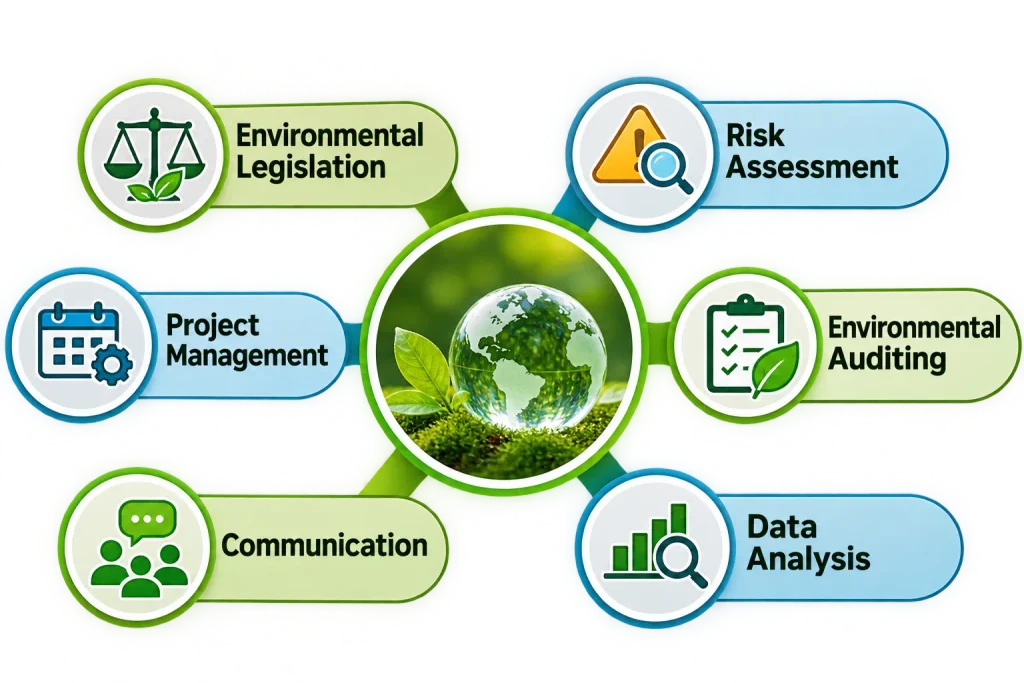
Essential Skills for Environmental Management Professionals
Successful environmental management professionals need a combination of technical, analytical, communication and management skills.
Employers may prioritise different competencies depending on the industry and responsibilities of the position.
1. Environmental legislation and regulatory knowledge
Professionals should understand the environmental laws, regulatory requirements and approval processes relevant to their work.
This includes familiarity with applicable environmental protection legislation, pollution standards, environmental assessments and waste management requirements.
2. Environmental risk assessment
Environmental risk assessment involves identifying activities that could harm the environment, evaluating their potential consequences and selecting appropriate control measures.
Professionals should be able to:
- Identify environmental hazards.
- Assess the likelihood and consequences of environmental impacts.
- Evaluate existing control measures.
- Recommend corrective and preventive actions.
- Monitor environmental risks.
3. Environmental auditing and inspection
Environmental auditing helps organisations evaluate whether their environmental management arrangements are functioning effectively.
Important competencies include conducting inspections, reviewing records, identifying non-conformities and preparing audit reports.
4. Data analysis and environmental monitoring
Environmental professionals frequently work with technical information, including air quality readings, water sampling results, waste records and emissions data.
Useful skills include:
- Environmental sampling techniques.
- Data interpretation.
- Spreadsheet analysis.
- Technical reporting.
- Environmental performance measurement.
- Monitoring and evaluation.
5. Communication and report writing
Environmental professionals communicate with managers, employees, regulatory authorities, contractors and external stakeholders.
They should be capable of explaining environmental risks, presenting technical findings and recommending realistic improvements.
6. Project and management skills
Senior environmental roles often involve managing projects, coordinating teams, allocating resources and evaluating organisational performance.
Professionals should develop:
- Project planning.
- Leadership and decision-making.
- Stakeholder engagement.
- Strategic thinking.
- Problem-solving.
- Performance management.
7. Digital and technological competencies
Environmental management increasingly involves digital tools and data-driven decision-making.
Useful technologies include:
- Geographic Information Systems (GIS).
- Remote sensing applications.
- Environmental monitoring equipment.
- Environmental data management software.
- Carbon accounting tools.
- Digital audit and reporting platforms.
Industry Standards, Regulations and Environmental Frameworks in Pakistan
Environmental management professionals must understand the regulatory requirements, environmental standards and management frameworks relevant to their industries. These frameworks help organisations control pollution, manage environmental risks, protect natural resources and fulfil their environmental responsibilities.
Pakistan has a combination of federal and provincial environmental legislation, national climate policies and internationally recognised management standards. Knowledge of these frameworks is particularly important for professionals working in environmental consultancy, industrial operations, construction, sustainability and environmental compliance.
The following frameworks are particularly relevant to environmental management professionals in Pakistan.
1. Pakistan Environmental Protection Act, 1997
The Pakistan Environmental Protection Act, 1997 provides an important legislative foundation for environmental protection in Pakistan. It addresses environmental pollution, environmental regulatory institutions, environmental assessments and environmental quality standards. The Act also establishes the legal basis for relevant environmental protection and regulatory functions.
Environmental professionals should understand its relevance to:
- Environmental pollution prevention and control.
- Environmental protection and regulatory responsibilities.
- Environmental Impact Assessment requirements.
- Environmental quality standards.
- Environmental inspections and compliance.
- Environmental approval and enforcement procedures.
The Pakistan Environmental Protection Agency (Pak-EPA) performs important regulatory functions, including reviewing environmental assessments, establishing environmental quality standards and supporting pollution prevention.
2. Environmental Impact Assessment (EIA) and Initial Environmental Examination (IEE)
Environmental Impact Assessment (EIA) and Initial Environmental Examination (IEE) are important processes used to evaluate the potential environmental consequences of proposed development projects. An IEE generally provides an initial assessment of potential environmental impacts, whereas an EIA involves a more detailed evaluation where the nature and significance of the expected impacts require it.
These assessments help decision-makers understand environmental risks and identify appropriate measures before projects proceed.
Environmental professionals may contribute to these processes through:
- Collecting baseline environmental information.
- Identifying potential environmental impacts.
- Evaluating alternative project options.
- Recommending environmental mitigation measures.
- Preparing Environmental Management Plans (EMPs).
- Developing environmental monitoring recommendations.
- Supporting environmental assessment documentation.
Pakistan’s federal IEE and EIA review regulations, together with applicable provincial requirements, provide the regulatory context for these activities.
3. National Climate Change Policy 2021
Pakistan’s National Climate Change Policy 2021 provides a framework for addressing climate change vulnerabilities and integrating climate considerations into national development planning. It covers important areas such as agriculture, water resources, forestry, energy, health, biodiversity and disaster risk reduction.
Environmental management professionals can use knowledge of this policy to support climate-related planning, environmental protection and sustainable resource management.
Important professional areas include:
- Climate change adaptation and resilience.
- Environmental risk assessment and planning.
- Sustainable water and agricultural management.
- Forest and biodiversity conservation.
- Climate-related disaster risk reduction.
- Environmental sustainability initiatives.
4. National Adaptation Plan
Pakistan’s National Adaptation Plan,provides a framework for strengthening climate resilience, supporting adaptation measures and improving coordination between relevant stakeholders. It highlights the importance of preparing vulnerable sectors and communities for the environmental and economic consequences of climate change.
The plan is particularly relevant to professionals working in climate adaptation, environmental planning and sustainable development.
Key areas of professional application include:
- Climate risk assessment and vulnerability analysis.
- Water resource management and conservation.
- Climate-resilient agricultural development.
- Environmental planning and policy implementation.
- Disaster risk reduction and resilience.
- Natural resource and ecosystem conservation.
5. ISO 14001 Environmental Management Systems
ISO 14001 is an internationally recognised standard that provides requirements for establishing, implementing, maintaining and continually improving an Environmental Management System (EMS). It helps organisations identify their environmental responsibilities, manage environmental impacts and improve their environmental performance systematically.
Environmental management professionals may support organisations in implementing and maintaining ISO 14001 through activities such as:
- Identifying environmental aspects and impacts.
- Evaluating applicable compliance obligations.
- Establishing environmental objectives and targets.
- Monitoring and measuring environmental performance.
- Conducting internal environmental audits.
- Identifying non-conformities and implementing corrective actions.
- Supporting continual improvement of environmental management processes.
ISO 14001 is a voluntary management system standard unless its adoption is required through a particular contractual, organisational or other applicable obligation. Certification is not a universal legal requirement for every organisation.
6. National Environmental Quality Standards (NEQS)
Pakistan’s National Environmental Quality Standards (NEQS) establish environmental quality requirements covering important areas such as industrial emissions, wastewater discharge, drinking water and noise. These standards provide an important reference for environmental monitoring, pollution control and regulatory compliance.
Professionals working in manufacturing, construction, environmental laboratories and industrial compliance should understand the relevant standards and monitoring requirements.
Their practical responsibilities may include:
- Monitoring industrial air emissions.
- Assessing wastewater discharge quality.
- Supporting water quality testing and monitoring.
- Evaluating noise levels in relevant environments.
- Maintaining environmental monitoring records.
- Identifying potential non-compliance.
- Recommending appropriate pollution control measures.
Environmental professionals should always consult the relevant federal or provincial regulatory framework to determine which standards and requirements apply to a particular organisation, project or location.
Employment Opportunities: Public Sector vs Private Sector
Environmental professionals in Pakistan can explore both government and private-sector employment.
Each offers different working environments, responsibilities and opportunities for professional development.
| Employment area | Typical opportunities | Main focus |
|---|---|---|
| Government departments | Environmental Officer, Research Officer, Climate Change Specialist | Environmental policies and regulatory functions |
| Private manufacturing | Environmental Manager, Compliance Officer | Pollution control and industrial compliance |
| Engineering companies | EIA Specialist, Environmental Engineer | Project assessments and mitigation |
| Renewable energy | Environmental Project Officer | Sustainable energy development |
| NGOs | Environmental Project Coordinator | Conservation and community programmes |
| International organisations | Climate Specialist, Environmental Consultant | Development and climate resilience |
| Corporate organisations | Sustainability Officer, ESG Analyst | Environmental performance and reporting |
| Water and waste utilities | Environmental Monitoring Officer | Water quality and waste management |
Challenges Facing Environmental Management Professionals in Pakistan
Although environmental management offers diverse career opportunities across government departments, industries, consultancy firms and development organisations, professionals entering this field may encounter several practical and professional challenges. Understanding these difficulties can help Learners and experienced professionals prepare for workplace responsibilities and develop the competencies needed for long-term career growth.
Some of the common challenges and recommended approaches include:
1. Limited Practical Experience
Many graduates enter the environmental sector with a strong theoretical understanding but limited practical exposure to environmental inspections, sampling procedures, audits and industrial operations. This can make it difficult to apply academic knowledge to real workplace situations.
Recommended approaches:
- Participate in internships and environmental fieldwork.
- Gain experience through practical training and industry projects.
- Develop familiarity with environmental monitoring equipment.
- Participate in environmental inspections and auditing activities.
2. Changing Environmental Requirements
Environmental legislation, regulatory procedures and compliance requirements can vary between federal and provincial jurisdictions in Pakistan. Changes in environmental policies and standards also require professionals to maintain up-to-date knowledge.
Recommended approaches:
- Regularly review official federal and provincial environmental publications.
- Stay informed about environmental legislation and regulatory updates.
- Develop knowledge of applicable environmental standards.
- Participate in relevant professional training and development activities.
3. Technical and Analytical Skill Gaps
Environmental management positions often require professionals to interpret technical information, prepare environmental assessments and understand monitoring procedures. Limited experience with analytical methods and digital tools can restrict their ability to perform certain responsibilities effectively.
Recommended approaches:
- Develop environmental monitoring and assessment skills.
- Learn Geographic Information Systems (GIS) applications.
- Improve environmental data analysis and interpretation.
- Strengthen technical report writing and documentation skills.
4. Coordination Between Departments
Effective environmental management requires cooperation between different organisational departments, including operations, engineering, procurement and senior management. Poor communication or limited coordination can affect the implementation of environmental policies and control measures.
Recommended approaches:
- Strengthen professional communication and teamwork.
- Develop project coordination and management capabilities.
- Improve stakeholder engagement and collaboration.
- Encourage environmental awareness across organisational departments.
5. Balancing Environmental Protection with Commercial Objectives
Businesses may face pressure to control operational costs while fulfilling their environmental responsibilities. Environmental professionals must therefore understand how to recommend practical solutions that protect the environment without unnecessarily disrupting organisational operations.
Recommended approaches:
- Promote resource efficiency and responsible consumption.
- Identify opportunities for waste reduction and recycling.
- Recommend practical pollution prevention measures.
- Evaluate the long-term benefits of effective environmental planning.
- Support sustainable operational improvements that contribute to organisational performance.
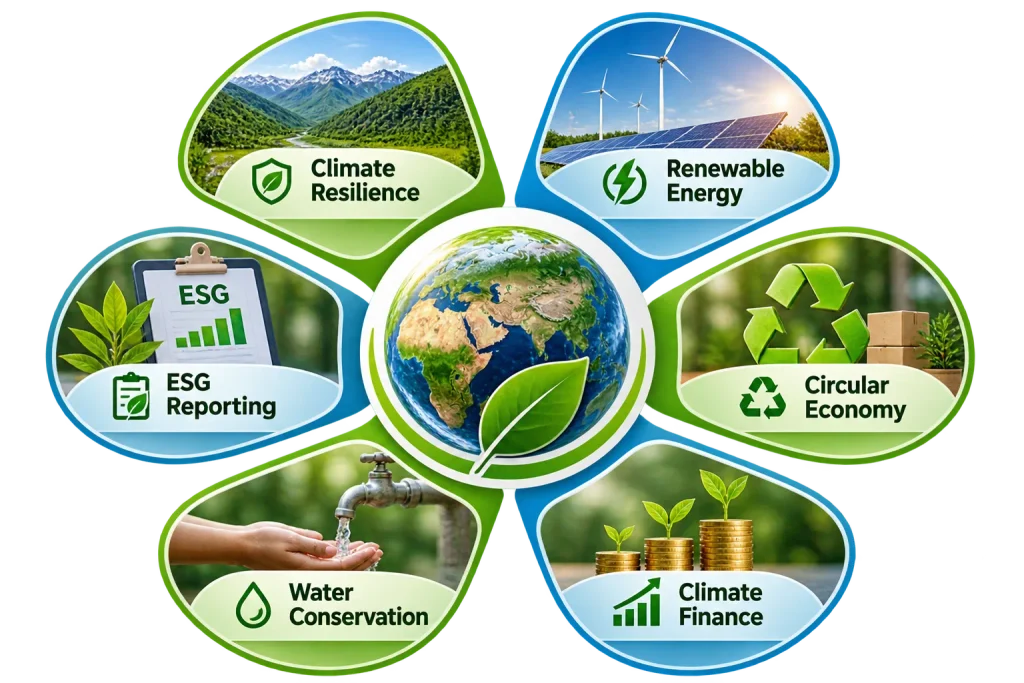
Future Developments and Emerging Environmental Career Opportunities in Pakistan
Environmental management is evolving as government institutions, businesses and development organisations respond to climate change, natural resource limitations, environmental regulations and sustainability objectives. These developments are creating new areas of professional activity for individuals with relevant environmental knowledge and technical expertise.
In Pakistan, several emerging trends may influence future environmental employment opportunities, particularly in climate resilience, renewable energy, corporate sustainability, waste management and environmental research.
1. Climate Change Adaptation and Resilience
Climate change adaptation and resilience are important development priorities for Pakistan. National climate policies and the National Adaptation Plan highlight the importance of preparing vulnerable sectors for climate-related risks and improving environmental resilience.
This creates potential professional opportunities in:
- Climate risk assessment and environmental planning.
- Climate adaptation and resilience projects.
- Disaster risk reduction and management.
- Environmental research and policy development.
- Sustainable agriculture and natural resource management.
2. Renewable Energy Development
The development of solar, wind and hydropower projects is creating opportunities for professionals who understand environmental assessments, resource management and environmental compliance. Environmental specialists can contribute to responsible project planning, impact monitoring and sustainable energy development.
Potential career areas include:
- Renewable Energy Environmental Officer.
- Environmental Project Coordinator.
- Environmental Assessment Consultant.
- Sustainability Specialist.
- Environmental Compliance Manager.
3. Corporate Sustainability and ESG Reporting
Organisations are paying increasing attention to environmental performance, sustainability objectives and responsible business practices. Environmental, Social and Governance (ESG) considerations are becoming relevant to corporate decision-making and sustainability reporting.
Professionals with appropriate technical and analytical knowledge may explore opportunities in:
- Corporate sustainability management.
- Carbon accounting and emissions monitoring.
- ESG data analysis and reporting.
- Environmental performance evaluation.
- Sustainable business strategy development.
4. Waste Reduction and Circular Economy
Circular economy approaches focus on reducing waste, improving material efficiency, reusing resources and promoting recycling. These practices can help organisations minimise environmental impacts while improving resource utilisation.
Environmental management professionals can contribute through:
- Conducting waste audits and assessments.
- Developing recycling and waste reduction programmes.
- Supporting resource recovery initiatives.
- Improving sustainable production practices.
- Monitoring waste treatment and disposal operations.
5. Water Conservation and Resource Efficiency
Water scarcity and increasing demand from agriculture, industries and urban communities make sustainable water management particularly important in Pakistan. Organisations require appropriate environmental knowledge to improve water conservation, monitor water quality and manage wastewater responsibly.
Relevant professional opportunities include:
- Water Quality Monitoring Specialist.
- Wastewater Treatment Officer.
- Water Resource Management Consultant.
- Industrial Water Efficiency Coordinator.
- Environmental Monitoring Officer.
6. Environmental Research and Climate Finance
Environmental research, climate finance and evidence-based decision-making are becoming important areas within environmental policy and sustainable development. Pakistan’s Ministry of Climate Change and Environmental Coordination publishes policy initiatives and information relating to climate finance, carbon markets and climate planning.
These developments may create opportunities for professionals interested in:
- Environmental research and policy analysis.
- Climate finance and project development.
- Carbon market-related activities.
- Environmental monitoring and evaluation.
- Sustainable development project management.
The International Labour Organization also highlights the relationship between employment, environmental sustainability and climate-related labour market opportunities in Pakistan.
As these areas develop, professionals with environmental management, research, analytical and project coordination skills may find opportunities across government institutions, private organisations and international development projects.
How to Build a Successful Career in Environmental Management
Building a successful career in environmental management requires a combination of relevant education, practical experience, technical expertise and continuous professional development. As environmental challenges and industry requirements continue to evolve, professionals need to develop the knowledge and competencies required to manage environmental responsibilities effectively.
Individuals interested in entering or progressing within this profession can follow several important steps to strengthen their career prospects:
Step 1: Choose a Relevant Educational Pathway
Start by obtaining an academic or professional qualification related to environmental science, environmental management, engineering, sustainability or another relevant discipline. Your educational pathway should reflect your preferred career direction and the type of environmental responsibilities you wish to undertake.
Step 2: Develop Technical Environmental Knowledge
Develop a strong understanding of environmental protection, pollution control, environmental legislation, risk assessment and sustainable resource management. Consider strengthening your knowledge in specialist areas such as:
- Environmental Impact Assessment (EIA).
- Environmental auditing and compliance.
- ISO 14001 Environmental Management Systems.
- Climate change management.
- Waste and water resource management.
Step 3: Gain Practical Industry Experience
Practical experience helps professionals understand how environmental management principles are applied within workplaces, industrial operations and development projects. Look for opportunities to participate in environmental inspections, monitoring activities, research projects and environmental management programmes.
Step 4: Develop Professional and Digital Skills
Alongside technical knowledge, employers value professionals who can communicate effectively, analyse information and manage environmental responsibilities. Focus on developing:
- Technical report writing and documentation.
- Environmental data analysis and interpretation.
- Communication and problem-solving.
- Project coordination and management.
- Geographic Information Systems (GIS).
- Environmental monitoring and data management tools.
Step 5: Pursue Advanced Professional Development
As your professional experience increases, consider further education and specialised training to strengthen your understanding of strategic environmental management, organisational sustainability, environmental research and leadership. Advanced learning can help prepare professionals for broader responsibilities in environmental consultancy, sustainability management and senior organisational positions.
Step 6: Explore Relevant Employment Opportunities
Identify employment opportunities that match your academic background, practical experience and technical competencies. Regularly explore vacancies across government departments, environmental consultancies, construction companies, manufacturing industries and sustainability-focused organisations.
To improve your employment prospects:
- Prepare a professional CV highlighting relevant qualifications and experience.
- Include environmental projects, internships and practical achievements.
- Highlight relevant professional training and technical competencies.
- Monitor environmental job vacancies through recruitment platforms and company websites.
- Continue updating your knowledge of environmental legislation and industry developments.

Professional Development and Further Learning in Environmental Management
Environmental management is a multidisciplinary profession that requires continuous learning and professional development. As environmental legislation, sustainability practices, climate policies and management approaches continue to evolve, professionals need to maintain relevant knowledge and develop new competencies to meet changing industry requirements.
For individuals aiming to progress into senior environmental management, consultancy, sustainability leadership or organisational management positions, further education can help strengthen technical expertise, strategic thinking and professional capabilities.
Professional development may include:
- Advanced Environmental Management: Develop a deeper understanding of environmental planning, management strategies and organisational environmental performance.
- Environmental Legislation and Compliance: Improve knowledge of environmental regulations, compliance requirements and environmental protection responsibilities.
- Sustainability Management: Understand sustainable development principles, resource efficiency and environmental sustainability strategies.
- Environmental Risk Management: Strengthen the ability to identify, evaluate and manage environmental risks within organisations.
- Environmental Auditing: Develop knowledge of environmental audits, performance evaluation and continual improvement.
- Strategic Leadership: Build management, decision-making and leadership capabilities for senior environmental responsibilities.
- Research and Professional Development: Improve analytical, research and problem-solving skills to address complex environmental challenges.
Professionals seeking advanced knowledge may also consider postgraduate-level education to support their career development and prepare for broader responsibilities in environmental management.
Conclusion
Environmental management careers in Pakistan offer diverse opportunities across government departments, construction, manufacturing, renewable energy, environmental consultancy, waste management and corporate sustainability. As environmental challenges, climate change and sustainability priorities continue to influence organisational and national development, the need for skilled environmental professionals remains important.
Building a successful career in this field requires relevant education, practical industry experience, technical expertise and continuous professional development. By developing knowledge of environmental regulations, risk assessment, sustainability and environmental management systems, professionals can strengthen their career prospects and contribute to environmental protection and sustainable development in Pakistan.