
Environmental Management Skills for the Green Economy: Sustainability, Compliance and Leadership
The transition towards a green economy has increased the importance of environmental management skills across industries, organisations and professional sectors. As businesses face growing environmental challenges, climate-related risks and changing regulatory expectations, the ability to manage environmental responsibilities has become an essential professional competency. Organisations are increasingly focusing on sustainable operations, responsible resource utilisation, pollution prevention and environmental compliance to minimise their environmental impact while supporting long-term economic development.
Environmental management professionals play a significant role in helping organisations achieve these objectives. They require a combination of technical knowledge, sustainability leadership, environmental risk assessment, ESG awareness and strategic decision-making skills. Understanding environmental legislation, implementing environmental management systems, evaluating climate risks and improving resource efficiency enables professionals to develop practical solutions to complex environmental challenges. These competencies are particularly important in sectors such as construction, manufacturing, energy, agriculture, transportation and infrastructure development.
The growing emphasis on sustainability has also created a need for professionals who can connect environmental responsibilities with organisational strategies and operational performance. Skills such as environmental auditing, environmental impact assessment, carbon management, waste reduction and sustainable supply chain management help organisations identify improvement opportunities and strengthen environmental accountability. In addition, effective communication and leadership enable environmental managers to engage stakeholders, influence workplace practices and encourage a culture of environmental responsibility.
What is Environmental Management in the Green Economy?
Environmental management is the systematic process of identifying, controlling and reducing the environmental impacts associated with organisational activities, products and services. It involves managing natural resources responsibly, preventing pollution, meeting environmental obligations and improving environmental performance.
The green economy extends this approach by encouraging economic development that supports environmental protection, resource efficiency and long-term sustainability. It requires organisations to consider environmental consequences when making decisions about production, investment, construction, procurement, transportation and business operations.
Environmental management professionals help organisations translate sustainability objectives into practical actions. Their responsibilities may include conducting environmental assessments, monitoring pollution, reviewing compliance obligations, developing environmental policies and evaluating the effectiveness of sustainability initiatives.
For example, a manufacturing organisation may introduce energy-efficient equipment, improve waste segregation, monitor industrial emissions and establish water conservation procedures. These activities require technical knowledge, environmental awareness, analytical thinking and effective management.
The transition to a green economy therefore depends not only on environmental technologies but also on professionals who can plan, implement and evaluate sustainable solutions.
Why Are Environmental Management Skills Important for the Green Economy?
Environmental management skills help organisations respond to environmental challenges while maintaining operational efficiency and responsible business practices.
Several developments have increased the importance of these competencies.
Growing environmental and regulatory expectations
Organisations must understand the environmental requirements applicable to their activities. Environmental professionals need the ability to identify relevant legislation, maintain records, assess compliance and coordinate corrective actions.
Climate change and environmental risks
Changing climate conditions can affect infrastructure, supply chains, agriculture, energy systems and industrial operations. Professionals require climate literacy and risk assessment skills to understand potential impacts and support appropriate adaptation measures.
Increasing importance of ESG performance
Environmental, Social and Governance (ESG) considerations influence how organisations assess sustainability performance, communicate responsibilities and respond to stakeholder expectations. Professionals need to understand environmental indicators, sustainability reporting and organisational accountability.
Resource efficiency and operational improvement
Energy consumption, water use, raw material requirements and waste generation influence both environmental performance and operating costs. Resource efficiency skills help identify opportunities to reduce unnecessary consumption and improve productivity.
Demand for sustainable leadership
Environmental improvements require cooperation across departments. Managers must communicate sustainability objectives, influence organisational behaviour and ensure environmental considerations are included in strategic decisions.
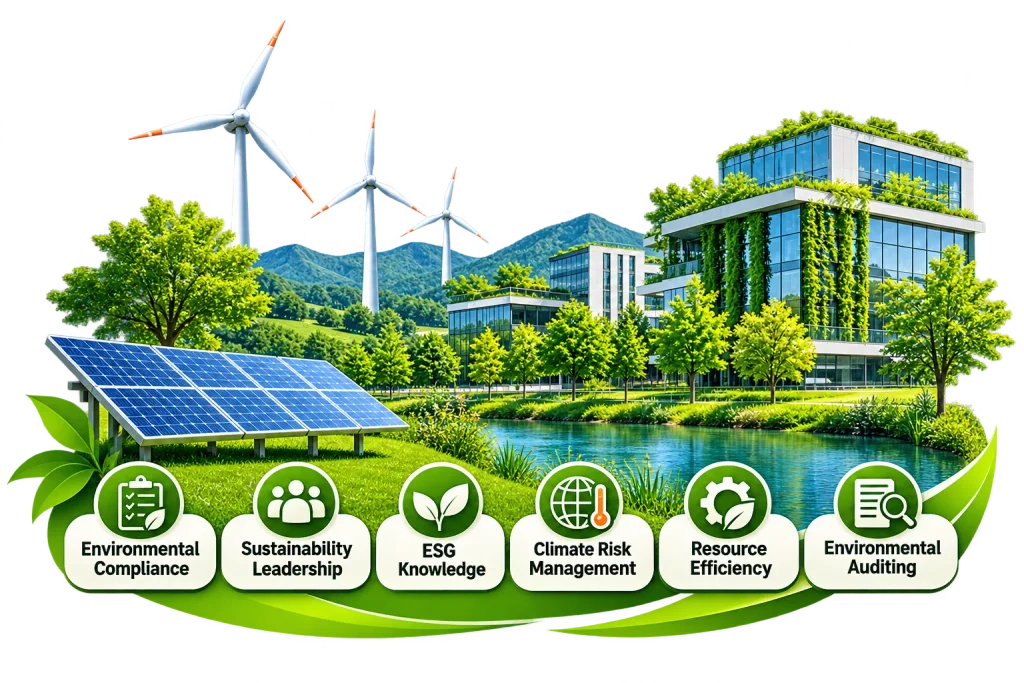
According to the Institute of Sustainability and Environmental Professionals (ISEP), effective sustainability professionals need a combination of core knowledge, technical competencies and sustainable leadership capabilities.
Essential Environmental Management Skills for Modern Professionals
Environmental management professionals need a combination of technical expertise, regulatory knowledge, analytical abilities and leadership competencies. These skills enable them to identify environmental problems, develop appropriate solutions and support organisational sustainability objectives.
The following competencies are particularly relevant to the green economy.
Environmental Compliance and Regulatory Knowledge
Environmental compliance is the ability to understand, interpret and apply relevant environmental legislation, regulations, permits, standards and organisational procedures.
Professionals must understand how environmental obligations affect workplace activities and how to maintain compliance through appropriate management systems.
Important capabilities include:
- Legislative awareness: Understanding applicable environmental laws, regulations, policies and regulatory responsibilities.
- Permit management: Identifying environmental permits, licences and approval requirements relevant to organisational activities.
- Compliance monitoring: Checking whether operations meet applicable environmental conditions and standards.
- Documentation: Maintaining environmental records, inspection reports, monitoring results and compliance evidence.
- Corrective action: Identifying non-compliance, investigating its causes and implementing appropriate improvements.
For example, an industrial facility may need to monitor wastewater discharges, manage hazardous waste and maintain records demonstrating compliance with its environmental permit conditions.
In England, certain activities involving emissions, waste operations and water discharges require environmental permits. Environmental professionals must understand the relevant requirements before activities commence.
Sustainability Leadership and Strategic Decision-Making
Sustainability leadership involves guiding organisations towards environmentally responsible decisions while considering operational requirements, financial performance and stakeholder expectations.
Environmental managers must be able to influence decision-makers and integrate sustainability into organisational policies, objectives and long-term planning.
Key sustainability leadership skills include:
- Strategic planning: Establishing measurable environmental objectives that support organisational priorities.
- Decision-making: Evaluating environmental consequences before approving operational or investment decisions.
- Stakeholder engagement: Working with employees, suppliers, regulators, customers and communities.
- Change management: Encouraging employees to adopt sustainable working practices.
- Accountability: Assigning responsibilities and reviewing progress against environmental targets.
For instance, a construction company may introduce a sustainability strategy that prioritises low-impact materials, responsible waste management, energy efficiency and environmental protection throughout project delivery.
Effective leadership ensures that sustainability becomes part of everyday organisational decision-making rather than an isolated environmental department responsibility.
ESG Knowledge and Sustainability Reporting
Environmental, Social and Governance (ESG) knowledge helps professionals understand how organisations manage their wider sustainability responsibilities and communicate performance to stakeholders.
Environmental management professionals increasingly need to understand how environmental performance is measured, documented and reported.
Relevant ESG competencies include:
- Understanding environmental, social and governance indicators.
- Monitoring greenhouse gas emissions and energy consumption.
- Collecting reliable environmental performance data.
- Supporting sustainability disclosures and reporting processes.
- Assessing environmental risks across supply chains.
- Identifying opportunities to improve organisational accountability.
An environmental professional working in a manufacturing business, for example, may collect information about energy consumption, water use, waste generation and emissions to support sustainability reporting.
ESG reporting should be based on reliable evidence, consistent measurement methods and transparent communication. Organisations should avoid unsupported environmental claims and misleading descriptions of their sustainability performance.
Climate Risk Assessment and Adaptation
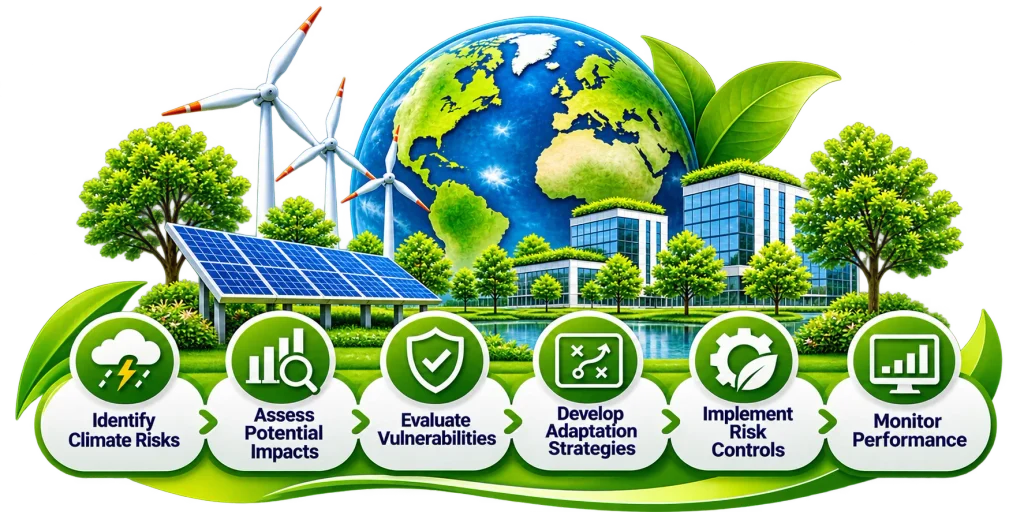
Climate risk management involves identifying, evaluating and responding to risks associated with climate change.
These risks may include flooding, extreme temperatures, water shortages, changing rainfall patterns, supply chain disruption and damage to infrastructure.
Environmental management professionals need to understand both physical climate risks and transition risks.
| Climate risk category | Explanation | Example |
|---|---|---|
| Physical risks | Direct impacts of changing climate conditions | Flooding affecting industrial facilities |
| Transition risks | Risks associated with the move towards a low-carbon economy | Increased costs associated with changing environmental requirements |
| Operational risks | Disruption to normal organisational activities | Water shortages affecting production |
| Supply chain risks | Environmental disruption affecting suppliers and logistics | Extreme weather delaying material deliveries |
Essential climate risk skills include:
- Risk identification: Recognising potential climate-related threats.
- Impact assessment: Evaluating how climate conditions may affect organisational activities.
- Scenario analysis: Considering different possible climate conditions and their implications.
- Adaptation planning: Developing measures to reduce vulnerability.
- Monitoring: Reviewing climate-related risks and evaluating the effectiveness of responses.
For example, an agricultural organisation operating in Pakistan may assess water availability, changing rainfall patterns and extreme temperatures when developing its resource management strategy.
Resource Efficiency and Circular Economy Management
Resource efficiency focuses on achieving better operational results while reducing the consumption of energy, water and raw materials.
The circular economy complements this approach by encouraging organisations to minimise waste, extend product lifecycles, reuse materials and recover valuable resources.
Professionals need the ability to identify inefficiencies and recommend practical improvements.
Important skills include:
- Energy management: Monitoring energy consumption and identifying opportunities for efficiency improvements.
- Water conservation: Assessing water use and introducing appropriate conservation measures.
- Waste minimisation: Reducing waste generation through improved processes and material handling.
- Material recovery: Encouraging reuse, recycling and responsible disposal.
- Life cycle thinking: Considering environmental impacts across different stages of a product or service.
A manufacturing organisation could apply these competencies by introducing energy-efficient machinery, recovering reusable production materials and improving water recycling systems.
Such measures can support environmental objectives while reducing unnecessary operating expenditure.
Environmental Impact Assessment and Risk Evaluation
Environmental Impact Assessment (EIA) is a systematic process for identifying and evaluating the potential environmental consequences of proposed projects or activities.
Environmental professionals need assessment skills to identify risks before they result in environmental damage.
These skills commonly include:
- Understanding environmental baseline conditions.
- Identifying potential impacts on air, water, soil and biodiversity.
- Evaluating the significance of environmental impacts.
- Developing mitigation and monitoring measures.
- Preparing environmental reports and management plans.
- Supporting consultation with relevant stakeholders.
For example, before a large infrastructure project begins, an environmental professional may assess potential effects on nearby water resources, vegetation, wildlife habitats, surrounding communities and local air quality.
An effective assessment helps project teams understand environmental constraints and establish appropriate mitigation measures.
Environmental Auditing and Performance Monitoring
Environmental auditing involves systematically reviewing organisational activities, procedures and records to evaluate environmental performance and identify areas requiring improvement.
Monitoring provides the information needed to assess whether environmental controls are working effectively.
Professionals should develop competencies in:
- Conducting environmental inspections and audits.
- Reviewing environmental management procedures.
- Monitoring emissions, waste and resource consumption.
- Evaluating compliance with environmental requirements.
- Identifying weaknesses in existing controls.
- Preparing audit reports and improvement recommendations.
For example, an environmental audit at an industrial site may identify inadequate chemical storage, inconsistent waste segregation or incomplete environmental monitoring records.
The organisation can then establish corrective actions, allocate responsibilities and review their implementation.
Communication, Problem-Solving and Analytical Thinking
Technical environmental knowledge is most effective when professionals can communicate findings clearly and translate them into practical organisational improvements.
Environmental managers regularly interact with senior management, operational teams, contractors, regulators and external stakeholders.
Essential transferable skills include:
- Analytical thinking: Interpreting environmental information and identifying significant trends.
- Problem-solving: Developing practical responses to environmental challenges.
- Communication: Explaining environmental requirements to technical and non-technical audiences.
- Report writing: Preparing clear environmental assessments, audit findings and performance reports.
- Negotiation: Working with stakeholders to agree achievable environmental improvements.
- Team collaboration: Coordinating environmental activities across departments.
These capabilities help environmental professionals build cooperation and ensure that sustainability objectives are understood throughout an organisation.
Technical Skills and Leadership Skills: Understanding the Difference
Successful environmental management requires both technical competence and professional leadership. Technical skills provide the knowledge needed to assess and control environmental impacts, while leadership skills help professionals implement improvements and influence organisational behaviour.
| Technical environmental skills | Professional leadership skills |
|---|---|
| Environmental legislation and compliance | Strategic decision-making |
| Environmental impact assessment | Stakeholder engagement |
| Environmental auditing | Team leadership |
| Pollution prevention | Change management |
| Climate risk assessment | Risk-based decision-making |
| Waste and resource management | Communication and negotiation |
| Environmental monitoring | Performance improvement |
| ESG data and reporting | Organisational accountability |
Both skill categories are interconnected. For example, identifying an environmental compliance problem requires technical knowledge, while ensuring that the organisation addresses it requires communication, planning and leadership.
The ISEP Sustainability Skills Map also identifies analytical thinking, effective communication, problem resolution, resilience, relationship development and leadership for change as important competencies for sustainability professionals.
How Environmental Management Skills Are Applied Across Industries
Environmental management skills are relevant across multiple economic sectors. Their application varies according to operational activities, environmental risks and regulatory requirements.
| Industry | Important environmental management skills | Practical application |
|---|---|---|
| Construction | EIA, waste management, environmental compliance | Managing construction waste and protecting surrounding ecosystems |
| Manufacturing | Pollution control, resource efficiency, environmental auditing | Reducing emissions and improving production efficiency |
| Oil and gas | Environmental risk assessment, monitoring and emergency planning | Preventing spills and managing environmental hazards |
| Agriculture | Water conservation, soil protection and climate adaptation | Improving irrigation and sustainable land management |
| Energy | Carbon management, environmental assessment and resource planning | Supporting renewable energy and reducing environmental impacts |
| Transportation | Emissions management and sustainable logistics | Improving fuel efficiency and reducing transport-related pollution |
| Healthcare | Waste management and environmental compliance | Managing clinical waste and reducing environmental contamination |
These examples demonstrate that environmental management is not limited to environmental specialists. Engineers, project managers, operations professionals, consultants and organisational leaders can also apply green skills within their responsibilities.
How Can Professionals Develop Environmental Management Skills?
Developing environmental management competencies requires a combination of structured learning, practical experience and continuous professional development.
The following steps can help learners build relevant knowledge and workplace capabilities.
- Build environmental knowledge: Study environmental management principles, sustainability concepts, environmental legislation and pollution prevention practices.
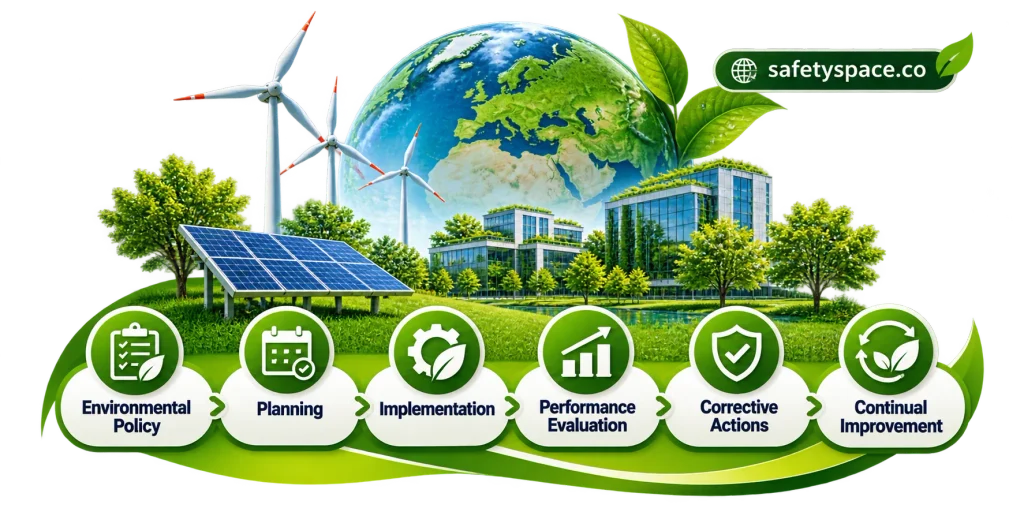
- Understand environmental management systems: Learn how organisations establish environmental policies, identify environmental aspects, set objectives, monitor performance and implement continual improvement.
- Develop assessment skills: Practise environmental risk assessment, impact evaluation, compliance reviews and environmental auditing.
- Improve analytical capabilities: Learn to interpret environmental data, monitor resource consumption and evaluate organisational performance.
- Strengthen leadership abilities: Develop communication, project management, stakeholder engagement and strategic decision-making skills.
- Gain practical experience: Participate in environmental inspections, sustainability projects, waste management initiatives and environmental monitoring activities.
- Continue professional development: Keep knowledge updated as environmental legislation, management standards, technologies and sustainability expectations evolve.
The importance of ISO 14001 knowledge
Understanding environmental management systems is particularly useful for professionals who want to work with organisational sustainability programmes.
ISO 14001:2026 provides a structured framework for establishing, implementing, maintaining and improving an Environmental Management System (EMS). It connects environmental responsibilities with organisational processes and performance objectives.
Professionals should understand how to:
- Identify environmental aspects and impacts.
- Establish environmental objectives.
- Manage environmental risks and opportunities.
- Monitor operational environmental performance.
- Evaluate compliance obligations.
- Review management system effectiveness.
- Implement continual improvement.
The ability to apply these principles can help professionals support organisations in developing more systematic environmental management practices.
Common Challenges in Developing Green Skills
Although environmental management skills are increasingly important, organisations and professionals can face challenges when developing and applying them.
| Challenge | Potential solution |
|---|---|
| Limited environmental knowledge | Provide structured environmental management training |
| Changing regulatory requirements | Establish regular compliance reviews |
| Insufficient environmental data | Improve monitoring and record-keeping systems |
| Limited management support | Demonstrate the operational and strategic value of sustainability |
| Employee resistance to change | Introduce awareness programmes and practical training |
| Inadequate resources | Prioritise improvements according to environmental risk and available resources |
| Weak sustainability reporting | Establish reliable indicators and transparent reporting procedures |
Environmental improvement requires consistent management attention. Training alone is not sufficient unless organisations provide appropriate resources, clear responsibilities and opportunities to apply acquired knowledge.
Professional Development Through Advanced Environmental Management Education
As environmental challenges continue to evolve, professionals need advanced knowledge of sustainability, environmental compliance, risk assessment and organisational leadership. Professional education helps learners strengthen their understanding of environmental management principles and develop the skills required to address complex environmental responsibilities.
Structured learning and practical experience can support the development of important professional competencies, including:
- Environmental Compliance: Understanding environmental regulations, standards and organisational responsibilities.
- Sustainability Leadership: Developing strategies that promote responsible environmental practices.
- Environmental Risk Management: Identifying environmental risks and implementing appropriate control measures.
- Environmental Assessment: Evaluating environmental impacts and recommending effective solutions.
- Resource Efficiency: Improving energy, water and material utilisation while reducing waste.
- Strategic Decision-Making: Integrating environmental considerations into organisational planning and operations.
Developing these competencies through advanced education, workplace experience and continuous professional development enables learners to strengthen their environmental knowledge and contribute to sustainable organisational performance.
Conclusion
Environmental management skills are essential for addressing modern environmental challenges and supporting the transition towards a sustainable green economy. Competencies in environmental compliance, sustainability leadership, climate risk assessment and resource efficiency enable professionals to improve environmental performance and promote responsible organisational practices.
Developing these skills through professional education, practical experience and continuous learning helps learners strengthen their knowledge and contribute to sustainable development. Strong environmental management capabilities also support better decision-making, environmental protection and long-term organisational sustainability.