Professional Qualification
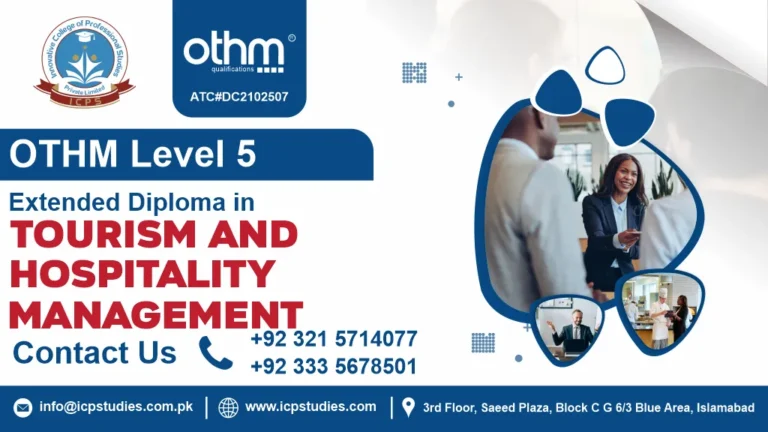
OTHM Level 7 Diploma in Tourism and Hospitality Management
Lead the Future of Global Tourism and Hospitality Management.
Mandatory Units
6
Awarding Body
OTHM
Credit Hours
120
TQT
1200
GLH
600
Course Overview
The OTHM Level 7 Diploma in Tourism and Hospitality Management is an advanced qualification designed for individuals seeking to develop strategic leadership, management and decision-making skills within the global tourism and hospitality industry. It provides Learners with the knowledge and professional competencies needed to understand industry trends, manage hospitality operations and contribute to the sustainable development of tourism businesses.
This Level 7 tourism and hospitality management qualification is suitable for aspiring senior managers, tourism professionals, hotel managers and individuals seeking career advancement in hospitality, travel and tourism. Learners develop an understanding of strategic management, customer experience, business development and operational planning to address the challenges of a competitive international marketplace.
The OTHM Level 7 Diploma in Tourism and Hospitality Management also supports the development of leadership, critical thinking and problem-solving skills relevant to hotels, resorts, travel companies, tourism organisations and hospitality enterprises. By exploring contemporary management practices and industry-focused strategies, Learners can strengthen their ability to make informed business decisions and improve organisational performance.
Whether you aim to progress into senior hospitality management, pursue opportunities in international tourism or enhance your existing professional expertise, this diploma offers a structured pathway to advanced knowledge and career development within the tourism and hospitality sector.
Innovative College of Professional Studies (Private) Limited is an OTHM-approved training centre, delivering professional qualifications to support Learners’ career advancement.
Study Units
Entry Requirments

Who Should take this Course?
The OTHM Level 7 Diploma in Tourism and Hospitality Management is ideal for individuals seeking to develop advanced management and leadership skills, strengthen their tourism expertise and progress their careers in the UK and international hospitality industry.
- Tourism Professionals – Enhance strategic knowledge of tourism operations, destination management and industry development.
- Hotel and Resort Managers – Strengthen leadership, operational management and customer experience skills.
- Hospitality Managers and Supervisors – Develop advanced management skills to improve service quality and organisational performance.
- Travel and Tourism Consultants – Expand expertise in tourism planning, business development and customer-focused services.
- Restaurant and Food Service Managers – Improve operational efficiency, service delivery and hospitality business management.
- Event and Conference Managers – Develop strategic skills for managing events, conferences and hospitality services.
- Business Owners and Entrepreneurs – Explore effective strategies for managing and growing tourism and hospitality businesses.
- Graduates and Aspiring Senior Managers – Build advanced tourism and hospitality management knowledge to support career progression into leadership positions.
Future Progression
The OTHM Level 7 Diploma in Tourism and Hospitality Management qualification enables learners to progress into or within employment and/or continue their further study. As this qualification is approved and regulated by Ofqual (Office of the Qualifications and Examinations Regulation), learners are eligible to progress to Master’s top-up programmes at many universities in the UK and overseas with advanced standing.
Frequently Asked Questions
Reserve Your Seat