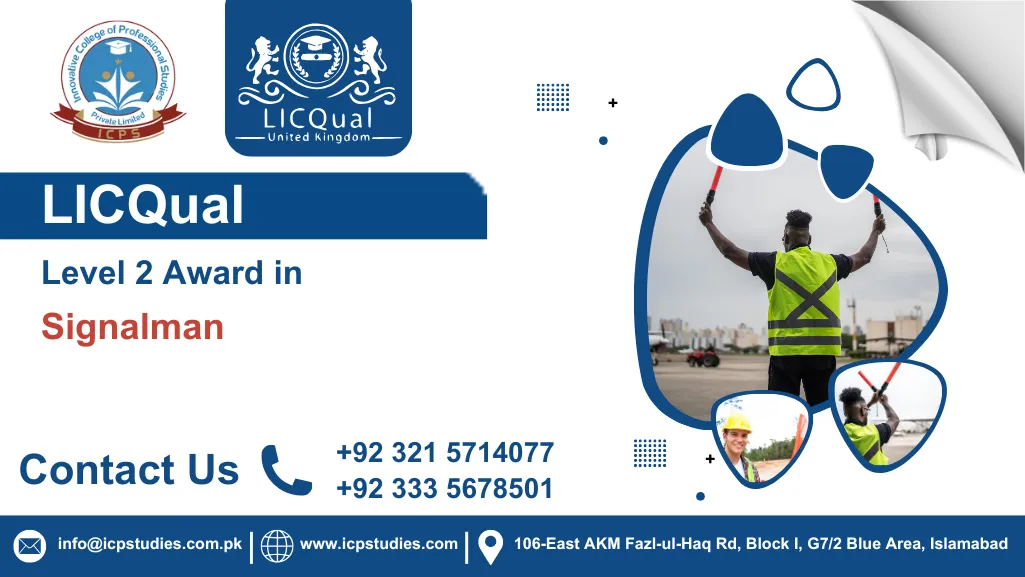
The LICQual Level 2 Award in Signalman provides learners with essential knowledge and practical skills required to guide vehicle and equipment movements safely within construction, industrial, and logistics environments. This course focuses on developing clear communication techniques, hazard awareness, and operational understanding to ensure safe coordination between signalmen, drivers, and site teams. Learners gain confidence in applying standard signalling methods, managing blind spots, and supporting smooth site operations through structured, scenario‑based learning that reflects real workplace conditions.
This qualification is not Ofqual regulated, but it aligns with industry expectations for foundational signalman training and supports professional development across various operational sectors. The course helps participants build competence in identifying site risks, using effective communication tools, and maintaining safe working zones around moving vehicles and machinery. Learners also benefit from exposure to related certifications and diplomas that complement their practical responsibilities and strengthen their overall safety awareness in dynamic work environments.
LICQual Level 2 Award in Signalman equips individuals with the core abilities needed to guide vehicle movements accurately, communicate effectively with operators, and maintain control in busy or restricted areas. Through focused instruction and hands‑on practice, learners develop the capability to manage signalling tasks with precision, support safe plant operations, and contribute to efficient site workflows. This course is ideal for those seeking to enhance their operational skills and play a vital role in maintaining safety and coordination on active worksites.
All About LICQual Level 2 Award in Signalman
Course Overview
The LICQual Level 2 Award in Signalman provides essential training for individuals responsible for guiding vehicle and equipment movements in busy or restricted work environments. This course focuses on developing clear communication skills, hazard awareness, and practical signalling techniques to ensure safe and efficient coordination between signalmen, drivers, and site personnel.
This qualification is structured into 6 units, each designed to build foundational competence in signalling practices, site safety, and operational communication. Learners engage in focused activities that strengthen their understanding of safe movement procedures, risk identification, and effective coordination, helping them perform confidently in construction, logistics, and industrial settings.
With 6 total credits, the programme offers a concise yet impactful learning experience that equips participants with the core abilities required for safe signalling operations. The curriculum emphasises practical application, enabling learners to apply standard signalling methods, manage blind spots, and support controlled vehicle manoeuvring in real‑world environments.
A total of 12 Guided Learning Hours (GLH) ensures that learners receive targeted instruction and hands‑on practice within a short, efficient timeframe. The LICQual Level 2 Award in Signalman provides the essential skills needed to contribute to safer worksites, improve communication flow, and support smooth operational activities across various industries.
A clear set of entry requirements ensures that learners enrolling in the LICQual Level 2 Award in Signalman are prepared to participate effectively in both the theoretical and practical components of the course.
- Minimum age of 16 years to ensure responsibility and readiness for safety‑related tasks
- Basic educational background such as completion of secondary schooling or related certificates and diplomas in safety, construction, logistics, or industrial operations
- Ability to understand and communicate in English at a functional level to follow instructions and safety guidelines
- Prior work experience is not required, but exposure to construction, warehousing, transport, or industrial environments is beneficial
These requirements help ensure that learners begin the programme with the foundational awareness needed to develop strong signalling skills and contribute to safe, well‑coordinated site operations.
This course is designed for individuals who aim to build essential signalling skills and support safe vehicle and equipment movements across various operational environments.
Construction Site Workers
- Individuals involved in daily site operations
- Workers assisting with vehicle entry and exit
- Labourers supporting heavy equipment movement
- Team members responsible for maintaining safe work zones
- Those seeking to improve communication and signalling abilities
Warehouse and Logistics Staff
- Personnel managing loading and unloading areas
- Workers coordinating truck and forklift movements
- Staff responsible for maintaining safe traffic flow
- Individuals aiming to reduce workplace risks
- Employees seeking to enhance operational efficiency
Transport and Fleet Operations Personnel
- Drivers working in restricted or busy areas
- Staff assisting with reversing and manoeuvring vehicles
- Team members supporting depot and yard operations
- Individuals responsible for ensuring safe vehicle positioning
- Workers aiming to meet workplace safety expectations
Industrial and Manufacturing Workers
- Employees working around moving machinery and vehicles
- Staff coordinating internal transport routes
- Workers supporting material handling operations
- Individuals aiming to improve hazard awareness
- Personnel responsible for maintaining controlled work zones
Health and Safety Assistants
- Individuals supporting workplace safety procedures
- Staff involved in monitoring site risks
- Team members assisting with compliance activities
- Workers aiming to expand practical safety skills
- Personnel contributing to safer operational environments
New Entrants to Operational Roles
- Individuals entering construction or logistics sectors
- Job seekers aiming to gain practical safety skills
- Workers exploring new opportunities in industrial settings
- Those seeking a recognised skills‑based award
- Individuals wanting to strengthen employability in safety‑related roles
This course is ideal for anyone committed to improving workplace safety, enhancing communication, and developing the essential abilities required to perform effectively as a signalman in active work environments.
Study Units
- Signalman Roles and Responsibilities in Detail
- Advanced Communication Techniques for Signalmen
- Safety Regulations and Protocols for Signalmen
- Handling Complex Signaling Operations
- Traffic Control Methods and Techniques
- Inspection and Maintenance of Signaling Equipment
Learning Outcomes
By the end of this course, learners will be able to demonstrate the essential knowledge, communication abilities, and operational awareness required to perform confidently and safely as a signalman in active railway environments.
Signalman Roles and Responsibilities in Detail
- Understand and explain the primary duties and responsibilities of a signalman within railway operations
- Manage train movements effectively while prioritizing tasks and maintaining strict safety procedures
- Recognize how signalman responsibilities influence overall railway efficiency and operational safety
- Support smooth coordination between trains, tracks, and control systems
- Maintain situational awareness to ensure safe and accurate signalling decisions
Advanced Communication Techniques for Signalmen
- Use advanced communication tools and protocols to interact clearly with train drivers and control centres
- Apply communication strategies to manage emergency situations safely and efficiently
- Maintain accurate, timely, and reliable communication during high‑pressure operational scenarios
- Coordinate effectively with railway personnel to support uninterrupted train movement
- Reduce operational risks through clear, consistent, and structured communication
Safety Regulations and Protocols for Signalmen
- Identify key safety regulations governing railway signalling operations
- Apply safety protocols to protect staff, passengers, and equipment during signalling activities
- Conduct risk assessments and respond appropriately to identified hazards
- Ensure compliance with industry standards and operational safety requirements
- Promote a safe working environment through proactive safety practices
Handling Complex Signaling Operations
- Manage challenging signalling situations such as diversions, track changes, and multiple train movements
- Apply critical thinking to resolve operational issues while maintaining safety and efficiency
- Coordinate real‑time signalling tasks with accuracy and confidence
- Adapt to changing operational conditions to maintain smooth train flow
- Support complex operations through structured planning and decision‑making
Traffic Control Methods and Techniques
- Understand and implement traffic control methods to manage train flow safely
- Balance train schedules and reduce delays through effective signal management
- Apply traffic control strategies to optimize operational efficiency
- Monitor train movements to maintain safe distances and prevent conflicts
- Support continuous railway operations through effective traffic coordination
Inspection and Maintenance of Signaling Equipment
- Conduct routine inspections to ensure signalling equipment is functioning correctly
- Apply maintenance procedures for different signalling systems and components
- Identify faults or malfunctions and take corrective action promptly
- Maintain equipment reliability to support safe and efficient train operations
- Contribute to operational integrity through consistent monitoring and upkeep
FAQs About LICQual Level 2 Award in Signalman