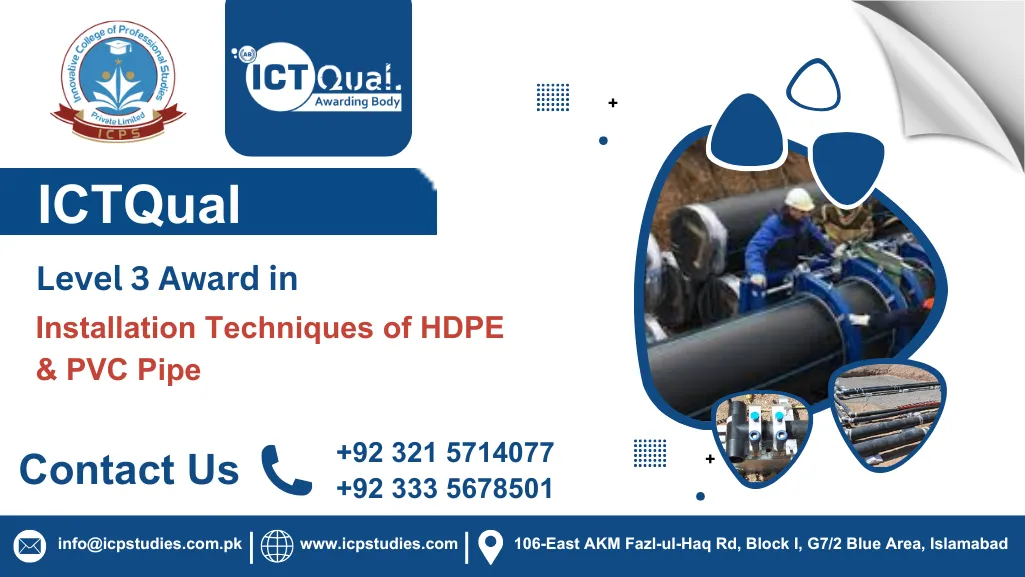
The ICTQual Level 3 Award in Installation Techniques of HDPE & PVC Pipe is a specialized professional training program designed for individuals involved in the installation, assembly, and quality assurance of thermoplastic piping systems. HDPE (High-Density Polyethylene) and PVC (Polyvinyl Chloride) pipes are widely used in industries such as water supply, construction, irrigation, oil and gas, and infrastructure projects, where durability, corrosion resistance, and compliance with industry standards are critical. This course equips participants with the practical skills and technical knowledge required to perform efficient and high-quality pipe installation, ensuring safety and long-term performance.
The ICTQual Level 3 Award in Installation Techniques of HDPE & PVC Pipe covers essential aspects of thermoplastic pipe installation, including pipe handling, alignment, jointing, welding, bending, and defect detection, along with industry best practices and quality control measures. Participants will gain hands-on experience and learn to follow proper installation procedures to maintain system integrity and meet regulatory standards.
Through a combination of theoretical instruction, practical exercises, and real-world case studies, learners will develop the expertise needed to manage installation projects, ensure compliance with standards, and enhance the reliability of HDPE and PVC piping systems. Completing the ICTQual Level 3 Award in Installation Techniques of HDPE & PVC Pipe prepares professionals to deliver safe, efficient, and high-performance piping installations in critical industrial and infrastructure environments.
All About ICTQual Level 3 Award in Installation Techniques of HDPE & PVC Pipe
Course Overview
The ICTQual Level 3 Award in Installation Techniques of HDPE & PVC Pipe is a 3-day, 9-hour intensive training program designed to provide professionals with comprehensive knowledge and practical skills in the installation of thermoplastic piping systems. This course focuses on High-Density Polyethylene (HDPE) and Polyvinyl Chloride (PVC) pipes, which are widely used in industries such as water supply, construction, irrigation, oil and gas, and infrastructure projects due to their durability, corrosion resistance, and long-term reliability.
Structured into 8 detailed study units, the program covers essential topics including pipe handling and alignment, jointing and welding techniques, bending and assembly processes, defect detection, quality assurance procedures, installation planning, site safety, and industry best practices. Participants will gain practical knowledge and hands-on experience to ensure proper pipe installation while maintaining compliance with industrial standards.
The ICTQual Level 3 Award in Installation Techniques of HDPE & PVC Pipe combines theoretical instruction, practical exercises, and real-world case studies, enabling learners to apply their knowledge directly to industrial and infrastructure projects. By the end of the program, participants will be able to manage pipe installation projects, implement quality control measures, identify and rectify installation defects, and contribute to the delivery of safe, reliable, and high-performance HDPE and PVC piping systems.
To enroll in the ICTQual Level 3 Award in Installation Techniques of HDPE & PVC Pipe, participants should meet the following criteria to ensure they can fully benefit from the training:
- Age Requirement:
Participants must be 18 years or older at the time of enrollment. - Educational Background:
A technical diploma, vocational qualification, or degree in engineering, materials, construction, or a related field is recommended.Candidates with relevant practical experience in pipe installation or industrial projects may also be eligible. - Experience:
Some experience in pipe installation, welding, jointing, or industrial construction projects is desirable.Basic understanding of HDPE and PVC pipe systems, installation procedures, and quality control practices is advantageous. - English Language Proficiency:
Learners must have a good command of English, both written and spoken.
The ICTQual Level 3 Award in Installation Techniques of HDPE & PVC Pipe is designed for professionals involved in the installation, assembly, and quality assurance of thermoplastic piping systems. It is ideal for individuals who want to develop technical expertise in HDPE and PVC pipe installation and ensure safe, efficient, and high-quality deployment in industrial and infrastructure projects.
This course is particularly suitable for:
- Installation Engineers and Technicians responsible for assembling and welding HDPE and PVC pipes.
- Site Supervisors and Project Managers overseeing pipe installation operations, quality control, and project efficiency.
- Quality Assurance and Quality Control Personnel tasked with inspecting installed pipes, detecting defects, and ensuring compliance with industry standards.
- Materials Engineers and Technical Specialists seeking practical knowledge of thermoplastic pipe jointing, bending, welding, and alignment techniques.
- Professionals working in industries such as water supply, construction, irrigation, oil and gas, and infrastructure, where reliable HDPE and PVC piping systems are critical.
The ICTQual Level 3 Award in Installation Techniques of HDPE & PVC Pipe is ideal for individuals aiming to enhance installation skills, quality assurance, and process efficiency, contributing to the safe, durable, and high-performance operation of thermoplastic piping systems.
Study Units
This qualification, theICTQual Level 3 Award in Installation Techniques of HDPE & PVC Pipe, consists of 8 mandatory units.
- Introduction to Pipe Installation
- HDPE and PVC Pipe Materials
- Health and Safety in Pipe Installation
- Pipe Handling, Transportation, and Storage
- Pipe Joining Methods
- Installation Techniques
- Quality Control and Inspection
- Environmental Considerations and Sustainability
Learning Outcomes
Learning Outcomes for the Study Units:
1. Introduction to Pipe Installation
- Understand the role of piping systems in infrastructure projects such as construction, water management, and agriculture.
- Identify the basic principles, tools, and industry standards involved in pipe installation training.
- Recognise how proper installation ensures the safe and efficient transport of fluids and gases across industries.
- Build a strong foundation for progressing to advanced installation techniques.
2. HDPE and PVC Pipe Materials
- Demonstrate knowledge of the properties, applications, and benefits of HDPE pipes and PVC pipe systems.
- Understand material selection for different environments, including water supply, wastewater, and irrigation.
- Compare the durability, flexibility, and cost-effectiveness of HDPE and PVC in infrastructure projects.
- Gain awareness of how material properties affect long-term performance and maintenance.
3. Health and Safety in Pipe Installation
- Apply health and safety regulations relevant to pipe installation sites.
- Identify common risks in handling HDPE and PVC pipe systems and implement effective control measures.
- Develop safe working practices to protect both workers and the environment.
- Promote a safety-first culture in all pipe installation activities.
4. Pipe Handling, Transportation, and Storage
- Learn correct methods for handling HDPE and PVC pipes to prevent damage.
- Understand safe transportation procedures for delivering pipes to installation sites.
- Apply best practices for storage to maintain material quality before installation.
- Reduce risks of defects, contamination, or accidents during handling and storage.
5. Pipe Joining Methods
- Gain practical knowledge of different joining systems used in HDPE and PVC pipe installation, including welding, solvent cementing, and mechanical fittings.
- Understand the strengths and limitations of each method in relation to project requirements.
- Apply joining techniques that ensure long-lasting, leak-free, and efficient pipe systems.
- Troubleshoot common issues during the jointing process to maintain quality standards.
6. Installation Techniques
- Master essential installation methods used in water distribution, drainage, irrigation, and construction projects.
- Apply step-by-step techniques for trenching, alignment, and pipe laying in varied environments.
- Understand the impact of soil conditions, pressure requirements, and environmental factors on installation outcomes.
- Deliver installations that meet safety, efficiency, and durability standards.
7. Quality Control and Inspection
- Conduct inspections to ensure pipe installation meets industry regulations and project specifications.
- Apply quality assurance practices during all stages of HDPE and PVC pipe system installation.
- Recognise defects or errors in installation and take corrective measures.
- Develop documentation and reporting skills to support quality control processes.
8. Environmental Considerations and Sustainability
- Understand the environmental impact of HDPE and PVC pipe installation in infrastructure projects.
- Apply sustainable practices such as waste reduction, recycling, and resource efficiency.
- Explore how durable piping systems support long-term water management and sustainable agriculture.
- Ensure compliance with environmental regulations while contributing to greener infrastructure solutions.
FAQs ICTQual Level 3 Award in Installation Techniques of HDPE & PVC Pipe