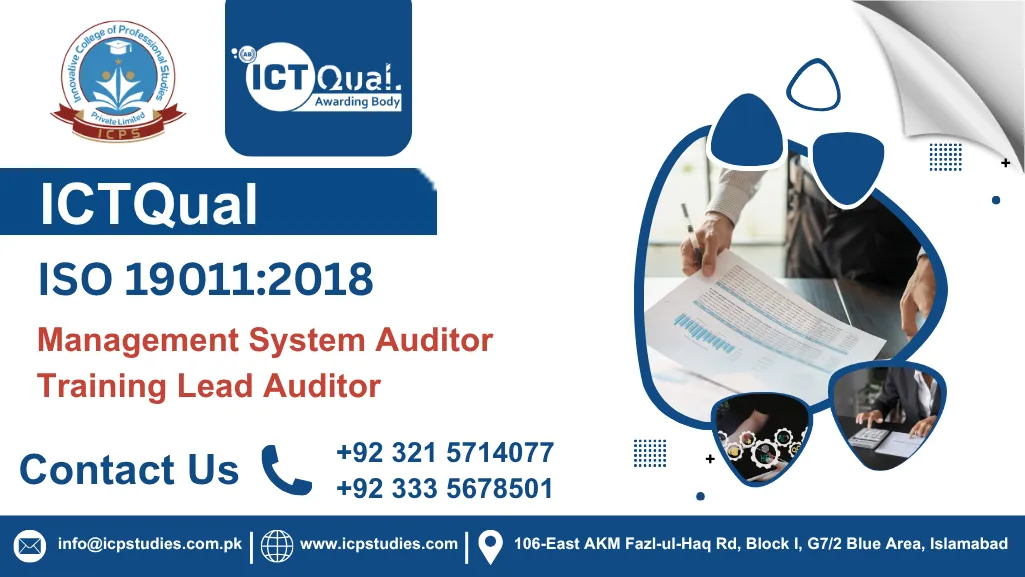
The ICTQual ISO 19011:2018 Management System Auditor Training Lead Auditor Course is a professionally designed program that equips learners with the knowledge and practical skills required to audit management systems effectively across various international standards. Based on the globally recognized ISO 19011:2018 guidelines, this course focuses on auditing principles, program management, and the competence required to conduct first-party and second-party audits with confidence and consistency.
This course provides a comprehensive understanding of audit planning, execution, reporting, and follow-up processes applicable to a wide range of management systems, including quality, environmental, and occupational health and safety standards. Learners will develop the ability to manage audit programs, assess risks, evaluate compliance, and apply evidence-based auditing techniques. The training also emphasizes communication skills, auditor behavior, and decision-making required to lead successful audits in complex organizational environments.
By enrolling in the ICTQual ISO 19011:2018 Management System Auditor Training Lead Auditor Course, learners will enhance their auditing capabilities and broaden their career opportunities across multiple industries. This course prepares professionals to lead audits, improve organizational performance, and ensure continual improvement in management systems, making them valuable assets in today’s compliance-driven and quality-focused global market.
All About ICTQual ISO 19011:2018 Management System Auditor Training Lead Auditor
Course Overview
The ICTQual ISO 19011:2018 Management System Auditor Training Lead Auditor Course is a comprehensive 5-day training program designed to develop practical auditing skills applicable across multiple management systems. This course focuses on building the competence required to plan, conduct, manage, and lead audits in accordance with ISO 19011:2018 guidelines, ensuring consistency, effectiveness, and value-driven audit outcomes.
The program is structured into 8 detailed study units, each covering essential elements of management system auditing. Learners will explore key topics such as auditing principles and concepts, audit program management, risk-based audit planning, audit preparation and execution, communication and interviewing techniques, evaluation of audit evidence, reporting and documentation, and corrective action with continual improvement processes. The course integrates practical exercises and real-world scenarios to enhance the application of auditing methodologies.
Throughout the 5-day training, learners will participate in interactive sessions, group activities, and case-based learning to strengthen analytical thinking and decision-making skills. The course emphasizes auditor competence, professional conduct, and effective audit team leadership. By the end of the program, learners will be well-prepared to conduct and lead management system audits across various standards, ensuring compliance and driving continuous organizational improvement.
The ICTQual ISO 19011:2018 Management System Auditor Training Lead Auditor Course has the following recommended entry requirements to ensure learners can effectively understand and apply the course content:
- Age Requirement:
Learners must be at least 18 years of age at the time of enrollment. - Educational Background:
A minimum of a high school diploma or equivalent qualification is required. However, a background in quality management, environmental management, health and safety, or a related discipline is highly beneficial. - Experience:
It is recommended that learners have prior experience in auditing, compliance, quality assurance, or management systems. Familiarity with ISO standards (such as ISO 9001, ISO 14001, or ISO 45001) will be advantageous, though not mandatory. - English Language Proficiency:
Learners must have a good command of English, both written and spoken.
The ICTQual ISO 19011:2018 Management System Auditor Training Lead Auditor Course is designed for professionals who want to develop or enhance their auditing skills across multiple management systems. It is ideal for individuals seeking to gain expertise in auditing principles, audit program management, and leading effective audits in line with ISO 19011:2018 guidelines.
This course is ideal for:
- Internal and External Auditors
Professionals who conduct audits or wish to become certified auditors across various ISO management systems. - Quality, Environmental, and HSE Professionals
Individuals working in ISO 9001, ISO 14001, ISO 45001, or integrated management systems. - Compliance and Regulatory Officers
Those responsible for ensuring organizations meet regulatory requirements and international standards. - Management System Consultants
Consultants providing advisory services on implementation, auditing, and improvement of management systems. - Audit Program Managers
Professionals responsible for planning, managing, and overseeing audit programs within organizations. - Risk and Compliance Managers
Individuals managing organizational risks and ensuring effective governance and compliance practices. - Operations and Department Managers
Managers who need to understand auditing processes to improve performance and ensure system effectiveness. - Professionals Seeking Career Advancement
Individuals aiming to build or advance careers in auditing, compliance, and management system certification.
This course equips learners with the essential skills to plan, conduct, and lead audits across multiple standards, making it highly valuable for professionals seeking versatility and growth in auditing and compliance roles.
Study Units
This qualification, the ICTQual ISO 19011:2018 Management System Auditor Training Lead Auditor, consists of 8 mandatory units.
- Introduction to ISO 19011:2018 and Auditing Principles
- Audit Planning and Preparation
- Conducting Management System Audits
- Audit Reporting and Documentation
- Auditor Roles, Responsibilities, and Competencies
- Corrective Actions and Continuous Improvement in Auditing
- Risk-Based Thinking in Auditing
- Ethical Considerations and Professionalism in Auditing
Learning Outcomes:
Here are the learning outcomes for each study unit:
Introduction to ISO 19011:2018 and Auditing Principles
- Explain the purpose and scope of ISO 19011:2018 in management system auditing.
- Identify key auditing principles and their application in effective audit processes.
- Understand the risk-based approach to auditing as outlined in ISO 19011:2018.
Audit Planning and Preparation
- Develop a structured audit plan, including objectives, scope, and criteria.
- Identify key resources, stakeholders, and documentation required for audit preparation.
- Apply risk assessment techniques to prioritise audit activities.
Conducting Management System Audits
- Execute audit activities in accordance with ISO 19011:2018 guidelines.
- Use appropriate questioning and observation techniques to gather audit evidence.
- Identify nonconformities and areas for improvement within a management system.
Audit Reporting and Documentation
- Prepare clear and concise audit reports that align with ISO 19011:2018 requirements.
- Document audit findings, including nonconformities and opportunities for improvement.
- Communicate audit results effectively to stakeholders.
Auditor Roles, Responsibilities, and Competencies
- Define the key roles and responsibilities of auditors and lead auditors.
- Demonstrate essential competencies required for conducting and managing audits.
- Understand the importance of impartiality, objectivity, and professional judgement in auditing.
Corrective Actions and Continuous Improvement in Auditing
- Recommend effective corrective actions to address nonconformities.
- Monitor the implementation of corrective and preventive measures.
- Promote continuous improvement within an organisation’s management system.
Risk-Based Thinking in Auditing
- Apply risk-based thinking to identify potential threats and opportunities during audits.
- Evaluate the effectiveness of risk management processes within audited organisations.
- Assess the impact of risks on management system performance.
Ethical Considerations and Professionalism in Auditing
- Uphold ethical auditing practices, including confidentiality and integrity.
- Recognise potential conflicts of interest and strategies to mitigate bias.
- Ensure compliance with professional auditing standards and codes of conduct.
FAQs ICTQual ISO 19011:2018 Management System Auditor Training Lead Auditor