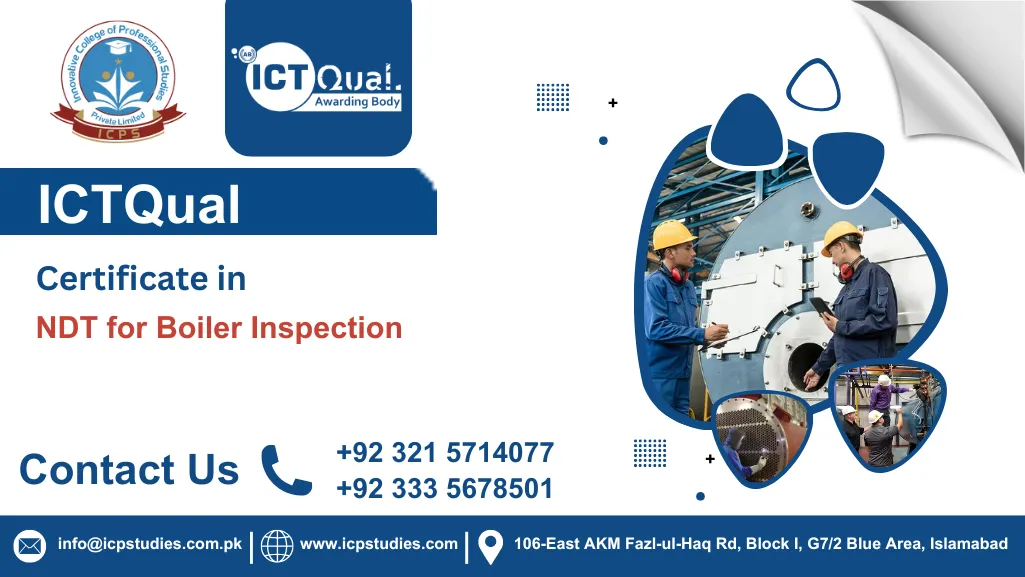
The ICTQual Certificate in NDT for Boiler Inspection is a specialized training program designed for professionals seeking to enhance their skills in inspecting boilers and pressure vessels using advanced Non-Destructive Testing (NDT) techniques. Boilers are critical components in power generation, manufacturing, and industrial processes, and their safe and efficient operation depends on accurate inspection and maintenance. This course focuses on equipping participants with the knowledge and practical expertise needed to identify defects, assess material integrity, and ensure compliance with industry safety standards.
The ICTQual Certificate in NDT for Boiler Inspection provides a comprehensive understanding of various NDT methods applied specifically to boiler systems, including visual inspection, ultrasonic testing, radiographic testing, magnetic particle testing, and dye penetrant testing. Participants will learn how to detect corrosion, cracks, weld defects, and other structural anomalies that may compromise the performance or safety of boilers.
Through a combination of theoretical instruction and practical applications, learners will develop the skills required to conduct accurate inspections, interpret NDT results, and prepare detailed inspection reports. By completing the ICTQual Certificate in NDT for Boiler Inspection, professionals will enhance their expertise in industrial boiler inspection, improve defect detection capabilities, and contribute to the reliability, safety, and operational efficiency of critical industrial systems.
All About ICTQual Certificate in NDT for Boiler Inspection
Course Overview
The ICTQual Certificate in NDT for Boiler Inspection is a 3-day intensive training program designed to equip professionals with the knowledge and practical skills required for effective boiler inspection using advanced Non-Destructive Testing (NDT) methods. Boilers and pressure vessels are vital in industries such as power generation, manufacturing, and petrochemical processing, making accurate inspection and defect detection critical for safety and operational efficiency.
Structured across 5 study units, the course covers essential NDT techniques applicable to boiler inspection, including visual inspection, ultrasonic testing (UT), radiographic testing (RT), magnetic particle testing (MT), and dye penetrant testing (PT). Participants will gain a deep understanding of how to detect corrosion, cracks, weld defects, and other structural anomalies that could affect boiler performance.
The ICTQual Certificate in NDT for Boiler Inspection emphasizes practical application alongside theoretical knowledge. Participants will learn to perform inspections, interpret NDT results accurately, and document findings in detailed reports for maintenance and safety compliance.
To enroll in the ICTQual Certificate in NDT for Boiler Inspection, participants should meet the following criteria to ensure they can fully benefit from the training and technical content of the program:
- Age Requirement:
Participants must be 18 years or older at the time of enrollment. - Educational Background:
A technical diploma, vocational qualification, or degree in engineering, science, or a related technical field is recommended.Individuals with relevant industrial or inspection experience may also be considered. - Experience:
Basic knowledge or practical experience in Non-Destructive Testing (NDT) is highly recommended.Familiarity with inspection methods such as ultrasonic testing, radiographic testing, magnetic particle testing, or visual inspection is beneficial. - English Language Proficiency:
Learners must have a good command of English, both written and spoken.
The ICTQual Certificate in NDT for Boiler Inspection is designed for professionals involved in industrial inspection, maintenance, and quality assurance who want to enhance their expertise in boiler and pressure vessel inspections using advanced Non-Destructive Testing (NDT) methods.
This course is particularly suitable for:
- NDT Technicians and Inspectors working with boilers, pressure vessels, and industrial piping who need to strengthen their skills in detecting defects and ensuring structural integrity.
- Quality Control and Quality Assurance Professionals responsible for maintaining compliance with safety and industry standards.
- Maintenance and Reliability Engineers involved in boiler operation, asset integrity management, and preventive maintenance programs.
- Industrial Engineers and Technical Specialists seeking practical knowledge of NDT techniques such as ultrasonic testing (UT), radiographic testing (RT), magnetic particle testing (MT), and dye penetrant testing (PT).
- Professionals in industries such as power generation, manufacturing, oil and gas, and petrochemical plants where safe and efficient boiler operation is critical.
The ICTQual Certificate in NDT for Boiler Inspection is ideal for individuals looking to improve inspection accuracy, defect detection, and reporting skills, while ensuring the safety, reliability, and performance of industrial boiler systems.
Study Units
This qualification, the ICTQual Certificate in NDT for Boiler Inspection, consists of 5 mandatory units.
- Fundamentals of NDT
- Boiler Construction and Components
- Inspection Techniques and Procedures
- Regulatory Compliance and Standards
- Quality Assurance and Continuous Improvement
Learning Outcomes
Learning Outcomes for the Study Units:
1. Fundamentals of NDT
- Understanding NDT Techniques: Gain proficiency in various non-destructive testing (NDT) methods such as ultrasonic testing, radiographic testing, magnetic particle testing, and dye penetrant testing.
- Application of NDT Techniques: Learn how to apply NDT techniques effectively to inspect boiler components, ensuring thorough detection of defects and discontinuities.
- Interpretation of NDT Results: Develop skills in interpreting NDT results to assess the structural integrity and condition of boiler materials and components.
2. Boiler Construction and Components
- Knowledge of Boiler Types and Applications: Understand the different types of boilers used across industries and their specific applications.
- Understanding Boiler Materials: Gain insights into the properties, strengths, and weaknesses of boiler construction materials.
- Identification of Critical Components: Identify critical boiler components prone to wear, corrosion, and structural degradation, and understand their importance in overall boiler performance.
3. Inspection Techniques and Procedures
- Execution of NDT Procedures: Acquire practical skills in executing NDT procedures for boiler inspection, including setup, calibration, and operation of testing equipment.
- Defect Detection and Evaluation: Learn to detect and evaluate defects, discontinuities, and other anomalies using NDT techniques.
- Safety Protocols: Understand and adhere to safety protocols during NDT inspections to ensure the safety of personnel and equipment.
4. Regulatory Compliance and Standards
- Knowledge of Industry Standards: Familiarize yourself with industry regulations, standards, and codes relevant to boiler inspection, such as the ASME Boiler and Pressure Vessel Code, API standards, and local regulatory requirements.
- Compliance Requirements: Understand the documentation, reporting, and record-keeping requirements necessary for compliance with regulatory standards.
- Ethical and Professional Conduct: Uphold ethical and professional conduct in accordance with industry best practices and regulatory guidelines.
5. Quality Assurance and Continuous Improvement
- Quality Control Measures: Implement quality control measures in NDT, including calibration, validation, and reliability assessment of inspection results.
- Continuous Improvement Strategies: Develop strategies for continuous improvement in boiler inspection techniques, procedures, and quality assurance practices.
- Role of Feedback and Corrective Actions: Utilize feedback mechanisms and corrective actions to enhance inspection effectiveness, reliability, and overall operational efficiency
FAQs ICTQual Certificate in NDT for Boiler Inspection