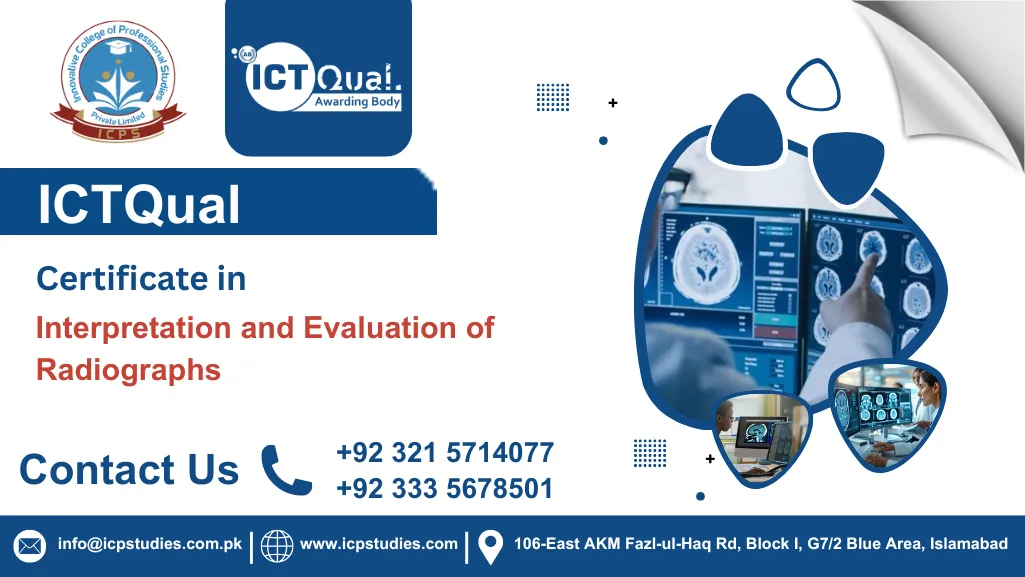
The ICTQual Certificate in Interpretation and Evaluation of Radiographs is a specialized training program designed for Non-Destructive Testing (NDT) professionals who aim to advance their skills in analyzing and evaluating radiographic inspection results. Radiography is a critical NDT method used across industries such as oil and gas, power generation, manufacturing, and construction to detect internal defects, assess weld quality, and ensure material integrity. Accurate interpretation and evaluation of radiographs are essential for maintaining operational safety, improving defect detection, and supporting quality assurance processes.
The ICTQual Certificate in Interpretation and Evaluation of Radiographs equips participants with the knowledge and practical expertise required to understand radiographic images, identify defects such as cracks, porosity, inclusions, and weld imperfections, and apply standardized evaluation procedures. The course emphasizes best practices in image analysis, reporting, and compliance with industry standards, helping professionals make informed inspection decisions.
Through a combination of theoretical instruction and hands-on exercises, learners will gain a thorough understanding of radiographic principles, exposure techniques, image quality assessment, and interpretation strategies. By completing the ICTQual Certificate in Interpretation and Evaluation of Radiographs, participants will enhance their competency in radiograph evaluation, defect recognition, and NDT reporting, enabling them to contribute to safer, more reliable, and efficient industrial operations across critical sectors.
All About ICTQual Certificate in Interpretation and Evaluation of Radiographs
Course Overview
The ICTQual Certificate in Interpretation and Evaluation of Radiographs is a focused 3-day training program designed to provide professionals with advanced skills in analyzing and evaluating radiographic inspection results. Radiography is a vital Non-Destructive Testing (NDT) method used in industries such as oil and gas, power generation, manufacturing, and construction to detect internal defects, assess weld integrity, and ensure material reliability.
Structured across 8 comprehensive study units, the course covers all aspects of radiograph interpretation, including image quality assessment, defect recognition, exposure techniques, evaluation standards, and reporting procedures. Participants will develop the ability to accurately identify cracks, porosity, inclusions, and weld defects, ensuring inspections meet industry quality and safety requirements.
The ICTQual Certificate in Interpretation and Evaluation of Radiographs combines theoretical instruction with practical exercises and real-world case studies, enabling learners to apply evaluation techniques effectively in industrial scenarios. By the end of the program, participants will be able to interpret radiographs confidently, evaluate defects accurately, and produce detailed, professional inspection reports.
This course is ideal for NDT technicians, inspectors, quality control professionals, and engineers seeking to enhance their expertise in radiographic evaluation, improve defect detection accuracy, and support safe and reliable operations in critical industrial environments.
To enroll in the ICTQual Certificate in Interpretation and Evaluation of Radiographs, participants should meet the following criteria to ensure they can fully benefit from the course content:
- Age Requirement:
Participants must be 18 years or older at the time of enrollment. - Educational Background:
A technical diploma, vocational qualification, or degree in engineering, science, or a related technical field is recommended.Individuals with relevant industrial or inspection experience may also be considered. - Experience:
Basic knowledge or practical experience in Non-Destructive Testing (NDT) is highly recommended.Familiarity with radiographic testing, ultrasonic testing, or other NDT techniques will help participants better understand course material and evaluation procedures. - English Language Proficiency:
Learners must have a good command of English, both written and spoken.
The ICTQual Certificate in Interpretation and Evaluation of Radiographs is designed for professionals involved in Non-Destructive Testing (NDT), industrial inspection, and quality assurance who want to strengthen their skills in interpreting and evaluating radiographic inspection results. Accurate radiograph evaluation is essential for detecting defects, assessing weld quality, and ensuring the safety and reliability of critical industrial components.
This course is particularly suitable for:
- NDT Technicians and Inspectors who perform radiographic inspections and want to enhance their ability to interpret radiographs accurately.
- Quality Control and Quality Assurance Professionals responsible for reviewing inspection results and ensuring compliance with industry standards.
- Maintenance and Reliability Engineers involved in monitoring the condition of pipelines, pressure vessels, and welded structures.
- Industrial Engineers and Technical Specialists seeking practical knowledge in radiograph evaluation, defect recognition, and reporting procedures.
- Professionals working in industries such as oil and gas, power generation, manufacturing, and construction, where accurate radiographic inspection is critical.
The ICTQual Certificate in Interpretation and Evaluation of Radiographs is ideal for individuals aiming to improve defect detection accuracy, image interpretation skills, and inspection reporting capabilities, contributing to safer, more efficient, and reliable industrial operations.ards of safety and reliability in their industrial operations.
Study Units
This qualification, the ICTQual Certificate in Interpretation and Evaluation of Radiographs, consists of 8 mandatory units.
- Radiographic Principles and Techniques
- Anatomy and Physiology
- Radiographic Pathology
- Advanced Imaging Modalities
- Quality Assurance and Control
- Clinical Practice and Case Studies
- Legal and Ethical Considerations
- Continuing Professional Development
Learning Outcomes
Learning Outcomes for the Study Units:
Radiographic Principles and Techniques:
- Demonstrate proficiency in producing high-quality radiographic images.
- Apply radiation safety measures effectively.
- Understand the principles of image acquisition and processing.
Anatomy and Physiology:
- Identify and describe anatomical structures visible in radiographic images.
- Explain the physiological processes relevant to radiographic interpretation.
- Correlate anatomical variations with imaging findings.
Radiographic Pathology:
- Recognize common pathological conditions in radiographs.
- Differentiate between normal anatomical structures and pathological findings.
- Interpret radiographic signs of various diseases and injuries.
Advanced Imaging Modalities:
- Interpret radiographic images from advanced modalities such as MRI, CT scans, and ultrasound.
- Understand the unique features and limitations of each imaging modality.
- Apply appropriate techniques for optimal imaging interpretation.
Quality Assurance and Control:
- Implement quality control measures to ensure accurate radiographic interpretations.
- Evaluate and optimize radiographic images for diagnostic purposes.
- Adhere to standards and protocols to minimize errors in radiography.
Clinical Practice and Case Studies:
- Apply theoretical knowledge to real-world clinical scenarios.
- Analyze and interpret radiographic images under supervised conditions.
- Develop proficiency in making accurate diagnostic decisions based on radiographic findings.
Legal and Ethical Considerations:
- Understand legal frameworks and regulations governing radiographic practice.
- Uphold ethical standards in patient care and confidentiality.
- Apply principles of informed consent and patient advocacy in radiography.
Continuing Professional Development:
- Recognize the importance of lifelong learning in radiographic practice.
- Pursue opportunities for professional growth and specialization.
- Stay updated with advancements and changes in radiographic technology and practice guidelines.
FAQs ICTQual Certificate in Interpretation and Evaluation of Radiographs