
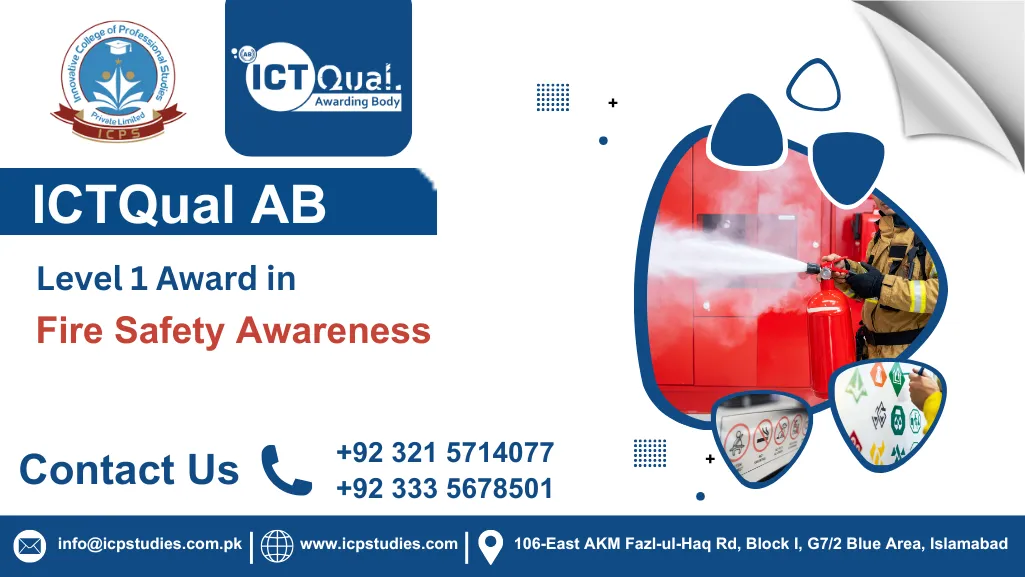
The ICTQual AB Level 1 Award in Fire Safety Awareness has been carefully designed to introduce learners to the fundamental principles of fire safety, focusing on prevention, hazard recognition, and emergency response. This program emphasizes the importance of building a strong foundation in safety practices, enabling participants to understand how fire hazards can impact lives, property, and organizational continuity. By combining accessible learning with practical insights, the award ensures that learners develop the confidence to take proactive steps in maintaining safe environments.
The training covers essential areas such as the fire triangle, common workplace hazards, fire prevention strategies, safe evacuation procedures, and the correct use of fire safety equipment. Learners will also explore the importance of cultivating a safety-first mindset, where awareness and preparedness are integrated into everyday activities. The program balances theoretical knowledge with practical application, making it suitable for individuals from diverse backgrounds, including employees, supervisors, and those seeking to strengthen their understanding of occupational safety.
The ICTQual AB Level 1 Award in Fire Safety Awareness is a recognized certification delivered through approved training centres, providing learners with a credible qualification that highlights their competence in fire safety practices. While not Ofqual regulated, the award complements other certifications and diplomas in occupational safety, health, and fire risk management, making it a valuable achievement for individuals committed to professional development. By completing this program, learners demonstrate their dedication to workplace safety and contribute to creating safer, more resilient organizations and communities.
All About ICTQual AB Level 1 Award in Fire Safety Awareness
Course Overview
The ICTQual Level 1 Award in Fire Safety Awareness is a short yet impactful training program designed to introduce learners to the essential principles of fire safety. Delivered over 1 day and 3 hours, the course provides a clear understanding of fire hazards, prevention strategies, and emergency response procedures. It is tailored for individuals who want to strengthen their awareness of fire safety and contribute to safer workplaces and communities.
The program covers key topics such as the fire triangle, common workplace hazards, safe evacuation procedures, and the correct use of fire safety equipment. Learners will also explore the importance of maintaining a proactive safety culture, ensuring that fire safety awareness becomes part of everyday practice. By combining theoretical knowledge with practical insights, the course ensures participants are well-prepared to respond effectively in case of emergencies.
A mandatory assessment is included as part of the ICTQual Level 1 Award in Fire Safety Awareness, conducted exclusively through Approved Training Centres. This ensures that learners are evaluated under standardized conditions, reinforcing the credibility and integrity of the certification. The assessment is designed to measure both knowledge and practical competence, confirming that participants can apply fire safety principles confidently in real-world scenarios.
By completing the ICTQual Level 1 Award in Fire Safety Awareness, learners gain a recognized certification that highlights their commitment to workplace safety. The program is particularly valuable for individuals seeking to enhance their professional profile and complements other certifications and diplomas in occupational safety, health, and fire risk management
To enroll in the ICTQual AB Level 1 Award in Fire Safety Awareness, learners are expected to meet the following basic requirements:
- Age Requirement: Participants should be at least 16 years old to ensure readiness for safety training.
- Educational Background: A basic level of secondary education is recommended. Learners with prior exposure to safety-related learning, such as certificates or diplomas in Occupational Safety, Fire Safety, or Health & Safety, will find the program particularly beneficial.
- Language Proficiency: Participants must have a good command of English, both written and spoken, to understand course materials and participate effectively in assessments.
- Work Experience: No prior work experience is mandatory, but individuals with exposure to workplace environments, especially in industries where fire hazards exist, will gain added value from the training.
These requirements ensure that learners can actively engage with the course content and successfully complete the mandatory assessment conducted through Approved Training Centres.
The ideal learner for the ICTQual AB Level 1 Award in Fire Safety Awareness is someone motivated to strengthen their knowledge of workplace safety and contribute to safer environments. This profile highlights the qualities and background that make a participant well-suited for the program.
Professional Awareness
- Understands the importance of fire safety in everyday and workplace environments.
- Recognizes the risks associated with fire hazards in different settings.
- Values structured training and professional development.
- Seeks to improve personal and organizational safety standards.
- Demonstrates responsibility in occupational roles.
Educational Background
- Holds a basic secondary education qualification.
- May have completed related certificates or diplomas in Occupational Safety, Fire Safety, or Health & Safety.
- Possesses foundational knowledge of workplace safety practices.
- Comfortable with structured learning environments.
- Prepared to engage with both theoretical and practical aspects of training.
Communication Skills
- Able to read and comprehend English training materials.
- Capable of following instructions during assessments and practical exercises.
- Communicates effectively with peers and trainers.
- Listens attentively and applies feedback constructively.
- Demonstrates confidence in group discussions and safety drills.
Workplace Readiness
- Interested in applying safety knowledge to real-world scenarios.
- May already be working in industries with fire safety concerns.
- Prepared to take on responsibilities related to safety compliance.
- Understands the importance of teamwork in emergency situations.
- Seeks to contribute positively to organizational safety culture.
Personal Attributes
- Motivated to learn and improve professional skills.
- Responsible and attentive to detail.
- Committed to maintaining high standards of safety.
- Adaptable to different workplace environments.
- Values continuous improvement and lifelong learning.
Career Orientation
- Seeks recognized certifications to strengthen professional credibility.
- Interested in enhancing employability in safety-related roles.
- Aims to build a career in occupational safety and risk management.
- Understands the importance of certifications in professional growth.
- Prepared to use the award as a foundation for further development.
Study Units
- Introduction to Fire Safety
- Understanding Fire
- Fire Prevention
- Fire Detection and Warning Systems
- Emergency Response Procedures
- Using Firefighting Equipment
- Human Behavior in Fire Emergencies
- Fire Safety and First Aid
Learning Outcomes
The following learning outcomes highlight the essential knowledge and skills learners will gain through the ICTQual Level 1 Award in Fire Safety Awareness. Each study unit is designed to build practical competence and confidence in managing fire safety across workplace environments.
Introduction to Fire Safety
- Understand why fire safety is crucial in the workplace and its impact on lives and operations.
- Familiarize with key fire safety laws, regulations, and compliance requirements.
- Recognize the roles and responsibilities of employers, employees, and fire safety officers.
- Appreciate how fire safety contributes to organizational resilience and employee well-being.
- Develop awareness of the importance of integrating fire safety into daily practices.
Understanding Fire
- Explain the fire triangle and the interaction of heat, fuel, and oxygen.
- Differentiate between classes of fires (A, B, C, D, F) and their characteristics.
- Recognize common causes of workplace fires and strategies to prevent them.
- Understand how environmental conditions influence fire behaviour.
- Apply knowledge of fire science to workplace safety planning.
Fire Prevention
- Conduct systematic fire risk assessments to identify hazards.
- Apply preventive measures such as safe storage and proper housekeeping.
- Interpret fire safety signage and understand its role in prevention.
- Develop awareness of workplace-specific fire risks and mitigation strategies.
- Promote a proactive culture of prevention within organizations.
Fire Detection and Warning Systems
- Identify different fire detection devices such as smoke and heat detectors.
- Understand the operation and importance of fire alarm systems.
- Recognize how detection systems support early evacuation and safety.
- Explore the integration of detection systems into workplace safety planning.
- Appreciate the role of technology in minimizing fire risks.
Emergency Response Procedures
- Develop effective evacuation plans tailored to workplace needs.
- Recognize safe assembly points and conduct accurate headcounts.
- Understand the responsibilities of fire wardens and designated personnel.
- Apply structured emergency response strategies during fire incidents.
- Promote teamwork and coordination during evacuation procedures.
Using Firefighting Equipment
- Demonstrate correct use of fire extinguishers including water, foam, CO2, and dry powder.
- Understand the use of fire blankets, hoses, and other firefighting tools.
- Apply practical skills in hands-on training scenarios.
- Recognize the limitations of firefighting equipment in different situations.
- Ensure proper maintenance and readiness of firefighting tools.
Human Behavior in Fire Emergencies
- Understand typical psychological responses during fire emergencies.
- Recognize how panic and stress affect evacuation outcomes.
- Apply communication strategies to maintain calm and order.
- Encourage responsible behaviour during emergencies.
- Promote awareness of human factors in fire safety planning.
Fire Safety and First Aid
- Provide basic first aid treatment for burns and fire-related injuries.
- Coordinate effectively with emergency medical services during incidents.
- Understand immediate care procedures for fire-related injuries.
- Recognize the importance of first aid in minimizing harm.
- Apply practical skills to support injured individuals until professional help arrives.
FAQs About ICTQual AB Level 1 Award in Fire Safety Awareness