
Sustainable Resource Management: How Organisations Reduce Waste, Water and Energy Use
Sustainable resource management has become an essential part of modern organisational operations as businesses face increasing environmental pressures, rising operational costs and growing expectations for responsible resource consumption. Organisations depend on natural resources such as water, energy, raw materials and land to maintain their activities. However, inefficient consumption, excessive waste generation and unnecessary energy use can contribute to environmental degradation, pollution and resource depletion.
Sustainable resource management focuses on using available resources efficiently while reducing environmental impacts throughout organisational activities. It involves practical approaches such as water conservation, energy efficiency, waste minimisation, recycling, sustainable procurement and the adoption of circular economy principles.
Effective resource management enables organisations to improve environmental performance, enhance operational efficiency, reduce unnecessary resource consumption and support long-term sustainability.
Understanding how organisations reduce waste, water and energy consumption is therefore important for learners, environmental professionals and business managers responsible for implementing sustainable practices.
What is Sustainable Resource Management?
Sustainable resource management is the systematic planning, monitoring and efficient use of natural and organisational resources to minimise environmental impacts while maintaining operational and economic performance.
It involves managing resources throughout their life cycles, from procurement and consumption to reuse, recovery and disposal.
The main objective is to ensure that organisations obtain maximum value from available resources without unnecessary consumption or environmental damage.
For example, a manufacturing company can introduce water recycling systems, improve machinery efficiency, reduce packaging materials and recover production waste. These measures help reduce resource consumption while supporting more sustainable production processes.
According to the United Nations Environment Programme (UNEP), resource efficiency is important for reducing the relationship between economic growth and environmental degradation. UNEP – UN Environment Programme+1
Key Principles of Sustainable Resource Management
Organisations can establish effective resource management systems through several important principles:
- Resource conservation: Use water, energy and raw materials responsibly.
- Waste prevention: Avoid unnecessary waste before it enters the disposal process.
- Resource efficiency: Improve operational processes to achieve greater output with fewer resources.
- Reuse and recycling: Extend the useful life of materials and recover valuable resources.
- Sustainable procurement: Select products and materials with lower environmental impacts.
- Continuous improvement: Monitor performance and regularly improve environmental practices.
These principles provide a foundation for integrating sustainability into organisational policies, workplace procedures and operational planning.
Why is Sustainable Resource Management Important for Organisations?
Sustainable resource management provides significant environmental, operational and economic benefits by helping organisations use natural resources responsibly and minimise unnecessary consumption. By monitoring resource utilisation, businesses can identify operational inefficiencies, control expenditure, reduce environmental impacts and improve overall productivity. It also encourages organisations to consider the entire resource life cycle, including procurement, consumption, reuse, recycling and disposal.
The importance of sustainable resource management can be understood through the following key benefits:
1. Reducing Environmental Impacts
Excessive consumption of natural resources contributes to environmental degradation, pollution and ecosystem disruption. Sustainable resource management helps organisations minimise these impacts through responsible resource utilisation and improved operational practices.
Key approaches include:
- Water Conservation: Reducing unnecessary water consumption through efficient systems and regular monitoring.
- Energy Efficiency: Minimising energy demand by improving equipment performance and adopting energy-saving technologies.
- Material Conservation: Reducing raw material consumption and preventing unnecessary production losses.
- Pollution Prevention: Introducing practices that minimise harmful emissions, wastewater and environmental contamination.
2. Controlling Operational Costs
Water, electricity, fuel and raw materials represent significant operational expenses. Improving resource efficiency helps organisations reduce unnecessary expenditure, minimise losses and achieve better financial performance without compromising operational requirements.
Practical cost-saving measures include:
- Leak Prevention: Identifying and repairing water leaks to prevent unnecessary consumption.
- Efficient Lighting: Replacing inefficient lighting systems with energy-efficient alternatives.
- Equipment Optimisation: Maintaining machinery to improve energy performance and reduce operational waste.
- Material Management: Improving inventory control and production planning to minimise material losses.
3. Supporting Environmental Compliance
Organisations must understand and manage the environmental requirements associated with their operations. These may involve waste handling, wastewater management, pollution prevention, resource consumption and environmental monitoring. Effective environmental management procedures help businesses maintain responsible practices and demonstrate compliance with applicable requirements.
Important compliance activities include:
- Environmental Monitoring: Regularly assessing resource consumption and environmental performance.
- Waste Management Procedures: Establishing appropriate waste segregation, storage and disposal practices.
- Pollution Control: Implementing measures to prevent or minimise environmental contamination.
- Environmental Documentation: Maintaining accurate records of environmental activities, inspections and corrective actions.
4. Strengthening Corporate Sustainability
Responsible resource management demonstrates an organisation’s commitment to environmental responsibility. It can also strengthen relationships with customers, employees, investors and business partners who increasingly value sustainable business practices.
Organisations can strengthen corporate sustainability through:
- Responsible Procurement: Selecting materials and suppliers that support environmental objectives.
- Employee Participation: Encouraging employees to adopt sustainable workplace practices.
- Transparent Reporting: Communicating environmental performance through accurate and measurable information.
- Sustainability Planning: Integrating resource efficiency objectives into organisational policies and operational strategies.
5. Improving Long-Term Resource Security
Natural resources are essential for maintaining industrial, commercial and organisational activities. Excessive consumption can increase pressure on available resources and create long-term operational challenges. Sustainable resource management encourages responsible consumption, resource recovery and efficient utilisation to support continued availability.
Organisations can improve long-term resource security by:
- Resource Conservation: Avoiding unnecessary consumption of water, energy and raw materials.
- Reuse and Recycling: Extending the useful life of materials and recovering valuable resources.
- Alternative Resources: Considering suitable renewable energy and sustainable material alternatives.
- Long-Term Planning: Establishing resource management targets that support operational continuity and environmental sustainability.
How Can Organisations Reduce Waste Through Sustainable Resource Management?
Waste minimisation is a fundamental component of sustainable resource management. Organisations generate waste through manufacturing, packaging, transportation, construction and everyday workplace activities. Effective waste management focuses on preventing unnecessary waste at its source, improving material utilisation and recovering valuable resources wherever possible. Rather than depending entirely on disposal methods, organisations should adopt systematic approaches that prioritise waste prevention, reuse, recycling and responsible material recovery.
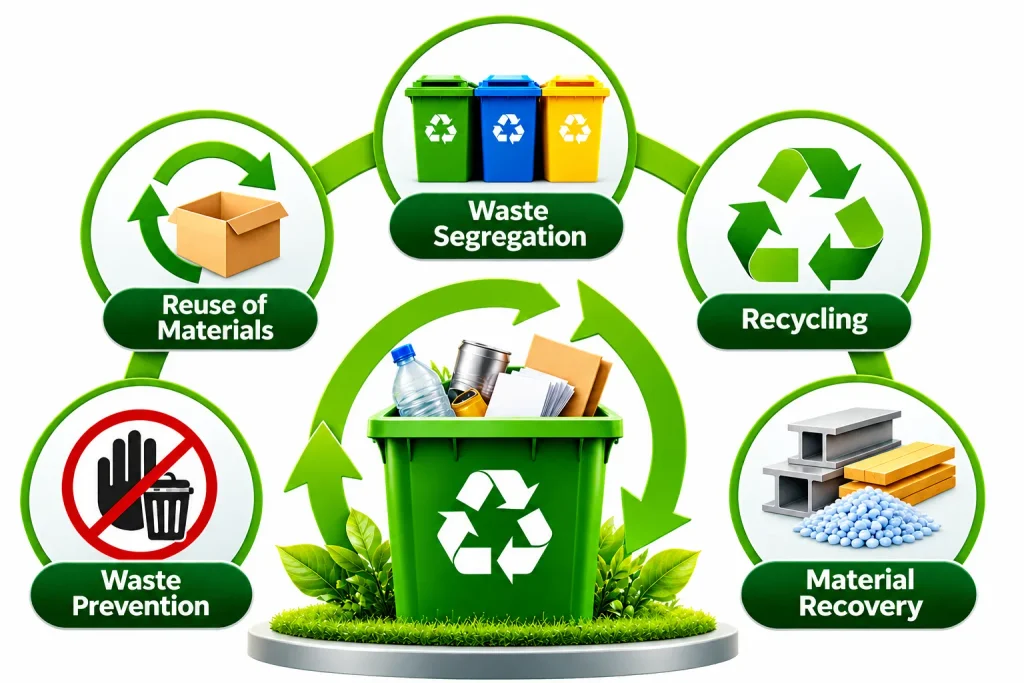
The following strategies can help organisations minimise waste and improve environmental performance:
1. Introduce Waste Prevention Strategies
Waste prevention involves identifying activities that generate unnecessary waste and improving operational processes to avoid material losses. Manufacturing organisations can review production methods to reduce defective products, excessive raw material consumption and unnecessary packaging. Offices can also minimise paper waste through digital documentation and electronic communication.
Practical waste prevention measures include:
- Packaging Reduction: Minimising unnecessary packaging materials and selecting efficient packaging designs.
- Inventory Management: Maintaining appropriate stock levels to prevent expired, damaged or unused materials.
- Digital Documentation: Using electronic records and approvals to reduce paper consumption.
- Responsible Purchasing: Purchasing materials according to actual operational requirements.
- Production Optimisation: Improving manufacturing processes to minimise defective products and material losses.
- Material Reuse: Reusing suitable materials wherever technically and operationally appropriate.
2. Implement Effective Waste Segregation
Waste segregation involves separating different waste materials according to their characteristics and handling requirements. Organisations should establish designated collection points to separate paper, cardboard, plastics, metals, glass, organic waste and general waste. Hazardous waste requires separate identification, storage and handling procedures to prevent environmental contamination and ensure appropriate disposal.
Effective waste segregation can be strengthened through:
- Designated Collection Areas: Providing clearly identified waste collection points throughout the workplace.
- Waste Identification: Using appropriate labels and signs to distinguish different waste categories.
- Employee Training: Educating employees about correct waste separation procedures.
- Hazardous Waste Control: Maintaining separate arrangements for hazardous and regulated waste.
- Regular Inspections: Checking collection areas to identify contamination and improve segregation practices.
3. Promote Recycling and Material Recovery
Recycling enables organisations to recover valuable materials and return them to productive use. Manufacturing facilities can recover metal offcuts, plastic components and cardboard, while construction organisations can identify opportunities to reuse timber, concrete, metals and other suitable materials. Material recovery reduces the demand for newly extracted resources and helps minimise the quantity of waste requiring final disposal.
Organisations can improve recycling and recovery through:
- Material Collection: Establishing suitable systems for collecting recyclable materials.
- Supplier Collaboration: Working with suppliers and recovery providers to manage recyclable resources.
- Production Waste Recovery: Identifying reusable materials generated during manufacturing activities.
- Recycling Partnerships: Arranging appropriate recycling services for different waste streams.
- Performance Monitoring: Recording recycling quantities and evaluating material recovery rates.
However, recycling should not be the first response to every waste problem. Preventing unnecessary material consumption and reusing existing resources should be considered before recycling.
4. Adopt Circular Economy Practices
The circular economy is an approach to resource management that aims to keep products, materials and resources in use for as long as possible. Unlike traditional linear production systems based on taking, making and disposing, circular economy practices encourage durability, maintenance, repair, refurbishment, reuse and material recovery.
Organisations can integrate circular economy principles into their operations through:
- Durable Product Design: Developing products that can be maintained, repaired and used for longer periods.
- Reusable Packaging: Introducing packaging systems that can be returned and used repeatedly.
- Equipment Refurbishment: Repairing and upgrading existing equipment instead of replacing it unnecessarily.
- Resource Recovery: Recovering valuable materials from production waste and discarded products.
- Sustainable Supplier Selection: Working with suppliers that provide reusable, recyclable or resource-efficient materials.
- Take-Back Arrangements: Establishing systems for collecting used products and recovering their valuable components.
These practices support resource conservation, reduce unnecessary waste generation and improve material utilisation throughout organisational operations.
How Can Businesses Improve Water Efficiency?
Water efficiency is a critical component of sustainable resource management because organisations rely on water for manufacturing, cleaning, cooling, sanitation, irrigation and various operational activities. Inefficient water consumption can increase operating costs, place unnecessary pressure on available water resources and contribute to wastewater pollution. Businesses should therefore adopt structured water conservation practices that improve resource utilisation, minimise water losses and support environmental sustainability.
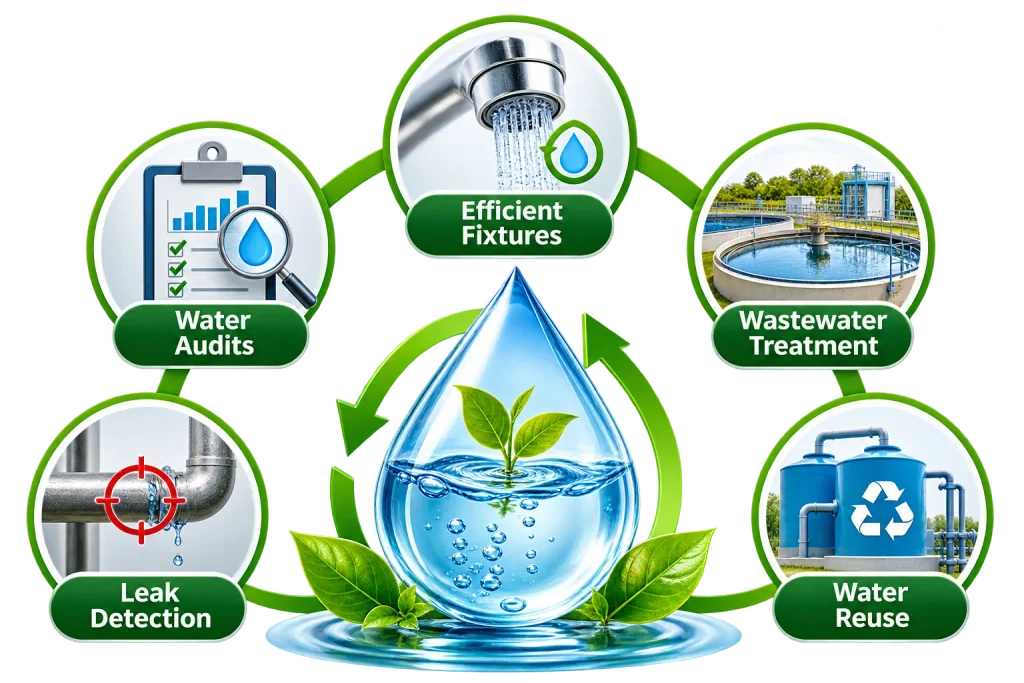
The following strategies can help organisations improve water efficiency and establish responsible water management practices:
1. Conduct Regular Water Audits
A water audit enables organisations to understand where, when and how water is consumed across their operations. It involves reviewing consumption records, inspecting water distribution systems and identifying areas where unnecessary water use occurs. Regular audits also help establish baseline consumption levels and measurable water reduction targets.
Important water auditing activities include:
- Water Supply Identification: Identifying all water supply points and distribution systems.
- Consumption Monitoring: Measuring water usage across different operational departments.
- Infrastructure Inspection: Examining pipes, valves, tanks and water storage systems.
- Leak Detection: Identifying water losses caused by damaged equipment or distribution systems.
- Process Evaluation: Reviewing activities that require high volumes of water.
- Target Development: Establishing measurable objectives for reducing water consumption.
2. Repair Leaks and Improve Water Infrastructure
Damaged pipes, leaking valves and inefficient plumbing systems can result in unnecessary water losses and increased operational expenditure. Organisations should implement regular inspections and preventive maintenance programmes to identify problems early. Installing water-efficient fixtures and automated controls can further improve water utilisation and reduce avoidable consumption.
Practical improvement measures include:
- Preventive Maintenance: Inspecting water infrastructure regularly to identify potential faults.
- Leak Repairs: Repairing damaged pipes, valves and connections promptly.
- Water-Efficient Fixtures: Installing low-flow taps, efficient toilets and water-saving equipment.
- Automatic Shut-Off Systems: Using automated controls to prevent unnecessary water flow.
- Infrastructure Upgrades: Replacing outdated and inefficient water distribution equipment.
3. Introduce Water Reuse and Recycling
Water reuse and recycling help organisations reduce their dependence on fresh water supplies by recovering suitable water from operational processes. Appropriately treated wastewater or recovered process water can be reused for activities such as equipment cleaning, cooling and irrigation, provided that the water meets the relevant quality and safety requirements. Industrial wastewater treatment systems can also create opportunities for improved water recovery and resource conservation.
Organisations can introduce water reuse practices through:
- Process Water Recovery: Collecting and treating suitable water generated during industrial operations.
- Wastewater Treatment: Installing appropriate treatment systems to improve water quality.
- Cooling Water Reuse: Recovering suitable water from cooling processes for further operational use.
- Irrigation Applications: Using appropriately treated recovered water for landscaping and irrigation.
- Water Recycling Systems: Introducing systems that allow suitable water to be reused within operational processes.
4. Improve Employee Awareness
Employee participation is essential for maintaining effective water conservation practices. Workers who understand the importance of responsible water use are more likely to identify unnecessary consumption, report leaks and follow workplace conservation procedures. Organisations should provide practical training and communicate clear responsibilities to encourage consistent water-saving behaviour.
Employee awareness can be strengthened through:
- Staff Training: Providing guidance on responsible water consumption.
- Leak Reporting: Encouraging employees to report damaged pipes and leaking fixtures.
- Operational Awareness: Teaching workers how to operate water-efficient equipment correctly.
- Workplace Procedures: Establishing clear instructions for reducing unnecessary water use.
- Performance Communication: Sharing water conservation targets and progress with employees.
By combining regular water audits, infrastructure improvements, water reuse systems and employee participation, organisations can improve water efficiency, reduce operational losses and strengthen their overall sustainable resource management practices.edures.
How Can Organisations Improve Energy Efficiency?
Energy efficiency involves reducing the amount of electricity, fuel and other energy resources required to perform organisational activities while maintaining productivity and operational performance. It is an essential part of sustainable resource management because energy consumption directly influences operational costs, resource utilisation and environmental impacts. Manufacturing facilities, offices, warehouses, construction sites and commercial buildings can improve energy performance by adopting efficient technologies, monitoring consumption and optimising everyday operations.
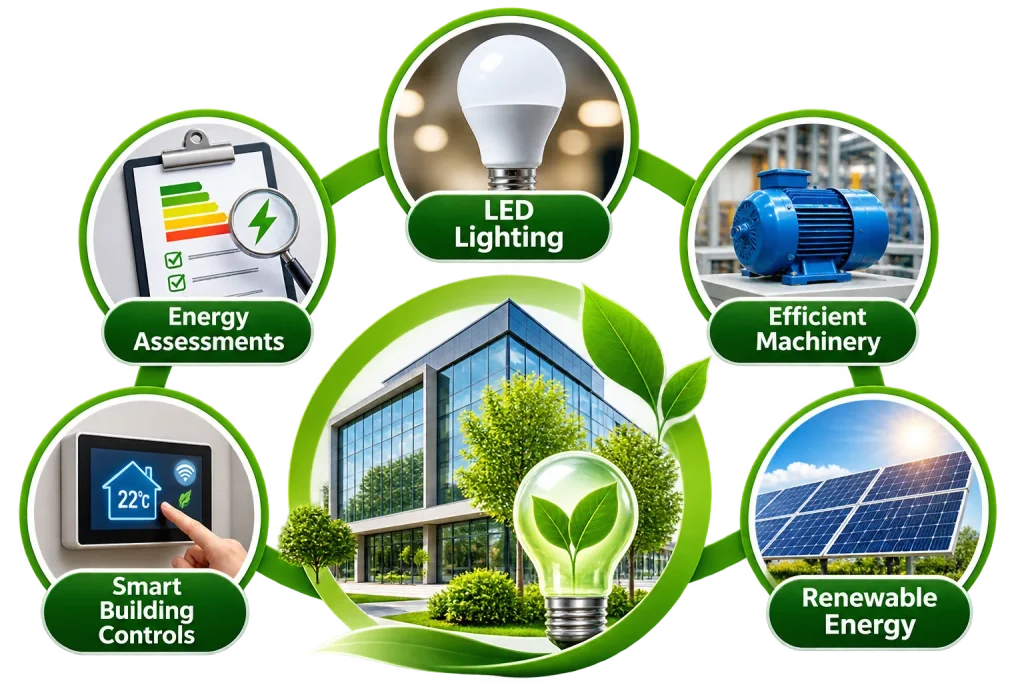
The following strategies can help organisations reduce energy consumption and strengthen environmental performance:
1. Conduct Energy Assessments
Energy assessments help organisations understand their energy consumption patterns, identify inefficient processes and determine opportunities for improvement. These assessments examine how energy is used across different departments and operational activities. The findings enable managers to prioritise energy-saving measures according to technical feasibility, environmental benefits and financial considerations.
Important areas to examine include:
- Electricity Consumption: Monitoring electricity usage across departments and operational areas.
- Machinery Performance: Assessing the energy efficiency of industrial machinery and equipment.
- HVAC Systems: Evaluating heating, ventilation and air conditioning performance.
- Lighting Requirements: Identifying inefficient lighting systems and unnecessary electricity consumption.
- Fuel Consumption: Reviewing fuel usage in vehicles, generators and operational equipment.
- Energy Losses: Identifying unnecessary energy consumption caused by inefficient processes and equipment.
2. Upgrade to Energy-Efficient Equipment
Older machinery and outdated electrical systems may consume excessive energy compared with modern efficient alternatives. Replacing inefficient equipment with energy-saving technologies can help organisations reduce electricity demand, improve operational performance and minimise unnecessary energy losses. Equipment selection should consider energy performance, operational requirements, maintenance needs and overall life-cycle costs.
Organisations can improve equipment efficiency by introducing:
- LED Lighting: Replacing traditional lighting with energy-efficient LED systems.
- Efficient Motors: Installing modern motors designed to reduce electricity consumption.
- Variable Speed Drives: Adjusting motor speeds according to actual operational requirements.
- Modern HVAC Systems: Upgrading heating and cooling equipment to improve energy performance.
- Automated Lighting Controls: Using sensors and timers to prevent unnecessary lighting.
- Efficient Office Equipment: Selecting computers, printers and other electrical devices with better energy performance.
3. Improve Building Energy Management
Buildings consume energy through lighting, heating, cooling, ventilation and electrical equipment. Inefficient building design, poor insulation and inadequate equipment maintenance can increase energy demand. Organisations can improve building energy performance through better insulation, regular HVAC maintenance, smart controls and efficient management of lighting and temperature settings.
Practical building energy management measures include:
- Building Insulation: Improving insulation to minimise unwanted heat transfer.
- HVAC Maintenance: Cleaning filters and maintaining heating and cooling equipment.
- Smart Controls: Installing programmable systems to manage energy consumption.
- Occupancy Sensors: Automatically switching off lighting in unoccupied areas.
- Lighting Optimisation: Making better use of natural daylight and efficient lighting.
- Operational Scheduling: Adjusting heating, cooling and electrical equipment according to occupancy and working hours.
4. Consider Renewable Energy Solutions
Renewable energy technologies provide organisations with opportunities to reduce dependence on conventional fossil-fuel-based energy sources. Depending on operational requirements, available infrastructure and financial resources, businesses can consider solar photovoltaic systems, solar water heating and other suitable renewable energy solutions. Proper planning is essential to ensure that renewable energy installations deliver reliable performance and support long-term sustainability objectives.
Organisations can explore renewable energy opportunities through:
- Solar Photovoltaic Systems: Generating electricity using solar panels.
- Solar Water Heating: Using solar energy to reduce conventional water-heating requirements.
- Renewable Energy Assessment: Evaluating the technical and financial suitability of renewable technologies.
- System Maintenance: Conducting regular inspections to maintain equipment efficiency.
- Energy Performance Monitoring: Measuring renewable energy generation and overall consumption.
- Long-Term Planning: Integrating renewable energy investments into organisational sustainability strategies.
By combining energy assessments, efficient equipment, improved building management and appropriate renewable energy solutions, organisations can reduce unnecessary energy consumption, control operational expenditure and strengthen their commitment to sustainable resource management.
Sustainable Resource Management Strategies: A Practical Comparison
Organisations should select resource efficiency measures according to their industry, environmental impacts, operational requirements and available resources.
| Resource area | Common problem | Sustainable management strategy | Expected benefit |
|---|---|---|---|
| Waste | Excessive material disposal | Waste prevention and recycling | Reduced waste generation |
| Water | Leakage and unnecessary consumption | Water audits and reuse | Improved water efficiency |
| Energy | Inefficient machinery | Energy-efficient equipment | Lower energy demand |
| Raw materials | Excessive production losses | Process optimisation | Reduced material consumption |
| Packaging | Single-use materials | Reusable packaging | Less packaging waste |
| Wastewater | Untreated discharge | Appropriate treatment and reuse | Better pollution control |
These measures should be implemented through a structured environmental management programme with clear responsibilities and measurable performance indicators.
How to Implement a Sustainable Resource Management Plan
Implementing a successful sustainable resource management plan requires a structured approach that integrates resource efficiency, environmental responsibilities and operational objectives. Organisations need to understand how resources are consumed, identify areas of inefficiency and establish practical measures to reduce waste, water consumption and energy demand. A well-developed management plan also defines employee responsibilities, establishes measurable environmental targets and provides a framework for monitoring continuous improvement.
The following seven steps provide a practical framework for implementing sustainable resource management:
Step 1: Assess Existing Resource Consumption
The first step involves evaluating how water, energy, fuel and raw materials are used throughout organisational activities. Organisations should collect accurate consumption records and examine existing resource management practices to establish a baseline of environmental performance.
Important assessment activities include:
- Water Consumption: Recording water usage across departments and operational processes.
- Energy Usage: Reviewing electricity, fuel and other energy consumption.
- Raw Material Utilisation: Assessing material purchases and production requirements.
- Waste Generation: Measuring the quantity and types of waste produced.
- Existing Practices: Reviewing current conservation, recycling and resource management procedures.
Step 2: Identify Resource Inefficiencies
After establishing baseline consumption, organisations should examine operational activities to identify unnecessary resource use and environmental inefficiencies. This may involve inspecting equipment, reviewing production processes and analysing consumption patterns. For example, excessive water use during equipment cleaning or material losses during manufacturing may indicate opportunities for improvement.
Organisations should focus on identifying:
- Water Losses: Leaking pipes, inefficient fixtures and unnecessary water consumption.
- Energy Waste: Poor equipment performance and unnecessary electricity usage.
- Material Losses: Excessive raw material consumption and defective production.
- Waste Generation: Activities producing avoidable packaging and operational waste.
- Process Inefficiencies: Operational practices that consume resources without adding value.
Step 3: Establish Measurable Environmental Targets
Clear environmental targets provide direction and help organisations evaluate the effectiveness of their resource management activities. Targets should be realistic, measurable and based on the findings of the initial resource assessment. Each objective should have a defined timeframe, responsible department and appropriate monitoring arrangements.
Examples of environmental targets include:
- Energy Reduction: Decreasing electricity consumption per unit of production.
- Water Conservation: Reducing water consumption per employee or operational unit.
- Waste Minimisation: Decreasing the quantity of waste sent for disposal.
- Material Recovery: Increasing the proportion of suitable materials recovered for reuse.
- Packaging Reduction: Minimising unnecessary packaging consumption.
Step 4: Develop Resource Management Procedures
Organisations should establish clear procedures that explain how resources must be purchased, consumed, monitored and managed. These procedures should reflect operational requirements and relevant environmental responsibilities. Consistent implementation helps employees understand the correct processes for reducing resource consumption and preventing unnecessary waste.
Essential procedures may cover:
- Sustainable Procurement: Establishing responsible purchasing practices.
- Resource Consumption: Defining appropriate water and energy usage practices.
- Waste Segregation: Providing instructions for separating and managing waste.
- Equipment Maintenance: Establishing schedules for maintaining resource-efficient equipment.
- Wastewater Management: Defining appropriate procedures for wastewater handling and reuse.
- Employee Responsibilities: Assigning duties for implementing environmental measures.
Step 5: Train Employees and Managers
Employee awareness and management commitment are essential for successful resource management. Workers should understand how their daily activities influence water consumption, energy demand, material utilisation and waste generation. Appropriate training helps establish consistent environmental practices and encourages employees to participate in sustainability initiatives.
Training programmes should address:
- Waste Prevention: Teaching employees how to avoid unnecessary waste generation.
- Water Conservation: Promoting responsible water consumption and leak reporting.
- Energy Efficiency: Encouraging energy-saving practices during daily operations.
- Pollution Prevention: Explaining practices that minimise environmental contamination.
- Equipment Operation: Providing guidance on using resource-efficient machinery correctly.
Step 6: Monitor Performance and Review Results
Regular monitoring allows organisations to determine whether their resource management measures are achieving the established objectives. Managers should evaluate environmental performance indicators, compare actual consumption with baseline figures and investigate unexpected increases in resource usage. Monitoring results also help identify areas where additional improvements may be required.
Important monitoring activities include:
- Performance Measurement: Recording water, energy and material consumption.
- Target Evaluation: Comparing actual results with established environmental objectives.
- Performance Reporting: Maintaining accurate records of resource management activities.
- Corrective Actions: Addressing identified inefficiencies and performance gaps.
- Management Reviews: Evaluating progress and determining further improvement requirements.
Step 7: Apply Continuous Improvement
Sustainable resource management should be treated as an ongoing organisational responsibility rather than a one-time environmental initiative. Organisations should regularly review their procedures, evaluate new technologies and identify opportunities to improve resource efficiency. Continuous improvement helps maintain progress and ensures that environmental objectives remain relevant to changing operational requirements.
Organisations can support continuous improvement through:
- Periodic Audits: Reviewing resource consumption and environmental management practices.
- Management Reviews: Evaluating the effectiveness of resource management plans.
- Employee Feedback: Encouraging workers to recommend practical improvements.
- Updated Targets: Revising environmental objectives according to performance results.
- Technology Improvements: Introducing suitable technologies that support efficient resource utilisation.
By following these seven steps, organisations can establish a structured sustainable resource management plan that connects environmental objectives with everyday operational activities. Regular assessment, employee participation and performance monitoring help reduce unnecessary resource consumption, minimise waste and strengthen long-term environmental performance.
What is the Role of ISO 14001 in Sustainable Resource Management?
ISO 14001 provides an internationally recognised framework for establishing, implementing and continually improving an Environmental Management System (EMS).
It helps organisations identify environmental aspects, evaluate associated impacts, establish environmental objectives and monitor operational performance.
The standard supports a systematic approach to managing areas such as resource consumption, waste generation, pollution prevention and environmental compliance.
The current published edition as of November 2026 is ISO 14001:2026. Organisations should consult the official ISO publication for applicable requirements and transition arrangements. Environmental management systems+1
Through an environmental management system, organisations can:
- Identify significant environmental aspects and impacts.
- Establish resource efficiency objectives.
- Improve waste management procedures.
- Monitor water and energy consumption.
- Strengthen environmental responsibilities.
- Evaluate environmental performance.
- Support continual improvement.
ISO 14001 does not automatically guarantee reduced consumption. Results depend on how effectively an organisation implements, maintains and evaluates its environmental management system.
Measuring Sustainable Resource Management Performance
Organisations cannot improve resource efficiency effectively without measuring their performance. Environmental monitoring helps managers understand whether sustainability initiatives are producing measurable improvements.
Key Performance Indicators (KPIs) should be selected according to organisational activities, environmental risks and sustainability objectives.
| Performance indicator | Measurement method | Management objective |
|---|---|---|
| Water consumption | Cubic metres of water used | Improve water efficiency |
| Energy consumption | kWh of energy used | Reduce energy demand |
| Waste generation | Kilograms or tonnes of waste | Minimise waste production |
| Recycling rate | Percentage of waste recovered | Increase material recovery |
| Material efficiency | Material used per production unit | Reduce production losses |
| Wastewater reuse | Percentage of suitable water reused | Improve water conservation |
| Carbon emissions | Tonnes of CO₂ equivalent | Reduce operational emissions |
Why are Environmental Performance Indicators Important?
Environmental indicators help organisations:
- Identify inefficient resource consumption.
- Compare current performance against established targets.
- Evaluate the effectiveness of environmental initiatives.
- Identify areas requiring corrective action.
- Communicate environmental performance to relevant stakeholders.
- Support management reviews and continuous improvement.
For example, a manufacturing organisation can measure electricity consumption per production unit rather than relying exclusively on total electricity bills. This provides a more meaningful indication of energy efficiency when production volumes change.
Common Challenges in Implementing Sustainable Resource Management
Despite its benefits, implementing sustainable resource management can present several operational and organisational challenges.
| Challenge | Possible solution |
|---|---|
| High initial investment | Introduce improvements in phases and evaluate life-cycle costs |
| Limited employee awareness | Provide practical sustainability training |
| Inadequate consumption data | Install monitoring systems and improve record keeping |
| Resistance to operational changes | Involve employees and department managers in planning |
| Limited recycling infrastructure | Establish partnerships with suitable recovery providers |
| Complex supply chains | Introduce sustainable procurement criteria |
| Lack of management commitment | Integrate environmental targets into organisational planning |
Successful implementation requires leadership support, appropriate financial planning, employee participation and regular performance evaluation.
How Does Professional Environmental Management Knowledge Support Sustainable Resource Management?
Effective sustainable resource management requires more than basic knowledge of recycling, water conservation and energy efficiency. It involves understanding environmental impacts, resource utilisation, pollution prevention and organisational sustainability. Professional environmental management knowledge enables individuals to assess resource consumption, identify environmental risks and develop practical strategies for improving environmental performance.
Professionals with relevant environmental management expertise can contribute to sustainable organisational practices through:
- Resource Efficiency: Identifying opportunities to reduce unnecessary consumption of water, energy and raw materials.
- Environmental Risk Assessment: Evaluating potential environmental risks and developing appropriate control measures.
- Waste Management: Implementing waste prevention, segregation, recycling and resource recovery practices.
- Pollution Prevention: Applying strategies to minimise environmental pollution and protect natural resources.
- Environmental Compliance: Understanding relevant environmental requirements and supporting responsible organisational practices.
- Environmental Impact Assessment: Evaluating the potential environmental consequences of organisational activities and proposed projects.
- Continuous Improvement: Monitoring environmental performance and recommending improvements to resource management processes.
Developing knowledge in these areas enables professionals to make informed decisions, establish measurable sustainability objectives and integrate environmental responsibility into everyday organisational operations.
Conclusion
Sustainable resource management enables organisations to reduce waste, conserve water, improve energy efficiency and minimise environmental impacts. By adopting responsible resource utilisation, recycling practices and efficient technologies, businesses can improve operational performance while reducing unnecessary resource consumption.
A structured approach supported by employee participation, measurable environmental targets and continuous monitoring helps organisations achieve long-term sustainability objectives. Effective resource management is therefore essential for protecting natural resources, improving environmental performance and promoting responsible organisational practices.