
Environmental Management Careers: Roles, Skills and Career Pathways
Environmental management careers offer opportunities for professionals who want to help organisations reduce environmental impacts, improve resource efficiency and meet their environmental responsibilities. From environmental consultancy and sustainability reporting to pollution prevention, environmental auditing and strategic management, the field covers a broad range of professional roles.
As businesses, public bodies and other organisations assess their environmental risks and sustainability objectives, they need people who can turn environmental knowledge into practical action. The work may involve monitoring environmental performance, assessing project impacts, improving waste management, advising on compliance or helping senior leaders make informed decisions.
For graduates, environmental officers and experienced professionals considering a career change, understanding the available roles and progression routes is an important first step. This guide explores environmental management careers, the responsibilities associated with different jobs, the skills employers may look for and how professionals can build relevant experience and knowledge.
What is Environmental Management?
Environmental management is the organised process of identifying, assessing and controlling the environmental effects of an organisation’s activities, products and services. It involves setting objectives, implementing controls, monitoring performance and improving how environmental responsibilities are managed.
Environmental management may cover:
- Pollution prevention and environmental protection.
- Waste reduction, segregation and responsible disposal.
- Efficient use of energy, water and raw materials.
- Environmental risk assessment and impact assessment.
- Compliance with applicable environmental requirements.
- Environmental monitoring, auditing and reporting.
- Biodiversity protection and responsible land use.
- Climate-related risks and emissions reduction.
- Environmental management systems and continual improvement.
The exact responsibilities depend on the organisation, industry, location and job level. An environmental officer working at a manufacturing facility, for example, may focus on waste handling, operational controls and inspections. A sustainability manager in a large business may concentrate on environmental strategy, performance indicators, reporting and engagement with senior management.
An environmental management career therefore combines technical knowledge with planning, communication, problem-solving and decision-making.
Why Consider a Career in Environmental Management?
Environmental management offers opportunities to contribute to environmental protection while supporting responsible organisational performance. Professionals in this field help identify environmental risks, minimise negative impacts, improve resource efficiency and promote sustainable working practices. It also provides opportunities to develop specialist knowledge and build a career across different industries.
Several factors make environmental management an attractive professional field:
Work Across Different Industries
Environmental management is relevant to a wide range of industries, creating opportunities for professionals with different interests and technical backgrounds. Individuals can develop expertise in a particular sector or gain experience across multiple areas.
Potential employment sectors include:
- Manufacturing and industrial operations.
- Construction and infrastructure development.
- Energy and renewable energy.
- Transport and logistics.
- Agriculture and food production.
- Waste management and environmental consultancy.
- Government and public-sector organisations.
Combine Technical and Management Skills
Environmental management allows professionals to apply technical knowledge alongside organisational and leadership abilities. Many positions involve working with operational teams, contractors, clients and senior decision-makers to address environmental challenges.
Professionals can develop skills in:
- Environmental monitoring and risk assessment.
- Compliance management and environmental auditing.
- Project coordination and operational planning.
- Sustainability strategy and performance evaluation.
- Team communication and stakeholder engagement.
Contribute to Measurable Improvements
Environmental professionals can make a practical contribution by helping organisations improve their environmental performance. Their work may involve identifying inefficiencies, recommending control measures and monitoring progress towards environmental objectives.
Examples of potential improvements include:
- Reducing waste generation and improving recycling practices.
- Improving energy and water efficiency.
- Preventing pollution and controlling environmental risks.
- Strengthening environmental procedures and workplace practices.
- Monitoring progress against sustainability targets.
Develop Transferable Professional Skills
Many competencies gained through environmental management are useful in other professional fields. Skills such as risk assessment, auditing, data analysis, project management and compliance monitoring can support career development in related disciplines.
These transferable skills may create opportunities in:
- Sustainability and corporate responsibility.
- Quality and environmental management systems.
- Health, safety and environmental management.
- Environmental consultancy and auditing.
- Project and operational management.
Opportunities for Professional Growth
Environmental management can offer different development routes, from practical operational responsibilities to specialist consultancy and senior management positions. However, career progression is not automatic and depends on factors such as relevant qualifications, practical experience, technical competence, employer expectations and individual career goals.
Key Environmental Management Careers and Job Roles
Environmental management includes both specialist technical positions and broader management roles. The following table summarises common career options and the work associated with them.
| Job role | Typical responsibilities | Useful skills |
|---|---|---|
| Environmental Officer | Conduct inspections, monitor environmental controls, maintain records and report concerns | Observation, reporting, environmental awareness and attention to detail |
| Environmental Manager | Coordinate environmental objectives, compliance activities, risk controls and performance reviews | Leadership, planning, risk management and communication |
| Environmental Consultant | Advise clients on environmental risks, assessments, compliance and improvement options | Research, analysis, report writing and client communication |
| Sustainability Officer | Support sustainability programmes, collect performance data and coordinate improvement initiatives | Data handling, project coordination and stakeholder engagement |
| Sustainability Manager | Develop or coordinate sustainability strategy, objectives and performance reporting | Strategic planning, leadership and performance management |
| Environmental Auditor | Evaluate environmental management processes, evidence and implementation against defined criteria | Audit methods, evidence evaluation and impartial judgement |
| Environmental Impact Assessment Specialist | Support assessments of potential environmental effects from proposed projects | Research, impact analysis, consultation and technical writing |
| Environmental Compliance Specialist | Track applicable requirements, monitor controls and support compliance activities | Regulatory research, record keeping and risk assessment |
| Waste Management Specialist | Improve waste segregation, storage, recovery, disposal and resource efficiency | Operational knowledge, data analysis and process improvement |
| Environmental Project Manager | Plan and coordinate environmental projects, budgets, resources and delivery | Project management, communication and problem-solving |
| Carbon or Climate Specialist | Support emissions measurement, carbon management and climate-related planning | Data analysis, reporting and knowledge of climate-related methods |
| Environmental Researcher | Collect and interpret environmental data and contribute to studies or reports | Research design, analytical thinking and technical communication |
These titles are not standardised across all employers. A role called “environmental coordinator” at one organisation may include responsibilities that another employer assigns to an environmental officer or manager. Candidates should always read the job description rather than relying on the job title alone.
1. Environmental Officer
An environmental officer commonly supports the day-to-day implementation of environmental procedures and controls. The role may be based at a construction site, industrial facility, infrastructure project, waste operation or other workplace with environmental responsibilities.
Typical duties may include:
- Conducting workplace inspections and environmental checks.
- Monitoring waste storage, segregation and disposal arrangements.
- Checking procedures designed to prevent spills, leaks and pollution.
- Maintaining environmental records and preparing reports.
- Supporting environmental risk assessments and incident investigations.
- Communicating environmental procedures to employees and contractors.
- Escalating non-conformities and following up corrective actions.
This role may suit someone who enjoys practical problem-solving and working with operational teams. Relevant experience, technical knowledge and familiarity with the industry’s environmental requirements can be important selection factors.
2. Environmental Manager
An environmental manager typically coordinates or oversees environmental management activities within an organisation, project or business unit. Depending on the employer, the role may involve supervising staff, advising senior leaders and maintaining oversight of environmental performance.
Responsibilities may include:
- Developing and reviewing environmental policies and objectives.
- Coordinating environmental risk assessments and control measures.
- Monitoring applicable legal and other compliance obligations.
- Overseeing environmental management systems.
- Reviewing audit findings, incidents and corrective actions.
- Reporting environmental performance to management.
- Supporting resource efficiency and pollution prevention initiatives.
- Working with suppliers, contractors, regulators and other stakeholders.
Environmental managers need more than technical awareness. They often have to explain environmental risks in business terms, prioritise actions, allocate resources and influence colleagues who have different operational responsibilities.
Progression into this position may follow experience in environmental coordination, compliance, consultancy or a related technical role. The route varies by sector and employer.
3. Environmental Consultant
Environmental consultants provide advice and technical support to clients facing environmental challenges or seeking to assess the impacts of proposed activities.
Depending on their specialism, consultants may work on environmental impact assessments, contaminated land, waste, pollution control, ecological issues, environmental compliance or management systems.
Their work may involve:
- Understanding the client’s project and requirements.
- Reviewing available information and identifying evidence gaps.
- Conducting research, site visits, assessments or monitoring.
- Analysing findings and evaluating potential impacts.
- Preparing reports and recommending practical controls.
- Explaining conclusions to clients and relevant stakeholders.
Consultants need strong analytical skills, clear report-writing ability and the confidence to communicate technical information to non-specialists. Some positions require specialist scientific or engineering knowledge, depending on the work undertaken.
4. Sustainability Officer and Sustainability Manager
Sustainability roles often consider environmental performance alongside wider organisational, social and economic priorities. Their scope depends on the employer: some positions focus primarily on environmental issues, while others include broader sustainability programmes and reporting.
A sustainability officer may support data collection, staff awareness, project coordination and progress monitoring. A sustainability manager may have greater responsibility for setting objectives, coordinating strategy, reporting to senior leaders and engaging with external stakeholders.
Typical areas of work include:
- Tracking energy, water, waste or emissions data.
- Supporting sustainability plans and performance indicators.
- Coordinating resource-efficiency initiatives.
- Contributing to sustainability disclosures and internal reports.
- Working with procurement and operational teams.
- Helping employees understand sustainability objectives.
- Monitoring progress and identifying areas for improvement.
Professionals in these roles need to distinguish between measurable performance, planned activities and aspirational targets. Clear records and credible evidence are important when communicating environmental progress.
5. Environmental Auditor
Environmental auditors evaluate whether defined environmental processes, procedures and management-system arrangements are being implemented as intended. The scope of an audit depends on its purpose, criteria and the auditor’s competence.
Environmental auditing may involve reviewing documentation, interviewing relevant personnel, observing activities and examining evidence. Findings can identify conformity, gaps, risks or opportunities for improvement.
Useful capabilities include:
- Planning and conducting structured audits.
- Gathering and evaluating objective evidence.
- Understanding audit criteria and environmental processes.
- Writing clear findings and reports.
- Communicating professionally with auditees.
- Following up corrective actions where required.
Auditors need to maintain impartiality and avoid drawing conclusions that the evidence does not support. Specialist audit roles may require relevant training, experience and demonstrated competence.
Essential Skills for Environmental Management Careers
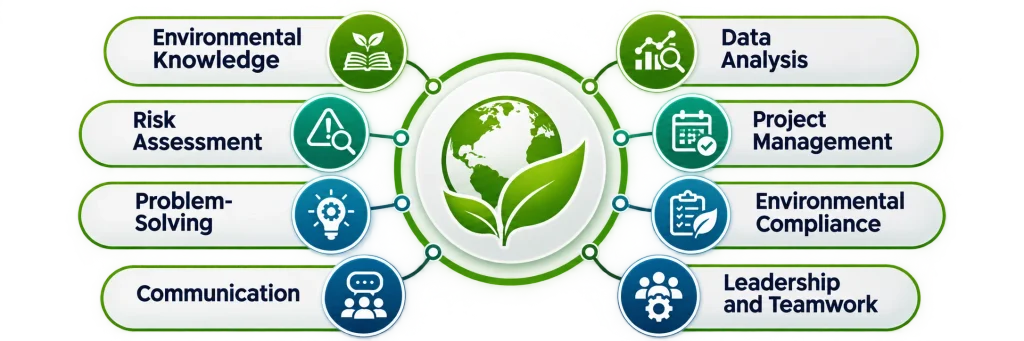
Successful environmental management professionals require a combination of technical knowledge, analytical abilities and interpersonal skills. These competencies help them identify environmental risks, implement effective controls, improve organisational performance and contribute to sustainable practices. The specific skills required may vary depending on whether an individual works in an operational, scientific, consultancy or management position.
Environmental Knowledge
A strong understanding of environmental principles enables professionals to recognise environmental impacts and recommend appropriate management measures. They should understand the environmental challenges associated with their industry and remain aware of relevant environmental responsibilities.
Key areas of knowledge include:
- Pollution prevention and environmental protection.
- Waste management and resource efficiency.
- Environmental impact assessment.
- Biodiversity and ecosystem protection.
- Climate-related environmental considerations.
- Environmental legislation and compliance requirements.
Risk Assessment and Problem-Solving
Environmental professionals must be able to identify potential environmental hazards, evaluate their consequences and recommend suitable control measures. Effective problem-solving also involves analysing available evidence, considering alternative solutions and prioritising actions according to the level of risk.
Important capabilities include:
- Identifying environmental hazards and potential impacts.
- Evaluating environmental risks and their significance.
- Selecting appropriate preventive and control measures.
- Investigating environmental incidents and non-conformities.
- Recommending practical environmental improvements.
Communication and Report Writing
Clear communication is essential because environmental professionals regularly work with employees, contractors, clients, management teams and other stakeholders. They must be able to explain technical information in an understandable way and prepare accurate reports that support organisational decisions.
Essential communication skills include:
- Preparing environmental reports and inspection records.
- Explaining environmental procedures and responsibilities.
- Presenting findings and recommendations.
- Communicating with internal and external stakeholders.
- Delivering environmental awareness and training sessions.
Data Analysis and Record Keeping
Environmental monitoring generates information that organisations use to evaluate performance and identify improvement opportunities. Professionals should be comfortable collecting, organising and interpreting data while maintaining accurate and reliable records.
Relevant skills include:
- Analysing environmental monitoring results.
- Maintaining waste, energy and water consumption records.
- Reviewing emissions and environmental performance data.
- Identifying trends and areas requiring improvement.
- Using spreadsheets and digital reporting tools.
Project Management
Environmental improvement projects often involve multiple departments, resources, deadlines and external contractors. Project management skills help professionals organise activities, coordinate responsibilities and ensure that planned improvements are implemented effectively.
Important project management capabilities include:
- Developing project plans and schedules.
- Coordinating teams and relevant stakeholders.
- Monitoring progress against agreed objectives.
- Managing resources, budgets and deadlines.
- Evaluating project outcomes and improvement opportunities.
Knowledge of Environmental Management Systems
Understanding environmental management systems is valuable for professionals responsible for organising and improving environmental activities. The ISO 14001 framework provides an internationally recognised approach to managing environmental aspects, addressing compliance obligations and supporting continual improvement.
Professionals should develop knowledge of:
- Environmental policies, objectives and procedures.
- Identification and evaluation of environmental aspects.
- Operational controls and performance monitoring.
- Internal environmental audits.
- Corrective actions and continual improvement.
Leadership and Stakeholder Engagement
Leadership skills become increasingly important as professionals take responsibility for teams, projects and organisational environmental objectives. Effective environmental leaders encourage responsible behaviour, communicate priorities and work with different departments to achieve practical improvements.
Key leadership competencies include:
- Coordinating environmental teams and activities.
- Influencing positive environmental behaviour.
- Building effective stakeholder relationships.
- Resolving operational challenges and disagreements.
- Supporting organisational change and continual improvement.
The Institute of Sustainability and Environmental Professionals (ISEP) also highlights core knowledge, technical expertise and sustainable leadership as important competency areas for environmental and sustainability professionals. Developing these capabilities can help individuals identify their professional strengths, address skills gaps and prepare for future career opportunities.
Qualifications, Training and Experience
There is no single qualification route for every environmental management career. Entry requirements depend on the role, employer, industry and country.
Some technical positions may require a relevant degree or specialist scientific or engineering knowledge. Other roles may place greater emphasis on practical experience, vocational training, environmental compliance knowledge or demonstrated competence.
Before applying for a position, review the person specification and identify the qualifications, experience and technical skills the employer actually requests.
Build relevant knowledge
Potential areas for study include environmental management, environmental science, sustainability, environmental legislation, environmental risk assessment, auditing and management systems. Select learning that relates to your intended career pathway rather than assuming one qualification is suitable for every role.
Gain practical experience
Relevant experience may be developed through internships, placements, volunteering, project work, research, entry-level employment or responsibilities within an existing role. Practical experience helps candidates understand how environmental procedures work in real settings.
Develop evidence of competence
Examples of useful evidence include contributing to an environmental inspection, preparing a monitoring report, assisting with a waste-reduction project, analysing environmental data or helping review an environmental management procedure. Any examples used in an application should accurately describe the candidate’s own contribution.
Maintain professional development
Environmental requirements, technologies and organisational priorities can change. Continuing professional development can help practitioners keep their knowledge current, identify skill gaps and prepare for additional responsibilities.
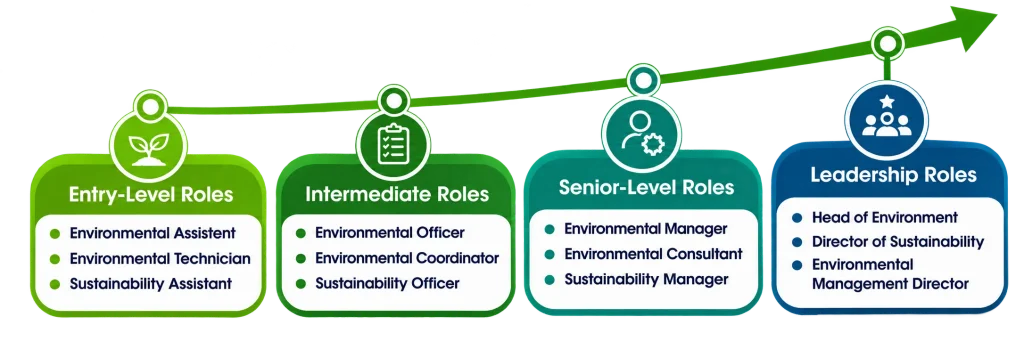
Career Progression: From Entry-Level Roles to Leadership
Environmental management career progression is not always a straight line. Professionals may develop through technical specialisation, broader management responsibilities, consultancy or strategic leadership.
| Career stage | Possible roles | Typical development priorities |
|---|---|---|
| Entry level | Environmental assistant, graduate environmental officer, environmental technician | Build foundational knowledge, reporting skills and practical experience |
| Developing professional | Environmental officer, environmental coordinator, junior consultant | Take responsibility for inspections, monitoring, records and defined projects |
| Experienced professional | Environmental advisor, environmental consultant, environmental auditor | Develop technical specialism, independent judgement and project responsibility |
| Management level | Environmental manager, sustainability manager, environmental programme manager | Lead teams, coordinate objectives, manage risks and report performance |
| Senior leadership or specialist level | Head of environment, sustainability director, principal consultant, specialist technical lead | Integrate environmental priorities into organisational strategy or develop advanced expertise |
These are illustrative pathways rather than mandatory stages. A professional may specialise in auditing or environmental assessment without becoming a line manager. Others may progress into leadership by combining environmental knowledge with business planning, project delivery and stakeholder management.
Future Developments in Environmental Management
Environmental management is continuously evolving as organisations adopt new technologies, strengthen environmental practices and respond to emerging risks. Professionals need to understand these developments to help organisations improve environmental performance, manage resources responsibly and achieve long-term sustainability objectives.
Environmental Management Systems and Continual Improvement
Environmental management systems provide a structured approach to identifying environmental impacts, establishing responsibilities, setting objectives and monitoring performance. Frameworks such as ISO 14001:2026 support organisations in managing environmental responsibilities and improving their environmental practices.
Key developments include:
- Strengthening environmental policies and management procedures.
- Improving environmental risk identification and control.
- Setting measurable environmental objectives.
- Conducting regular audits and performance reviews.
- Promoting continual improvement across organisational activities.
Environmental Data and Digital Technologies
Digital technologies are making environmental monitoring and performance evaluation more efficient. Organisations increasingly use data management systems, monitoring equipment and analytical tools to identify environmental trends and support informed decisions.
Important developments include:
- Digital environmental monitoring and reporting.
- Automated collection of environmental performance data.
- Data visualisation and performance dashboards.
- Improved tracking of energy, water and waste consumption.
- Greater use of analytical tools for environmental decision-making.
Resource Efficiency and Waste Reduction
Organisations are placing greater emphasis on using resources efficiently and reducing unnecessary waste. Environmental professionals help identify opportunities to minimise resource consumption, improve operational processes and encourage responsible waste management.
Key areas of focus include:
- Reducing energy and water consumption.
- Minimising waste generation at source.
- Promoting reuse, recycling and material recovery.
- Improving raw material efficiency.
- Introducing sustainable operational practices.
Climate-Related Risk and Emissions Management
Climate-related risks and greenhouse gas emissions are becoming important considerations in organisational environmental planning. Professionals may support activities that assess climate-related risks, monitor emissions and develop appropriate environmental improvement measures.
Emerging areas include:
- Greenhouse gas emissions monitoring.
- Carbon management and reduction planning.
- Assessment of climate-related operational risks.
- Development of emissions reduction initiatives.
- Integration of climate considerations into organisational planning.
Environmental Performance and Accountability
Organisations are increasingly expected to demonstrate environmental progress through reliable information and measurable results. Environmental professionals play an important role in collecting evidence, evaluating performance and communicating achievements accurately.
Important priorities include:
- Establishing clear environmental performance indicators.
- Maintaining accurate monitoring and reporting records.
- Evaluating progress against environmental objectives.
- Supporting transparent sustainability reporting.
- Distinguishing between planned targets, completed actions and verified results.

How to Start or Advance Your Environmental Management Career
If you are considering a career in environmental management, use a structured approach to identify the most suitable next step.
- Choose a career direction: Decide whether you are most interested in operational environmental work, consultancy, auditing, sustainability, compliance or management.
- Review real job descriptions: Compare vacancies in your preferred location and industry to identify common qualification, experience and skills requirements.
- Assess your current skills: Record the environmental knowledge, technical abilities and transferable skills you already have.
- Identify development gaps: Select relevant education, training or practical experience that addresses those gaps.
- Build practical evidence: Seek appropriate projects, placements, volunteering or workplace assignments that demonstrate your abilities.
- Strengthen your professional profile: Update your CV with accurate examples of responsibilities, contributions and results.
- Continue learning: Keep track of relevant standards, environmental requirements and developments within your chosen specialism.
Professionals looking to advance their environmental management knowledge can benefit from further learning and specialised professional development. Developing a deeper understanding of environmental strategies, risk management, sustainability practices and regulatory responsibilities can help strengthen professional competence and support long-term career progression.
Conclusion
Environmental management offers diverse career opportunities across environmental protection, sustainability, consultancy, compliance and organisational leadership. Building the right combination of technical knowledge, practical experience and professional skills can help individuals pursue suitable roles and progress towards greater responsibilities.
As environmental priorities continue to evolve, professionals who remain committed to learning, problem-solving and continuous improvement can strengthen their expertise and contribute to more sustainable organisational practices. Choosing a career pathway that matches your interests, abilities and long-term goals is an important step towards professional growth.