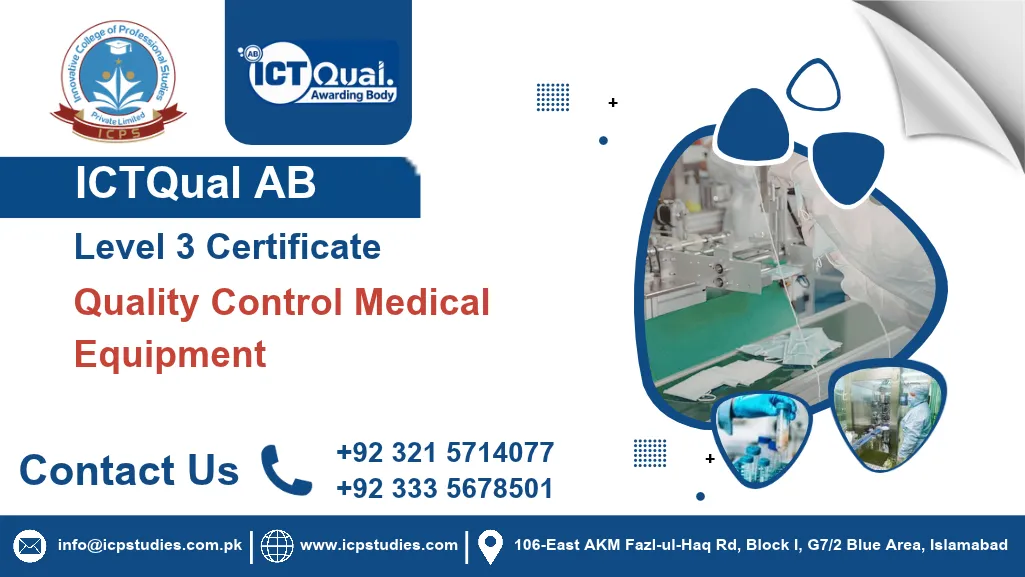
The ICTQual AB Level 3 Certificate in Quality Control Medical Equipment is a vocational qualification designed to introduce learners to the essential principles of medical equipment quality control, inspection, safety, and performance verification. Quality control plays a vital role in ensuring that medical devices and equipment meet specified quality requirements and function reliably within healthcare environments. This qualification provides foundational knowledge relevant to the inspection and quality monitoring of medical equipment used in hospitals, clinics, diagnostic laboratories, medical device manufacturing facilities, and healthcare technology organisations.
The ICTQual AB Level 3 Certificate in Quality Control Medical Equipment is suitable for aspiring quality control assistants, healthcare support personnel, medical equipment technicians, biomedical engineering students, and individuals interested in medical device quality assurance. Learners can develop an understanding of equipment inspection procedures, quality documentation, defect identification, product verification, maintenance records, and compliance with applicable safety and quality requirements. The course also introduces the importance of accurate record-keeping, systematic inspection, and quality monitoring in supporting the reliability and safe use of medical equipment.
By studying the Level 3 Certificate in Quality Control Medical Equipment, learners can build a foundation for further learning and professional development in medical device quality control, biomedical equipment support, and healthcare technology services. The knowledge gained may help learners understand how quality procedures contribute to equipment reliability, patient safety, and consistent service delivery. This qualification can support preparation for relevant entry-level opportunities, subject to employer requirements, practical competence, and any additional technical training or certifications needed for specific roles.
All About ICTQual AB Level 3 Certificate in Quality Control Medical Equipment
Course Overview
The ICTQual AB Level 3 Certificate in Quality Control Medical Equipment is a vocational qualification structured to develop learners’ understanding of quality management practices associated with medical devices and healthcare equipment. Comprising 3 units and 10 credits, the course provides a focused learning pathway for individuals who want to understand how quality requirements are applied throughout equipment procurement, inspection, storage, and use. It introduces the importance of following established procedures, maintaining accurate records, and supporting consistent quality standards in healthcare technology environments.
The course explores essential concepts relevant to medical equipment quality control, including equipment identification, inspection checklists, documentation procedures, defect reporting, performance monitoring, and quality compliance. Learners can develop an understanding of how inspection records support traceability, how equipment discrepancies are documented, and why quality procedures must align with manufacturer instructions and applicable regulatory requirements. The programme also highlights the importance of clear communication, attention to detail, and coordination between healthcare personnel, technical teams, suppliers, and quality assurance staff. These concepts are relevant to hospitals, diagnostic centres, medical device suppliers, and healthcare equipment organisations.
The ICTQual AB Level 3 Certificate in Quality Control Medical Equipment may benefit individuals seeking foundational knowledge for quality related support roles in healthcare technology and medical device environments. It can support further vocational learning in medical equipment quality assurance, biomedical equipment support, and related technical disciplines. However, specific job responsibilities depend on practical competence, employer requirements, and applicable regulations. Tasks involving calibration, electrical safety testing, clinical use approval, or regulated medical device servicing may require separate technical qualifications and authorisation.
Entry Requirement
The ICTQual AB Level 3 Certificate in Quality Control Medical Equipment is suitable for individuals interested in developing foundational knowledge of medical equipment quality control, inspection procedures, and healthcare equipment standards.
- Age: Applicants should meet the minimum age requirements specified by the awarding body and approved training centre.
- Educational Background: Basic secondary education or an equivalent qualification is recommended. A background in healthcare, biomedical engineering, medical technology, or a related technical subject may be beneficial.
- Relevant Experience: Previous experience in healthcare, medical equipment handling, equipment maintenance, or quality control may be advantageous but should be confirmed against the official entry requirements.
- English Language Proficiency: Learners should have sufficient English reading, writing, and comprehension skills to understand course materials, follow technical instructions, and complete assessments.
- Technical Knowledge: Basic awareness of medical devices, healthcare equipment, inspection procedures, or workplace safety can be helpful but may not be mandatory.
Study Units
This qualification, the ICTQual AB Level 3 Certificate in Quality Control Medical Equipment, consists of 3 mandatory units.
- Fundamentals of Medical Equipment Quality Control
- Inspection, Testing, and Maintenance Procedures
- Regulatory Compliance and Documentation in Healthcare Technology
Learning Outcomes:
Learning Outcomes for the Study Units:
Fundamentals of Medical Equipment Quality Control
- Understand the objectives and significance of quality control in medical equipment
- Identify key components and functions of various types of medical devices
- Explain the role of quality assurance in maintaining healthcare equipment standards
- Describe essential quality control processes in relation to patient safety
Inspection, Testing, and Maintenance Procedures
- Apply standard procedures for inspecting medical equipment functionality
- Perform basic testing to evaluate equipment accuracy and reliability
- Carry out scheduled maintenance tasks to ensure consistent equipment performance
- Accurately document and report inspection and maintenance outcomes
Regulatory Compliance and Documentation in Healthcare Technology
- Recognise relevant regulatory bodies and their compliance requirements
- Understand the role of documentation in ensuring traceability and accountability
- Prepare standard compliance records and quality control reports
- Demonstrate appropriate reporting practices for equipment faults or non-conformities
Ideal Candidate:
The ICTQual AB Level 3 Certificate in Quality Control Medical Equipment is designed for individuals who want to develop foundational knowledge of medical equipment quality control, inspection procedures, documentation, and quality assurance practices.
This course is particularly suitable for:
- Aspiring Medical Equipment Quality Control Assistants: Individuals interested in learning about equipment inspection, quality checks, and defect reporting.
- Healthcare Support Workers: Personnel who want to improve their understanding of medical equipment quality requirements in healthcare environments.
- Biomedical Engineering Students: Learners seeking introductory knowledge of medical device inspection and equipment quality management.
- Medical Equipment Technicians: Technical personnel looking to strengthen their understanding of quality documentation and inspection procedures relevant to their responsibilities.
- Hospital and Clinic Staff: Healthcare employees who work with medical equipment and want to understand equipment quality monitoring and reporting.
- Medical Device Industry Beginners: Individuals interested in quality-related work within medical device manufacturing, supply, or distribution.
- Quality Assurance Trainees: Learners seeking foundational knowledge of quality records, compliance procedures, and equipment verification.
- Healthcare Technology Personnel: Individuals interested in the relationship between equipment reliability, quality requirements, and healthcare service delivery.
- Diagnostic Laboratory Assistants: Personnel who want to develop awareness of equipment inspection records and quality monitoring in laboratory environments.
- Medical Equipment Store and Procurement Staff: Employees interested in understanding equipment identification, documentation, and quality checks during receipt and storage.
- Technical and Vocational Students: Learners pursuing education in medical technology, electronics, biomedical sciences, or related technical fields.
- Equipment Maintenance Support Staff: Individuals seeking a better understanding of inspection records and quality requirements associated with equipment maintenance.
- Career Changers: Individuals exploring quality control opportunities in healthcare technology and the medical device sector.
- Entry-Level Job Seekers: People aiming to build relevant knowledge before applying for suitable quality related support roles.
FAQs ICTQual AB Level 3 Certificate in Quality Control Medical Equipment