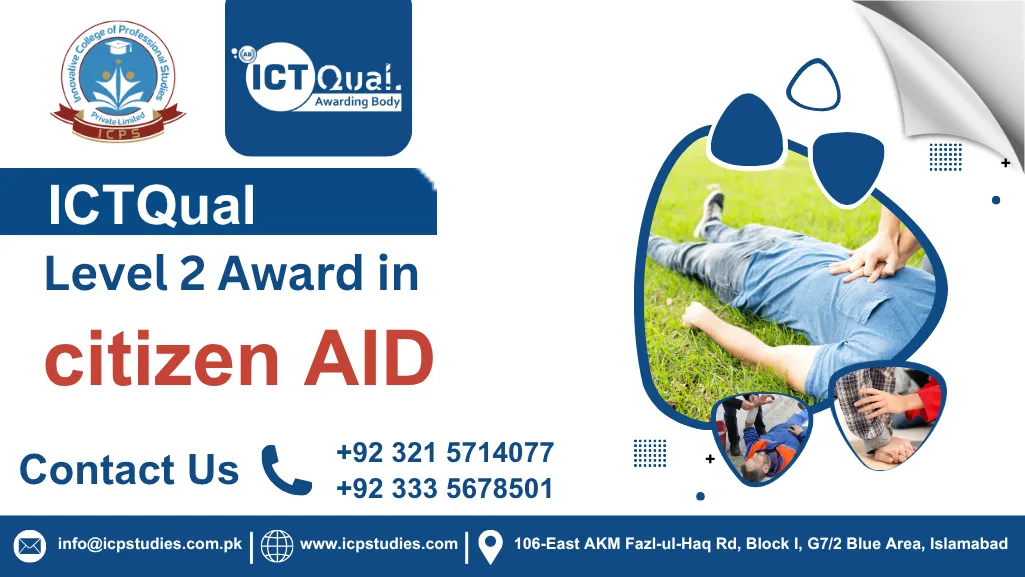
The ICTQual Level 2 Award in Citizen AID is a professionally designed course aimed at equipping individuals with the essential skills to respond confidently and effectively during life-threatening emergencies in public spaces. This qualification is ideal for members of the public, workplace staff, and community volunteers who want to make a positive difference during critical incidents, including major accidents, cardiac arrests, and injuries.
The programme focuses on teaching participants how to assess emergency situations, manage bleeding, provide basic life support, and use emergency equipment safely and efficiently. Learners will gain practical knowledge in handling incidents such as choking, fractures, burns, and shock, ensuring they can deliver immediate care until professional medical services arrive.
Aligned with recognized first aid and emergency response standards, the course emphasizes hands-on training, real-life scenario exercises, and clear guidance on legal responsibilities. Participants will also learn how to communicate effectively with emergency responders and prioritize actions during high-pressure situations.
By completing the ICTQual Level 2 Award in Citizen AID, learners enhance their confidence and competence in emergency response, becoming proactive first responders in their communities or workplaces. This qualification is particularly valuable for teachers, workplace staff, volunteers, and everyday citizens who wish to develop life-saving skills and contribute to safer public and professional environments.
All About ICTQual Level 2 Award in citizen AID
Course Overview
The ICTQual Level 2 Award in Citizen AID is a 2-day, 6-hour intensive training programme designed to provide learners with practical skills to respond effectively in emergency situations. The course is structured into 6 comprehensive study units, each covering essential aspects of public emergency response to ensure participants can act quickly and confidently in life-threatening incidents.
Throughout the programme, learners will explore topics such as assessing emergencies, managing severe bleeding, providing basic life support (BLS), handling choking, fractures, burns, and shock, and safely using emergency equipment. Additional units focus on legal responsibilities, effective communication with emergency services, and strategies for maintaining personal and bystander safety during incidents.
The course emphasizes scenario-based learning and hands-on exercises, allowing participants to apply theoretical knowledge in realistic situations. Interactive training helps learners develop confidence, decision-making skills, and practical competence to provide immediate assistance until professional help arrives.
By the end of this 2-day, 6-hour programme, participants will be fully prepared to act as proactive first responders in public, workplace, and community settings. This course is ideal for workplace staff, volunteers, teachers, and members of the public seeking to develop life-saving skills and contribute to safer environments.
To enroll in the ICTQual Level 2 Award in Citizen AID, applicants should meet the following criteria:
- Age Requirement:
Candidates must be at least 14 years old at the time of registration. - Educational Background:
There are no formal academic qualifications required, although a basic level of education is recommended to support understanding of course content. - Experience:
No prior first aid or emergency response experience is necessary. This course is suitable for beginners and individuals seeking to develop essential life-saving skills. - English Language Proficiency:
Learners must have a good command of English, both written and spoken.
The ICTQual Level 2 Award in Citizen AID is designed for individuals who want to develop essential life-saving skills to respond effectively during emergencies in public, workplace, and community settings. It is ideal for anyone who wants to make a difference in critical situations and save lives.
This course is suitable for:
- Members of the Public who want to be prepared for emergencies in everyday life
- Workplace Staff and First Aiders responsible for safety in offices, factories, and organizations
- Teachers, Teaching Assistants, and School Staff overseeing children and students
- Volunteers and Community Workers supporting public safety at events and gatherings
- Parents, Guardians, and Caregivers seeking emergency response knowledge
- Youth Leaders, Sports Coaches, and Activity Instructors managing active groups
- Anyone seeking a recognized Citizen AID qualification for personal or professional development
This course is particularly beneficial for those who want to gain confidence in providing immediate assistance, managing injuries, performing basic life support, and safely handling emergency situations until professional help arrives.
Study Units
This qualification, the ICTQual Level 2 Award in citizen AID, consists of 6 mandatory units.
- Introduction to Citizen AID
- Threat Awareness and Personal Safety
- Medical Emergencies
- Trauma Management
- Communication and Coordination
- Psychological First Aid
Learning Outcomes:
Learning Outcomes for the Study Units:
Introduction to Citizen AID
- Understanding of Citizen AID Principles: Gain a comprehensive understanding of the principles and objectives of Citizen AID, including the REACT acronym and the role of bystander intervention in emergency response.
- Awareness of Community Empowerment: Recognize the importance of empowering communities to respond effectively to emergencies and the role that individuals can play in supporting each other during critical incidents.
- Historical Context: Explore the history and development of Citizen AID as a proactive approach to enhancing public safety and resilience in the face of evolving threats.
- Ethical Considerations: Consider the ethical implications of bystander intervention and the importance of acting responsibly and ethically when providing assistance to those in need during emergencies.
Threat Awareness and Personal Safety
- Recognition of Potential Threats: Develop the ability to recognize potential threats and hazards in various environments, including public spaces, workplaces, and educational institutions.
- Risk Assessment Skills: Acquire skills in conducting risk assessments and evaluating the level of danger posed by different situations, including assessing the presence of weapons or suspicious behavior.
- Personal Safety Strategies: Learn strategies and techniques for prioritizing personal safety while responding to emergencies, including situational awareness, evasion tactics, and the importance of seeking cover or shelter.
- Understanding of Response Protocols: Understand the importance of following established response protocols and guidelines for personal safety, including procedures for evacuating or sheltering in place during emergencies.
Medical Emergencies
- Recognition of Medical Emergencies: Develop the ability to recognize signs and symptoms of common medical emergencies, including cardiac arrest, choking, severe bleeding, and allergic reactions.
- Basic Life Support Skills: Acquire practical skills in performing basic life support interventions, including cardiopulmonary resuscitation (CPR), the use of automated external defibrillators (AEDs), and techniques for opening and maintaining airways.
- First Aid Techniques: Learn first aid techniques for treating minor injuries, administering medications (e.g., epinephrine auto-injectors for anaphylaxis), and providing initial care for individuals with medical conditions such as diabetes or seizures.
- Understanding of Emergency Medical Services: Understand the role and responsibilities of emergency medical services (EMS) providers and the importance of activating EMS assistance promptly when needed.
Trauma Management
- Assessment of Traumatic Injuries: Develop the ability to assess and prioritize traumatic injuries based on severity and potential for life-threatening complications.
- Hemorrhage Control Techniques: Acquire practical skills in controlling external bleeding, including the application of direct pressure, wound packing, and the use of tourniquets or hemostatic agents.
- Airway Management: Learn techniques for managing airway obstruction and ensuring adequate ventilation in individuals with traumatic injuries or compromised airways.
- Stabilization and Transportation: Understand the principles of trauma stabilization and the importance of rapid and safe transportation of injured individuals to definitive care facilities for further treatment.
Communication and Coordination
- Effective Communication Skills: Develop effective communication skills for relaying accurate information to emergency services, coordinating with other responders or bystanders, and providing reassurance to individuals affected by emergencies.
- Use of Communication Devices: Learn how to use communication devices effectively, including mobile phones, two-way radios, and public address systems, to facilitate communication and coordination during emergencies.
- Collaborative Decision-Making: Understand the importance of collaborative decision-making and teamwork in emergency response situations, including the delegation of tasks and the establishment of clear roles and responsibilities.
- Crisis Communication Strategies: Acquire skills in crisis communication, including techniques for managing information flow, addressing misinformation or rumors, and providing updates to stakeholders and the public.
Psychological First Aid
- Recognition of Psychological Distress: Develop the ability to recognize signs of psychological distress in individuals affected by traumatic events, including symptoms of anxiety, fear, grief, and post-traumatic stress.
- Empathic Listening Skills: Acquire skills in empathic listening and providing emotional support to individuals in crisis, including active listening techniques, validation of emotions, and nonjudgmental communication.
- Crisis Intervention Strategies: Learn crisis intervention strategies for assisting individuals in managing acute stress reactions, promoting coping mechanisms, and connecting them with appropriate support services.
- Self-Care Practices: Understand the importance of self-care for responders and volunteers involved in emergency response activities, including strategies for managing stress, maintaining resilience, and seeking support when needed.
FAQs ICTQual Level 2 Award in citizen AID