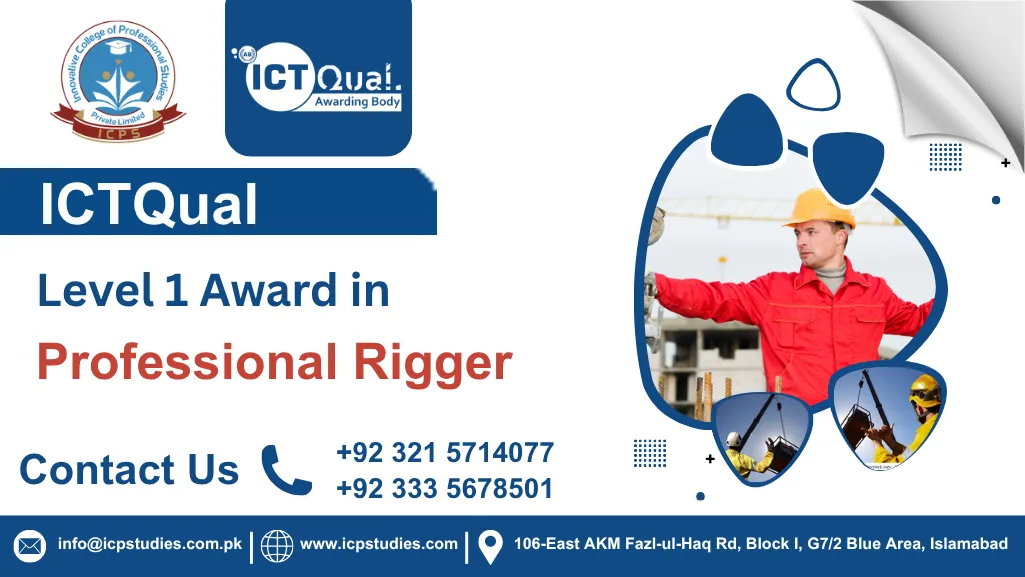
The ICTQual Level 1 Award in Professional Rigger is a foundational qualification designed for individuals seeking to begin a career in rigging and lifting operations within industries such as construction, oil and gas, logistics, and engineering. This entry-level course provides essential knowledge and practical understanding of safe rigging practices, equipment handling, and workplace safety standards. It is ideal for beginners who want to develop core competencies required to support lifting operations effectively and safely.
This course introduces learners to key rigging principles, including the identification and inspection of lifting gear, basic slinging techniques, communication methods, and hazard awareness. Emphasis is placed on adhering to international safety regulations and best practices, ensuring that learners understand the importance of risk assessment and accident prevention in high-risk environments.
By completing the ICTQual Level 1 Award in Professional Rigger, candidates will gain the confidence and fundamental skills needed to work under supervision in rigging roles. The qualification also serves as a stepping stone for further professional development in lifting operations and advanced rigging certifications. It is an excellent starting point for those aiming to build a successful career in the rigging and heavy lifting industry.
All About ICTQual Level 1 Award in Professional Rigger
Course Overview
The ICTQual Level 1 Award in Professional Rigger is a concise and practical 1-day training program designed to equip learners with essential introductory skills required for safe and effective rigging operations. This course is structured into 6 focused study units, each targeting key areas of knowledge that are critical for individuals entering the lifting and rigging field.
The program begins with an overview of rigging fundamentals, followed by an introduction to commonly used lifting equipment and accessories. Learners will explore safe handling techniques, basic slinging methods, and the importance of clear communication during lifting operations. The course also covers hazard identification, risk control measures, and the responsibilities of a rigger in maintaining workplace safety. Additionally, participants will gain an understanding of inspection procedures and proper use of personal protective equipment (PPE).
Designed to be intensive yet accessible, this 1-day course blends theoretical knowledge with practical insights, enabling learners to quickly grasp core concepts. The structured approach ensures that all six study units contribute to building a strong foundation in rigging practices. Upon completion, learners will be better prepared to assist in lifting tasks safely and efficiently while complying with industry standards and safety regulations.
To enrol in the ICTQual Level 1 Award in Professional Rigger, learners are expected to meet the following basic entry requirements:
- Age Requirement:
Applicants must be at least 18 years old at the time of registration to ensure they are legally eligible to participate in workplace-related training and safety procedures. - Educational Background:
There are no formal academic qualifications required for this entry-level course. However, a basic level of education (such as secondary school or equivalent) is recommended to help learners understand training materials and safety instructions. - Experience:
No prior experience in rigging or lifting operations is required. This course is specifically designed for beginners who are new to the field and wish to develop foundational skills. - English Language Proficiency:
Learners must have a good command of English, both written and spoken.
The ICTQual Level 1 Award in Professional Rigger is designed for individuals who are looking to start or support a career in rigging and lifting operations. This course is suitable for:
- Beginners and entry-level workers who want to gain basic knowledge of rigging practices
- Construction and site workers involved in lifting and material handling tasks
- Helpers, assistants, or labourers working under supervision in industrial environments
- Individuals seeking a career in oil & gas, logistics, or engineering sectors
- Safety-conscious workers who want to understand proper lifting techniques and hazard prevention
- Employers or organizations aiming to provide foundational rigging training to their workforce
This course is ideal for anyone who wants to develop essential rigging skills, improve workplace safety awareness, and build a strong foundation for progressing into advanced rigging qualifications.
Study Units
This qualification, the ICTQual Level 1 Award in Professional Rigger, consists of 6 mandatory units.
- Introduction to Rigging
- Rigging Equipment and Gear
- Rigging Techniques and Procedures
- Safety in Rigging Operations
- Load Calculations and Weight Distribution
- Rigging Inspections and Documentation
Learning Outcomes:
Learning Outcomes for the Study Units:
1. Introduction to Rigging
- Gain a foundational understanding of what rigging is and its importance in industries such as construction, logistics, events, and heavy lifting.
- Identify the roles and responsibilities of a professional rigger in supporting safe and efficient operations.
- Understand the basic terminology, concepts, and rigging processes used in different work environments.
- Develop awareness of workplace regulations, legal responsibilities, and industry standards relevant to rigging.
2. Rigging Equipment and Gear
- Recognise common rigging equipment such as ropes, chains, slings, pulleys, hooks, and lifting devices.
- Learn how to correctly select rigging gear based on load type, weight, and environmental conditions.
- Demonstrate knowledge of safe handling, maintenance, and storage of rigging equipment.
- Understand the importance of using certified, well-maintained equipment to prevent accidents and failures.
3. Rigging Techniques and Procedures
- Learn essential rigging techniques such as attaching loads, securing lifting points, and balancing equipment.
- Apply safe rigging procedures for common tasks including hoisting, moving, and positioning loads.
- Understand different rigging configurations and their applications in real-world projects.
- Develop the ability to follow detailed work instructions and technical drawings during rigging operations.
4. Safety in Rigging Operations
- Identify common hazards in rigging environments such as falling objects, overloading, and unsafe equipment.
- Apply industry-standard safety protocols including PPE (Personal Protective Equipment) use, hazard reporting, and emergency procedures.
- Understand how to work as part of a team to ensure safe rigging operations.
- Develop strong awareness of workplace safety culture and regulatory compliance.
5. Load Calculations and Weight Distribution
- Learn the basic mathematical principles behind load calculations and weight distribution.
- Understand how to estimate load weight and identify safe lifting capacities for different equipment.
- Apply calculations to determine the centre of gravity and balance of loads.
- Gain confidence in planning safe rigging setups based on accurate measurements and calculations.
6. Rigging Inspections and Documentation
- Understand the importance of pre-use inspection of rigging equipment to identify wear, defects, or potential hazards.
- Learn how to record inspection results accurately using standard documentation practices.
- Develop the ability to maintain proper records of rigging activities for safety audits and compliance.
- Recognise the role of inspection and documentation in preventing accidents and ensuring accountability.
FAQs ICTQual Level 1 Award in Professional Rigger