
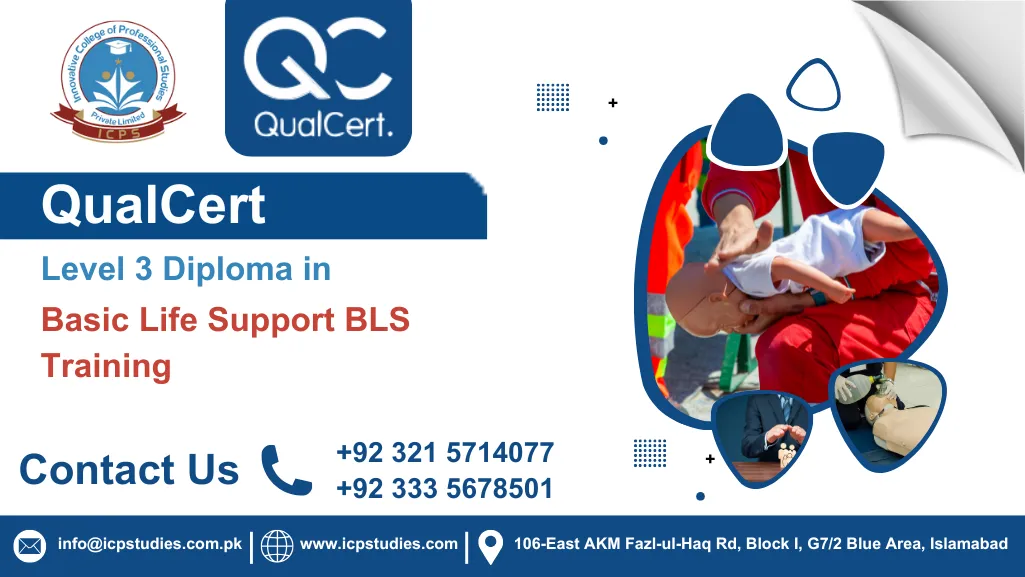
The QualCert Level 3 Diploma in Basic Life Support BLS Training is designed to provide learners with essential knowledge and practical skills required to respond effectively in emergency situations. This course focuses on equipping participants with the ability to deliver immediate care, maintain safety, and apply recognized life support techniques. Learners will gain confidence in handling scenarios such as cardiac arrest, choking, and respiratory emergencies, ensuring they are prepared to act quickly and responsibly when needed.
This diploma emphasizes practical application alongside theoretical understanding, making it suitable for individuals working in healthcare, community services, or safety-critical industries. The training includes structured modules that cover CPR, use of automated external defibrillators (AEDs), and safe patient handling. By completing this program, learners demonstrate competence in vital life-saving procedures, enhancing workplace safety and personal responsibility. The qualification also complements other certifications and diplomas in health and safety, first aid, and emergency response.
QualCert Level 3 Diploma in Basic Life Support BLS Training provides a recognized certification that validates the learner’s ability to perform essential life support interventions. It is not Ofqual regulated but remains a respected credential within professional environments. The course highlights the importance of immediate response and practical readiness, ensuring learners can contribute effectively to safeguarding lives. Successful completion of this diploma strengthens professional credibility and aligns with industry standards, making it a valuable addition to existing certifications and diplomas in related fields.
All About QualCert Level 3 Diploma in Basic Life Support BLS Training
Course Overview
The QualCert Level 3 Diploma in Basic Life Support BLS Training offers a structured pathway to mastering essential emergency response skills. Learners gain 60 credits through a comprehensive program designed to balance theoretical knowledge with practical application, ensuring participants are fully prepared to deliver effective life-saving interventions in critical situations.
This diploma requires a Total Qualification Time (TQT) of 300 hours, including 210 Guided Learning Hours (GLH). The structured learning approach ensures participants receive consistent instruction, practice, and assessment. Learners benefit from a clear framework that supports both individual development and professional recognition within health, safety, and emergency response environments.
As the highest-level diploma in this area, the program emphasizes leadership, coordination, and advanced life support techniques. Participants are trained not only to perform interventions but also to manage emergency scenarios, guide teams, and ensure safety protocols are followed. This focus on leadership makes the qualification valuable across diverse professional settings.
The QualCert Level 3 Diploma in Basic Life Support BLS Training equips learners with advanced skills that enhance confidence and competence in emergency care. By completing this program, participants demonstrate their ability to respond effectively, coordinate support, and apply advanced techniques, making this diploma a respected certification within health, safety, and emergency response sectors.
To enroll in the QualCert Level 3 Diploma in Basic Life Support BLS Training, learners should meet the following entry requirements:
- Minimum age of 18 years to ensure maturity and responsibility in handling emergency scenarios.
- Basic educational background, ideally holding certificates or diplomas in areas such as First Aid, Health and Safety, or Emergency Response.
- Proficiency in English language to understand instructions, communicate effectively, and complete assessments.
- Prior work experience in healthcare, safety, or related fields is beneficial but not mandatory.
These requirements ensure that learners are adequately prepared to engage with the course content and apply their skills in real-world settings. Having related qualifications such as a Diploma in First Aid, Certificate in Health and Safety, or Emergency Medical Response training can strengthen the learner’s foundation and readiness.
The QualCert Level 3 Diploma in Basic Life Support BLS Training is designed for individuals seeking to develop advanced life support skills and leadership capabilities in emergency care.
Healthcare Professionals
- Nurses, paramedics, and medical staff aiming to enhance emergency response skills.
- Hospital staff responsible for patient safety and immediate care.
- Community health workers providing frontline support.
- Care home staff ensuring resident safety.
- Clinical support workers seeking recognized certification.
Safety and Emergency Personnel
- Firefighters requiring advanced life support knowledge.
- Police officers managing emergency incidents.
- Security staff working in public or private sectors.
- Disaster response teams coordinating rescue operations.
- Workplace safety officers ensuring compliance.
Corporate and Industrial Workers
- Employees in high-risk industries such as construction and manufacturing.
- Supervisors responsible for team safety.
- Occupational health staff managing workplace emergencies.
- Managers overseeing safety-critical operations.
- Staff in logistics and transport sectors.
Community Leaders and Volunteers
- Volunteers supporting local emergency services.
- Teachers and school staff ensuring student safety.
- Sports coaches managing athlete health.
- Religious or community leaders providing support during gatherings.
- Public service workers engaging with large groups.
Aspiring Trainers and Coordinators
- Individuals aiming to lead safety workshops.
- Trainers delivering first aid and life support sessions.
- Coordinators managing emergency drills.
- Safety consultants advising organizations.
- Professionals seeking credibility in training roles.
International Learners
- Professionals working abroad in healthcare or safety roles.
- Learners seeking globally recognized certification.
- Staff in NGOs delivering emergency aid.
- Workers in humanitarian missions.
- Individuals preparing for international safety standards.
This course is ideal for anyone committed to safeguarding lives and strengthening their professional profile in emergency response. It empowers learners with advanced skills, leadership qualities, and recognized certification to act confidently in critical situations.
Study Units
- Advanced Theoretical and Practical Life Support Techniques
- Leadership and Coordination in Emergency Medical Response
- Advanced Trauma Life Support and Mass Casualty Management
- Use of Medical Equipment and Pharmacological Interventions
- Research, Risk Analysis, and Innovations in BLS
- Practical Simulations and High-Stress Scenario Training
Learning Outcomes
This diploma is designed to provide learners with advanced knowledge, practical expertise, and leadership skills in emergency medical response.
Advanced Theoretical and Practical Life Support Techniques
- Gain proficiency in advanced CPR methods, AED operation, and airway management procedures.
- Understand the physiological foundations of life support and emergency interventions.
- Apply evidence-based approaches to improve patient survival outcomes.
- Strengthen both theoretical knowledge and practical application in diverse emergency contexts.
Leadership and Coordination in Emergency Medical Response
- Lead and coordinate emergency response teams under high-pressure conditions.
- Communicate clearly with medical staff, first responders, and bystanders during incidents.
- Implement structured emergency action plans for effective incident management.
- Develop leadership qualities essential for guiding teams in critical environments.
Advanced Trauma Life Support and Mass Casualty Management
- Assess and prioritize multiple casualties using structured triage systems.
- Manage severe trauma cases, including fractures, spinal injuries, and head trauma.
- Apply strategies for mass casualty response in disaster or accident scenarios.
- Enhance decision-making skills in complex trauma and multi-patient emergencies.
Use of Medical Equipment and Pharmacological Interventions
- Operate essential medical equipment such as oxygen therapy units, suction devices, and bag-valve masks.
- Understand the importance of pharmacological interventions in emergency medicine.
- Safely administer life-saving medications under professional guidance.
- Integrate equipment use with clinical judgment to optimize patient care.
Research, Risk Analysis, and Innovations in BLS
- Analyse case studies to identify best practices in life support.
- Conduct risk assessments to strengthen emergency preparedness.
- Explore innovative technologies and methodologies in life-saving interventions.
- Apply research-driven insights to improve emergency response strategies.
Practical Simulations and High-Stress Scenario Training
- Engage in realistic emergency simulations to refine decision-making skills.
- Perform life-saving procedures under time-sensitive and high-pressure conditions.
- Evaluate performance through structured debriefing and feedback sessions.
- Commit to continuous improvement through scenario-based learning.
These learning outcomes ensure that learners completing the QualCert Level 3 Diploma in Basic Life Support BLS Training are fully prepared to act with confidence, competence, and leadership in emergency situations, making them valuable assets in healthcare, safety, and community environments.
FAQs About QualCert Level 3 Diploma in Basic Life Support BLS Training