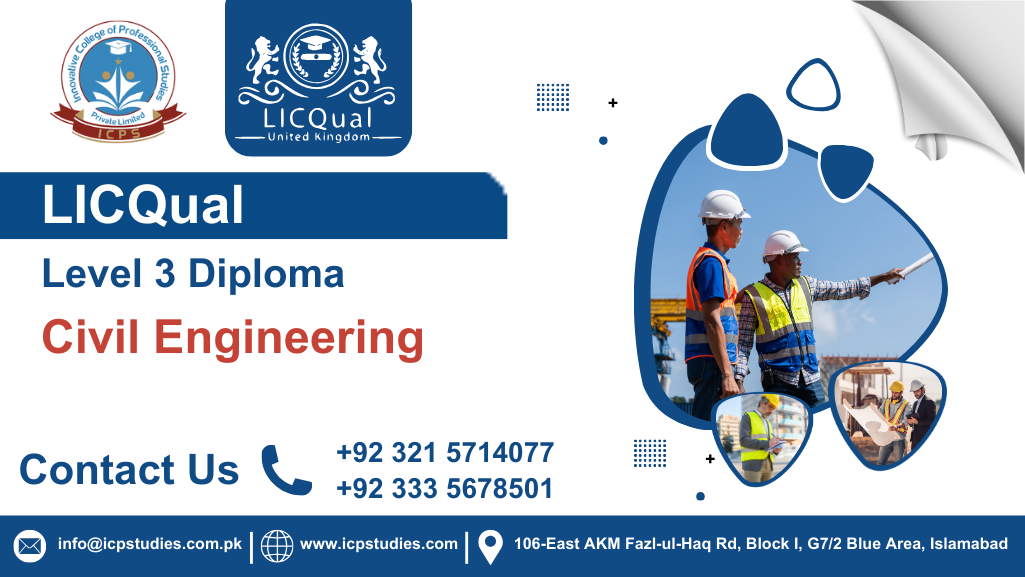
Dominate the Industry: LICQual Level 3 Diploma in Civil Engineering
The LICQual Level 3 Diploma in Civil Engineering is designed to provide learners with a strong foundation in the principles and practices of civil engineering. This course focuses on essential areas such as construction methods, project management, and safety standards. While it is not Ofqual regulated, it delivers valuable knowledge and practical skills that can enhance professional competence and career opportunities in the civil engineering sector.
This diploma is structured to emphasize practical applications, ensuring learners gain insights into real-world engineering challenges and solutions. Participants will explore topics including structural analysis, site supervision, and sustainable construction practices. Alongside this diploma, learners may also pursue other certifications and diplomas such as a Certificate in Construction Management or a Diploma in Structural Engineering to complement their expertise.
The LICQual Level 3 Diploma in Civil Engineering equips learners with the confidence to take on technical and managerial responsibilities within construction projects. By combining theoretical knowledge with practical understanding, the course prepares individuals to meet industry demands effectively. Learners who complete this diploma can strengthen their professional profile and may choose to add further certifications and diplomas to expand their skills and credibility in the civil engineering field.
All About LICQual Level 3 Diploma in Civil Engineering
Course Overview
The LICQual Level 3 Diploma in Civil Engineering is a structured program designed to provide learners with essential knowledge and practical skills in civil engineering. Delivered over 30 hours, the course introduces fundamental concepts, construction techniques, and industry practices, ensuring participants gain a solid foundation for professional growth.
This diploma is divided into 10 comprehensive units, each focusing on a key area of civil engineering. Topics include structural design, project planning, construction safety, and material science. Learners benefit from a balanced mix of theoretical instruction and practical application, making the course highly relevant to real-world engineering challenges.
The program emphasizes applied learning, enabling participants to understand how civil engineering principles are implemented in modern infrastructure projects. With 30 hours of guided study, learners develop confidence in handling technical tasks, analyzing engineering problems, and applying effective solutions. Each unit builds progressively to strengthen overall competence.
LICQual Level 3 Diploma in Civil Engineering offers a valuable certification that enhances career prospects in the construction and engineering sectors. Covering 10 units in detail, the course ensures learners acquire versatile skills and industry knowledge. Its structured 30-hour duration makes it accessible, efficient, and impactful for aspiring professionals.
Entry Requirements
- Age Requirement: Learners must be at least 18 years old at the time of enrollment.
- Educational Background: A minimum of secondary education is required. Holding a related qualification such as a Diploma in Construction Management or Certificate in Engineering Fundamentals is considered an advantage.
- Language Proficiency: Applicants should demonstrate good command of English, both written and spoken, to understand course materials and assessments effectively.
- Work Experience: Prior exposure to construction or engineering-related work is beneficial but not mandatory.
- This course is designed to be accessible while ensuring learners have the foundational skills to succeed. Meeting these entry requirements helps participants gain maximum benefit from the program and positions them for success in civil engineering careers.
Ideal Learner
The LICQual Level 3 Diploma in Civil Engineering is designed for individuals who are motivated to gain practical knowledge and skills in the civil engineering field. The ideal learner should demonstrate the following qualities:
- Age 18 or above, with maturity to engage in structured professional learning
- Basic educational background, preferably supported by a related certificate or diploma in construction or engineering
- Strong interest in civil engineering, infrastructure development, and construction projects
- Good English language proficiency to understand course materials and assessments
- Analytical and problem-solving mindset with attention to technical detail
- Commitment to complete 30 hours of study across 10 structured units
- Willingness to apply practical skills in real-world engineering environments
This diploma is best suited for learners who want to strengthen their expertise, gain industry-relevant knowledge, and establish themselves as capable professionals in civil engineering. Meeting these qualities ensures participants can maximize the benefits of the program and achieve success in their career journey
Study Units
- Introduction to Civil Engineering
- Construction Technology and Materials
- Surveying in Construction
- Health, Safety, and Welfare in Construction
- Structural Design Principles
- Environmental Impact and Sustainability in Engineering
Learning Outcomes
Introduction to Civil Engineering
- Understand the role and responsibilities of a civil engineer in various sectors, including infrastructure, construction, and environmental engineering.
- Develop a foundational knowledge of the key principles, practices, and processes involved in civil engineering projects.
Construction Technology and Materials
- Gain an understanding of the different types of construction materials and their applications in civil engineering.
- Learn about construction technologies, techniques, and the methods used in the design and execution of building and infrastructure projects.
Surveying in Construction
- Understand the importance of surveying in civil engineering and its role in accurately measuring and assessing land, site conditions, and structural elements.
- Develop the skills to apply surveying techniques and use industry-standard tools for site analysis and project planning.
Health, Safety, and Welfare in Construction
- Recognize the critical importance of health, safety, and welfare regulations in construction settings.
- Understand and apply safety protocols to minimize risks and ensure compliance with industry standards during engineering projects.
Structural Design Principles
- Understand the fundamental principles of structural design, including the behavior of materials and load distribution in different types of structures.
- Learn how to design simple structures by applying principles of stability, strength, and durability while considering safety and functionality.
Environmental Impact and Sustainability in Engineering
- Examine the environmental impacts of civil engineering projects and the importance of sustainability in construction practices.
- Understand how to incorporate eco-friendly design principles, resource conservation, and waste reduction into engineering projects to minimize environmental damage.
FAQs About LICQual Level 3 Diplomain Civil Engineering