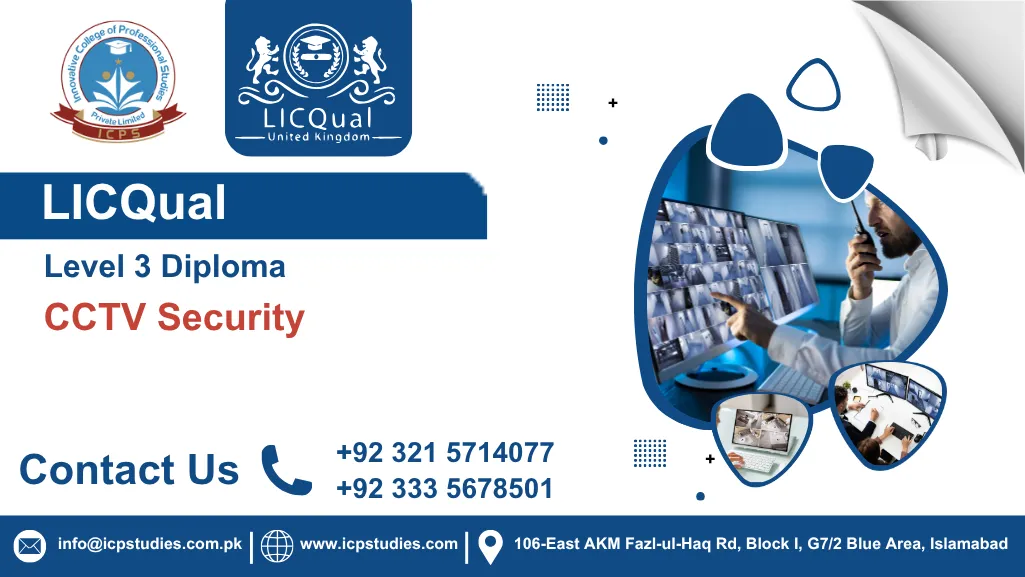
The LICQual Level 3 Diploma in CCTV Security is designed for Learners who want to develop advanced practical knowledge of CCTV systems, surveillance operations, security monitoring and professional CCTV management. CCTV technology is widely used across commercial, industrial, retail, residential and public environments, making skilled surveillance personnel important for effective security monitoring, incident awareness and protection of people and property.
This diploma provides Learners with a structured understanding of CCTV security principles, including system design, camera technologies, monitoring procedures, recording and image management, surveillance techniques, incident response and professional security practices. Learners can develop knowledge of how CCTV systems operate within wider security strategies and how effective monitoring can support risk management and security operations.
The LICQual Level 3 Diploma in CCTV Security is suitable for Learners seeking to strengthen their knowledge for CCTV operator, surveillance, control room and security-related responsibilities. It is also relevant to security personnel who want to develop a deeper understanding of CCTV systems and professional surveillance practices.
The qualification supports practical knowledge applicable to modern CCTV security environments. Learners can strengthen their understanding of surveillance procedures, CCTV equipment, monitoring responsibilities, incident reporting and responsible handling of security information. The diploma is relevant to security environments across the UK, Pakistan, UAE, Middle East and other international markets where CCTV systems form part of wider security arrangements.
All About LICQual Level 3 Diploma in CCTV Security
Course Overview
The LICQual Level 3 Diploma in CCTV Security is designed to provide Learners with advanced practical knowledge of CCTV systems, surveillance operations, security monitoring and professional CCTV practices. The qualification develops a deeper understanding of how CCTV technology supports security operations, incident monitoring, evidence management and the protection of people, property and premises.
The programme covers important areas of CCTV security, including CCTV system components, camera technology, surveillance techniques, monitoring procedures, recording and image management, incident response, security documentation and professional responsibilities. Learners can develop knowledge relevant to modern CCTV control rooms, security operations and surveillance environments.
This diploma is suitable for Learners interested in CCTV operations, surveillance, control room activities, private security, retail security, facilities management and workplace security. It provides relevant professional knowledge for CCTV-related responsibilities across the UK, Pakistan, UAE, Middle East and other international markets.
Entry Requirement:
The LICQual Level 3 Diploma in CCTV Security is designed for Learners who want to develop advanced knowledge of CCTV systems, surveillance operations, security monitoring and professional CCTV practices. The following entry requirements are recommended:
- Age: Normally 18 years or above.
- Experience: Previous experience in CCTV, private security, surveillance, control room operations or related security work is beneficial but not essential.
- Educational Background: A basic secondary education or equivalent qualification is recommended.
- Language Proficiency: Learners should have sufficient English language proficiency to understand CCTV terminology, technical information, course materials and assessment requirements.
- Digital Skills: Basic to intermediate computer and digital skills are recommended for working with CCTV systems and electronic learning resources.
- Technical Knowledge: Basic knowledge of CCTV or security systems is beneficial, but advanced technical knowledge is not normally required.
- Security Knowledge: Previous understanding of security procedures, surveillance practices or workplace safety can be helpful.
- Learning Resources: Learners should have access to the required course materials, digital resources and suitable equipment where practical learning is included.
- Professional Commitment: Learners should be willing to develop and apply professional CCTV monitoring, surveillance and information-handling practices.
Study Units
This qualification, the LICQual Level 3 Diploma in CCTV Security, consists of 6 mandatory units.
- Comprehensive CCTV System Design and Management
- Advanced AI and Facial Recognition in CCTV Security
- Legal Frameworks and International Security Regulations
- Risk Assessment and Security Strategy Development
- Emergency Response Planning and Crisis Management
- Leadership, Training, and Professional Development in CCTV Security
Learning Outcomes:
By the end of this course, learners will be able to:
Comprehensive CCTV System Design and Management
- Understand the core components of a CCTV system, including cameras, recording devices, and monitoring software.
- Learn how to design, install, and configure an efficient and effective surveillance system.
- Develop the ability to assess and optimize CCTV placement for maximum coverage and security effectiveness.
- Gain knowledge of maintenance, troubleshooting, and upgrading CCTV systems.
Advanced AI and Facial Recognition in CCTV Security
- Explore the latest advancements in AI-driven security systems and facial recognition technology.
- Understand the ethical and legal implications of AI surveillance in different sectors.
- Learn how to analyze AI-generated security data for crime prevention and threat detection.
- Gain hands-on experience in configuring and managing AI-powered CCTV analytics.
Legal Frameworks and International Security Regulations
- Understand global and regional laws governing CCTV surveillance and data privacy.
- Learn about GDPR, human rights considerations, and compliance in CCTV operations.
- Develop skills in writing security policies that align with legal standards.
- Gain insight into legal responsibilities, including evidence collection and admissibility in court.
Risk Assessment and Security Strategy Development
- Learn how to identify potential security threats and vulnerabilities using CCTV surveillance.
- Develop risk assessment methodologies tailored to different environments (corporate, public, residential).
- Create and implement effective security strategies to mitigate risks.
- Understand the role of CCTV in proactive threat detection and response planning.
Emergency Response Planning and Crisis Management
- Develop a structured approach to handling security breaches, emergencies, and crises.
- Learn how to coordinate with emergency services using CCTV surveillance insights.
- Understand evacuation procedures, communication strategies, and real-time incident management.
- Gain skills in post-incident reporting, evaluation, and security enhancements.
Leadership, Training, and Professional Development in CCTV Security
- Learn key leadership skills for managing a security team in a CCTV control room environment.
- Develop strategies for training personnel in effective CCTV monitoring and response.
- Understand career progression opportunities in CCTV security and professional development pathways.
- Enhance decision-making, communication, and problem-solving skills in a security leadership role.
Ideal Candidate:
The LICQual Level 3 Diploma in CCTV Security is suitable for Learners who want to develop advanced knowledge of CCTV systems, surveillance operations, monitoring procedures and professional security practices. It is particularly relevant to Learners working or seeking responsibilities in CCTV control rooms, private security, surveillance and wider security operations.
- CCTV Operators: Learners responsible for monitoring CCTV systems and observing security activity across controlled environments.
- CCTV Monitoring Personnel: Learners who want to strengthen their knowledge of professional surveillance and monitoring procedures.
- Security Officers: Learners who use CCTV as part of wider premises protection, incident awareness and security operations.
- Control Room Personnel: Learners working in security control rooms who need knowledge of CCTV monitoring, communication and incident procedures.
- Surveillance Professionals: Learners involved in surveillance activities who want to develop their understanding of CCTV technology and monitoring practices.
- Retail Security Personnel: Learners responsible for CCTV-supported security, loss prevention and incident monitoring within retail environments.
- Facilities Management Personnel: Learners involved in premises security, CCTV systems and building monitoring.
- Security Supervisors: Learners who supervise CCTV operators, security teams or surveillance activities and need stronger technical and operational knowledge.
- Security and Risk Personnel: Learners involved in security planning, risk awareness, incident management and protective measures.
- Career Development Learners: Learners seeking to develop professional CCTV and surveillance knowledge for roles involving security monitoring and control room operations.
FAQs LICQual Level 3 Diploma in CCTV Security