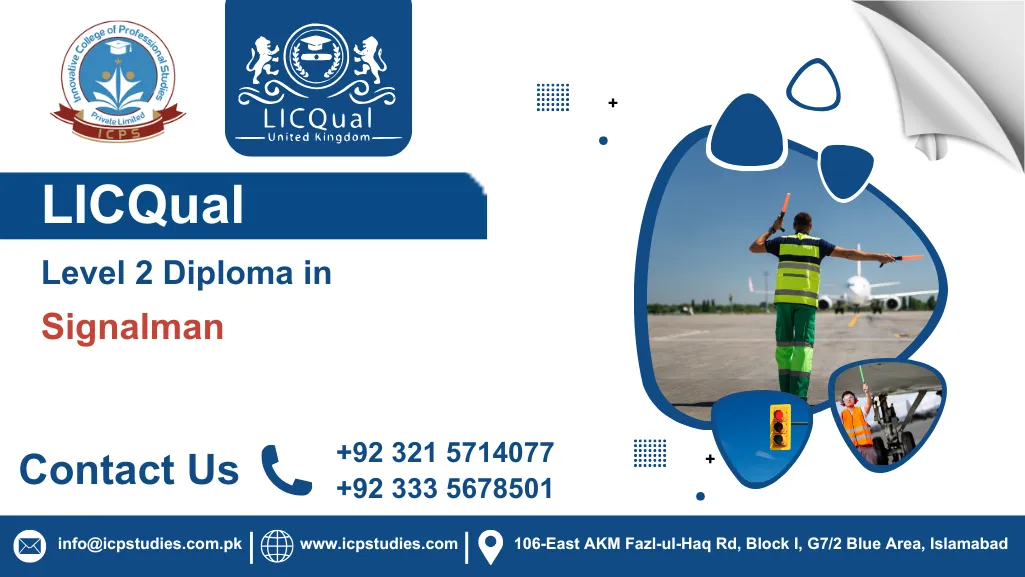
The LICQual Level 2 Diploma in Signalman is a professional qualification designed to provide learners with intermediate knowledge and practical skills in railway signaling. This course builds upon foundational concepts and introduces more advanced responsibilities, focusing on safety, communication, and operational efficiency. Learners are guided through structured training that emphasizes accuracy, reliability, and confidence in handling signaling duties. The program ensures participants are well-prepared to manage signaling tasks effectively while adhering to industry standards and safety protocols.
This diploma is carefully structured to highlight the importance of signaling systems, operational checks, and communication methods within railway environments. Learners will gain insights into traffic management, equipment handling, and emergency preparedness, ensuring they can respond effectively to operational challenges. Although the qualification is not Ofqual regulated, it is recognized for its industry relevance and practical focus. Participants can strengthen their career profile by complementing this diploma with related certifications and diplomas such as Railway Operations, Safety Management, or Technical Communication, which enhance professional standing.
The LICQual Level 2 Diploma in Signalman provides a valuable credential for individuals seeking to advance their expertise in railway signaling. The course equips learners with practical knowledge and applied skills essential for safe and efficient signaling operations. By completing this diploma, participants demonstrate their commitment to industry standards and professional growth. Alongside this qualification, learners may pursue further certifications and diplomas that complement their expertise, helping them build a well-rounded portfolio of achievements in railway operations and safety management.
All About LICQual Level 2 Diploma in Signalman
Course Overview
The LICQual Level 2 Diploma in Signalman provides learners with intermediate knowledge and practical skills in railway signaling. It builds upon foundational concepts, focusing on safety, communication, and operational efficiency. This qualification prepares participants to handle signaling responsibilities with confidence, ensuring compliance with industry standards and effective railway operations.
The program is divided into 6 total units, each designed to cover essential aspects of signaling. Learners explore signaling systems, traffic management, communication protocols, and emergency preparedness. The structured approach ensures participants gain both theoretical understanding and practical competence, enabling them to perform signaling duties effectively in diverse operational environments.
Learners completing the diploma will achieve 36 total credits, reflecting the depth and breadth of study undertaken. These credits demonstrate professional development and recognition of acquired skills. The qualification emphasizes industry-relevant competencies, helping learners strengthen their career profile while complementing their knowledge with related certifications and diplomas in railway operations.
The course requires 120 Guided Learning Hours (GLH), offering a balanced mix of classroom instruction and applied learning. This time allocation ensures learners engage with both theory and practice, developing confidence in signaling tasks. The LICQual Level 2 Diploma in Signalman provides a valuable credential for individuals seeking to advance their expertise in railway safety and signaling.
To enroll in the LICQual Level 2 Diploma in Signalman, learners are expected to meet the following criteria:
- Age Requirement: Applicants should generally be 18 years or older, ensuring maturity and readiness for intermediate-level responsibilities.
- Educational Background: A school-level qualification or equivalent is recommended. Related diplomas or certificates such as Railway Operations, Safety Awareness, or Technical Communication can strengthen the learner’s profile.
- Language Proficiency: Learners must demonstrate the ability to read, write, and communicate effectively in English to understand course materials and assessments.
- Work Experience: Prior exposure to railway operations or signaling tasks is beneficial, though not mandatory, as it helps learners connect theory with practice.
These requirements ensure participants are prepared to engage with the course content effectively and can build upon their existing knowledge and skills.
The LICQual Level 2 Diploma in Signalman is designed for individuals seeking to enhance their knowledge and skills in railway signaling. It is suitable for learners who want to progress from foundational concepts to more advanced responsibilities in signaling operations.
Railway Professionals
- Individuals already working in railway operations
- Staff seeking formal recognition of signaling skills
- Employees aiming to improve safety knowledge
- Workers transitioning into signaling roles
- Supervisors needing structured training
Career Builders
- Learners aiming to strengthen their professional profile
- Individuals preparing for signaling responsibilities
- Those interested in operational safety practices
- Candidates seeking industry-relevant certifications
- People motivated to expand their career opportunities
Technical Staff
- Maintenance workers involved in signaling equipment
- Technicians supporting railway operations
- Staff responsible for monitoring train movements
- Employees ensuring compliance with safety standards
- Personnel requiring structured operational training
Safety-Focused Learners
- Individuals prioritizing workplace safety
- Learners interested in risk management
- Staff aiming to reduce operational hazards
- Employees responsible for communication accuracy
- Professionals committed to industry protocols
Aspiring Signalmen
- Candidates preparing for signaling duties
- Learners seeking practical and applied skills
- Individuals aiming to enhance career opportunities
- Workers motivated to gain recognized certification
- Professionals committed to railway efficiency
Industry Enthusiasts
- Learners passionate about railway systems
- Individuals exploring signaling as a career path
- Enthusiasts seeking structured knowledge
- Those interested in operational standards
- Learners motivated by professional growth
This course provides a valuable credential for anyone committed to railway safety and signaling excellence, offering structured learning and recognition of professional competence.
Study Units
- Signalman Roles and Responsibilities in Detail
- Advanced Communication Techniques for Signalmen
- Safety Regulations and Protocols for Signalmen
- Handling Complex Signaling Operations
- Traffic Control Methods and Techniques
- Inspection and Maintenance of Signaling Equipment
Learning Outcomes
By the end of this course, learners will be able to:
Signalman Roles and Responsibilities in Detail
- Demonstrate a thorough understanding of the comprehensive roles and responsibilities of a signalman in complex railway operations.
- Identify and apply key tasks associated with overseeing train movements and ensuring safety.
- Coordinate effectively with other railway staff to maintain operational efficiency.
- Analyze responsibilities within a broader operational framework to ensure smooth traffic flow.
- Develop confidence in managing signaling duties across varied operational scenarios.
Advanced Communication Techniques for Signalmen
- Master advanced communication protocols and techniques used in railway signaling.
- Apply effective communication strategies in high-pressure situations to ensure safety.
- Coordinate seamlessly with operational teams using clear and concise methods.
- Understand the importance of verbal, non-verbal, and electronic communication tools.
- Demonstrate professional communication that supports accuracy and operational efficiency.
Safety Regulations and Protocols for Signalmen
- Develop an in-depth understanding of advanced safety regulations and industry protocols.
- Identify potential hazards in complex signaling environments and mitigate risks effectively.
- Adhere to legal and operational safety standards at all times.
- Apply structured safety measures to protect personnel and passengers.
- Demonstrate commitment to maintaining a safe and compliant signaling environment.
Handling Complex Signaling Operations
- Analyze and manage signaling operations involving multiple train movements.
- Coordinate effectively in high-traffic scenarios to ensure smooth operations.
- Troubleshoot operational challenges with minimal disruption to services.
- Apply advanced signaling procedures and decision-making techniques.
- Ensure efficient, safe, and timely operations in complex railway environments.
Traffic Control Methods and Techniques
- Understand and implement advanced traffic control techniques for managing train flows.
- Utilize signaling systems to prioritize train movements effectively.
- Develop strategies to minimize delays and maintain operational efficiency.
- Manage traffic during congestion or emergencies with structured approaches.
- Apply methods that reduce risks while maintaining safety standards.
Inspection and Maintenance of Signaling Equipment
- Gain expertise in inspecting, testing, and maintaining signaling equipment.
- Identify and address potential issues before they affect operations.
- Ensure systems remain functional and compliant with safety standards.
- Apply regular equipment checks to prevent failures.
- Recognize the importance of maintenance in ensuring safe signaling operations.
FAQs About LICQual Level 2 Diploma in Signalman