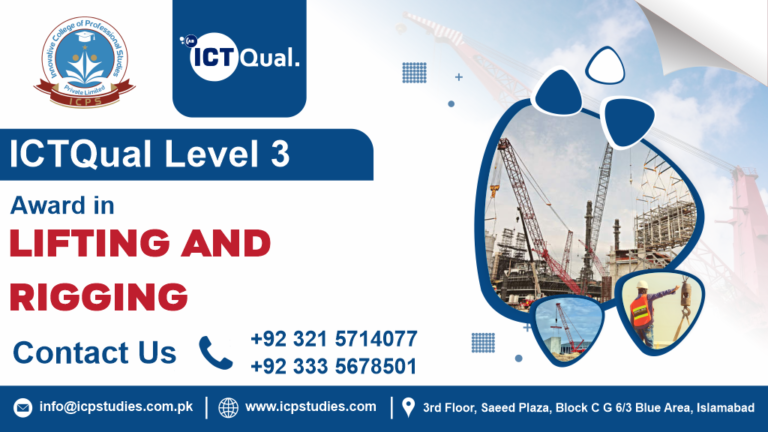
Transform Future: LICQual Level 3 Banksman, Slinger & Rigger Course
LICQual Combined Level 3 Diploma in Banksman, Slinger & Rigger is a professional training program designed to provide advanced knowledge and practical skills in lifting operations, signaling, and rigging. This diploma focuses on safe load handling, effective communication, and industry‑based techniques, ensuring participants can perform their duties with confidence and competence in demanding environments.
The course emphasizes hands‑on learning, covering essential topics such as directing crane operators, securing loads, applying rigging methods, and maintaining safety standards. Learners gain practical experience through structured training sessions, enabling them to manage lifting tasks efficiently. The program also highlights teamwork and hazard awareness, preparing participants for real‑world industrial and construction projects.
The LICQual Combined Level 3 Diploma in Banksman, Slinger & Rigger also provides learners with opportunities to pursue related certifications and diplomas that complement their professional growth. These may include specialized safety certifications, advanced lifting operation diplomas, and industry‑specific training programs. With its practical approach and recognized value, this diploma serves as a strong foundation for professionals aiming to excel in lifting, slinging, and rigging operations across diverse sectors
All About LICQual Combined Level 3 Diploma in Banksman, Slinger & Rigger
Course Overview
The LICQual Combined Level 3 Diploma in Banksman, Slinger & Rigger is designed to provide advanced training in lifting operations and rigging practices. Delivered over 30 hours, the program ensures learners gain both theoretical knowledge and practical skills, preparing them to handle complex tasks safely and effectively in industrial environments.
This diploma is divided into 10 comprehensive units, each focusing on critical aspects of banksman duties, slinging techniques, and rigging operations. Learners progress through structured modules that build competence step by step, covering signaling, load securing, hazard awareness, and teamwork, ensuring a complete understanding of industry standards and safe practices.
The 30 hours of guided learning emphasize hands‑on training, allowing participants to apply classroom knowledge in practical scenarios. Through demonstrations, supervised exercises, and real‑world simulations, learners develop confidence in managing lifting operations, directing crane operators, and ensuring compliance with workplace safety requirements across construction and engineering projects.
To enroll in the LICQual Combined Level 3 Diploma in Banksman, Slinger & Rigger, candidates must meet certain eligibility criteria to ensure they can fully benefit from the training. The requirements are designed to make the course accessible while maintaining professional standards.
- Age Requirements: Learners must be at least 18 years old at the time of enrollment.
- Educational Requirements: A minimum of secondary education (Matric or equivalent) is required. Holding a related qualification such as a Diploma in Occupational Safety or a Certificate in Construction Site Safety is considered an advantage.
- Language Proficiency: Participants should have a good command of English, as training materials, instructions, and assessments are delivered in English.
- Work Experience: Prior work experience in construction, lifting operations, or industrial environments is recommended but not mandatory. Individuals with exposure to safety practices or load handling will find the course particularly beneficial.
- Educational Background: Candidates with related diplomas or certificates such as a Basic Safety Training Certificate or a Level 2 Diploma in Banksman, Slinger & Rigger are encouraged to apply, as these provide a strong foundation for the advanced content covered in this program.
By meeting these entry requirements, learners ensure they are well‑prepared to engage with the training and maximize the benefits of the diploma. This course is designed to build on existing knowledge while equipping participants with advanced skills in banksman, slinger, and rigger responsibilities.
The ideal learner for the LICQual Combined Level 3 Diploma in Banksman, Slinger & Rigger is someone motivated to advance their knowledge and practical skills in lifting operations, signaling, and rigging. This course is designed for individuals who demonstrate the following qualities:
- Strong interest in construction, engineering, or industrial safety practices.
- Ability to follow detailed instructions and communicate clearly with team members.
- Basic understanding of workplace safety and hazard awareness.
- Willingness to engage in hands‑on training and practical exercises.
- Responsibility and focus when handling loads and equipment.
- Commitment to learning advanced industry standards and applying them effectively.
- Desire to enhance career prospects through recognized certifications and diplomas.
This diploma is best suited for learners who are eager to combine technical expertise with practical application. By meeting these qualities, participants can maximize the benefits of the training and position themselves as competent professionals in lifting, slinging, and rigging operations across diverse industries.
Study Units
- Advanced Health & Safety in Lifting Operations
- Complex Risk Assessment and Management
- Supervisory Roles and Responsibilities
- Lifting Equipment Inspection & Maintenance
- Supervising Lifting Operations
- Lifting Plans, Risk Assessments, and Method Statements
Learning Outcomes
By the end of this course, learners will be able to:
- Advanced Health & Safety in Lifting Operations
- Demonstrate a comprehensive understanding of advanced health and safety regulations specific to lifting operations.
- Apply safety measures to effectively identify and mitigate health and safety risks during lifting tasks.
- Evaluate and implement safety protocols to ensure the well-being of personnel and equipment.
- Complex Risk Assessment and Management
- Conduct detailed risk assessments for complex lifting operations, identifying potential hazards and evaluating associated risks.
- Develop and implement comprehensive risk management plans to control and reduce risks in lifting operations.
- Regularly review and update risk assessments to ensure continuous safety and compliance.
- Supervisory Roles and Responsibilities
- Understand and demonstrate the core responsibilities of supervising lifting operations, including leadership and team management.
- Manage and coordinate lifting teams to ensure tasks are performed safely, efficiently, and in compliance with regulations.
- Monitor operations and provide guidance to resolve issues, ensuring smooth execution of lifting tasks.
- Emergency Response Procedures for Lifting Operations
- Develop and implement emergency response procedures for various lifting operation scenarios.
- Train teams to effectively respond to lifting-related emergencies, minimizing damage and injury.
- Evaluate the effectiveness of emergency response plans and adjust them as necessary to address potential risks.
- Lifting Equipment Inspection & Maintenance
- Learn to conduct thorough inspections of lifting equipment, ensuring compliance with safety standards and identifying faults or damage.
- Develop maintenance schedules and procedures to ensure lifting equipment remains safe and functional.
- Understand the legal and safety implications of equipment maintenance and inspection within lifting operations.
- Lifting Plans, Risk Assessments, and Method Statements
- Create detailed lifting plans that address all aspects of lifting operations, including equipment, personnel, and safety procedures.
- Produce comprehensive risk assessments and method statements that outline the procedures and risk control measures for lifting tasks.
- Regularly review and update lifting plans and assessments to ensure they reflect any changes in operational conditions or safety requirements.
FAQs About LICQual Combined Level 3 Diploma in Banksman, Slinger & Rigger