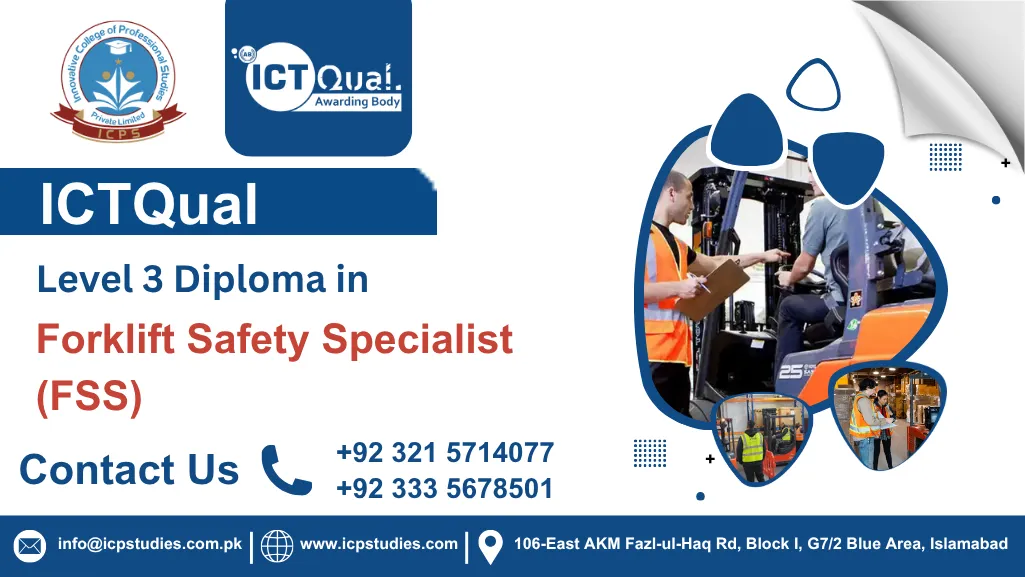
The ICTQual Level 3 Diploma in Forklift Safety Specialist (FSS) is a professionally designed qualification aimed at individuals who want to develop advanced expertise in forklift safety management and operational risk control. This course is tailored to meet international workplace safety standards, making it highly relevant for professionals working in logistics, warehousing, construction, and industrial environments where forklift operations are essential.
The programme focuses on building in-depth knowledge of safety regulations, hazard identification, and risk assessment related to forklift operations. Learners will gain a comprehensive understanding of safe operating procedures, equipment inspection, incident prevention strategies, and compliance with legal and organisational safety requirements. Emphasis is placed on promoting a proactive safety culture and reducing workplace accidents through effective planning and supervision.
In addition to technical knowledge, the course enhances leadership and communication skills required to manage safety practices within teams and organisations. Participants will be equipped to monitor forklift operations, enforce safety standards, and implement corrective actions where necessary.
The ICTQual Level 3 Diploma in Forklift Safety Specialist (FSS) prepares candidates for specialised safety roles, improving their professional credibility and enabling them to contribute to safer, more efficient, and compliant working environments.
All About ICTQual Level 3 Diploma in Forklift Safety Specialist (FSS)
Course Overview
The ICTQual Level 3 Diploma in Forklift Safety Specialist (FSS) is a comprehensive and industry-relevant qualification designed to provide structured training in forklift safety management and operational compliance. This 30 Credit Hours training program is developed in line with international health and safety standards, ensuring that learners gain the knowledge and practical insight required to manage risks associated with forklift operations effectively.
The course is delivered through 10 detailed study units, covering key areas such as forklift safety regulations, hazard identification, risk assessment methodologies, accident prevention strategies, and equipment inspection procedures. It also focuses on developing the ability to implement safety systems, conduct workplace audits, and ensure compliance with organisational and legal requirements.
In addition, the programme emphasizes communication, reporting, and leadership skills necessary for promoting a strong safety culture within the workplace. Learners will gain the competence to identify unsafe practices, recommend corrective actions, and support continuous improvement in operational safety.
This qualification is ideal for individuals seeking to specialise in forklift safety roles within logistics, warehousing, construction, and industrial sectors. Upon completion, participants will be equipped to manage forklift-related risks confidently while ensuring safe, efficient, and compliant operations.
To enroll in the ICTQual Level 3 Diploma in Forklift Safety Specialist (FSS), candidates should meet the following basic entry requirements:
- Age Requirement:
Applicants must be at least 18 years old, as the course involves safety-critical responsibilities related to forklift operations and workplace risk management. - Educational Background:
There are no strict academic qualifications required; however, a basic level of education is recommended. Learners should be able to read, understand, and communicate in English to follow safety regulations, technical instructions, and training materials effectively. - Experience:
No prior experience is mandatory; however, basic exposure to warehouse, logistics, construction, or industrial environments will be beneficial. Individuals with experience in forklift operations or safety-related roles will have an added advantage. This course is suitable for both beginners and those looking to formalise their existing knowledge in forklift safety. - English Language Proficiency:
Learners must have a good command of English, both written and spoken.
The ICTQual Level 3 Diploma in Forklift Safety Specialist (FSS) is designed for individuals who want to specialise in forklift safety and enhance their role in maintaining safe and compliant workplace operations.
- Individuals seeking a career in forklift safety, logistics, warehousing, and industrial operations
- Beginners who want to build professional knowledge in forklift safety and risk management
- Forklift operators aiming to upgrade their skills and move into safety-focused roles
- Warehouse staff and material handlers responsible for safe equipment operation
- Health and safety officers looking to strengthen their expertise in forklift-related safety practices
- Supervisors and team leaders responsible for monitoring workplace safety and compliance
- Employees involved in risk assessment, incident prevention, and safety inspections
- Individuals aiming to gain a recognised qualification to improve career opportunities in safety management
This course is ideal for anyone committed to promoting workplace safety, reducing risks, and ensuring compliance in forklift operations.
Study Units
This qualification, the ICTQual Level 3 Diploma in Forklift Safety Specialist (FSS), consists of 10 mandatory units.
- Introduction to Forklift Operations
- Forklift Safety Regulations and Standards
- Risk Assessment and Hazard Management
- Operator Training and Certification
- Safe Forklift Operations
- Forklift Maintenance and Inspection
- Emergency Procedures and Incident Response
- Ergonomics and Operator Health
- Technology in Forklift Safety
- Case Studies and Practical Applications
Learning Outcomes:
Learning Outcomes for the Study Units:
1. Introduction to Forklift Operations
- Understand the various types of forklifts and their specific applications in different industrial settings.
- Identify and explain the basic components and controls of a forklift.
- Demonstrate foundational knowledge of the principles of forklift operation.
2. Forklift Safety Regulations and Standards
- Recognize and interpret national and international safety standards related to forklift operations.
- Explain the legal responsibilities of employers and operators concerning forklift safety.
- Ensure compliance with Occupational Safety and Health Administration (OSHA) guidelines and other relevant safety regulations.
3. Risk Assessment and Hazard Management
- Identify potential hazards associated with forklift operations in various environments.
- Conduct thorough risk assessments to evaluate and prioritize risks.
- Implement effective hazard control measures to minimize risk and enhance safety.
4. Operator Training and Certification
- Develop and implement best practices for training forklift operators.
- Understand the processes and requirements for operator certification.
- Evaluate and assess the competence and performance of forklift operators to ensure they meet safety standards.
5. Safe Forklift Operations
- Apply safe operating procedures and best practices in forklift operation.
- Demonstrate proper load handling techniques to maintain load stability and prevent accidents.
- Navigate forklifts safely in different work environments and under various conditions.
6. Forklift Maintenance and Inspection
- Perform routine maintenance procedures to ensure forklifts are in safe working condition.
- Use pre-operation inspection checklists to identify and address potential mechanical issues.
- Understand and manage the maintenance requirements for different types of forklifts.
7. Emergency Procedures and Incident Response
- Develop and implement emergency protocols for responding to forklift-related accidents.
- Apply first aid and medical response techniques in case of incidents.
- Document and report forklift incidents accurately and thoroughly.
8. Ergonomics and Operator Health
- Apply ergonomic principles to enhance the safety and comfort of forklift operators.
- Identify strategies to prevent operator fatigue and reduce the risk of injuries.
- Promote a healthy working environment that supports the well-being of forklift operators.
9. Technology in Forklift Safety
- Understand the latest innovations in forklift safety technology.
- Utilize telematics and monitoring systems to enhance operational safety.
- Evaluate the impact of automation and artificial intelligence on forklift safety and efficiency.
10. Case Studies and Practical Applications
- Analyze real-world forklift incidents to identify causes and preventive measures.
- Extract valuable lessons from industry case studies to improve safety practices.
- Apply problem-solving skills to practical scenarios, demonstrating mastery of course content.
FAQs ICTQual Level 3 Diploma in Forklift Safety Specialist (FSS)