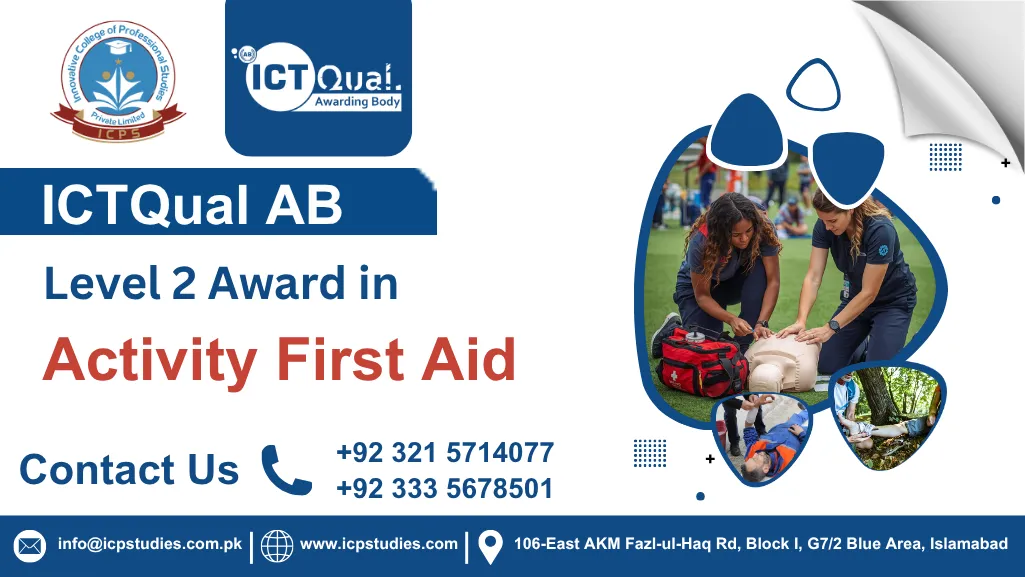
The ICTQual Level 2 Award in Activity First Aid is a professionally designed course that equips participants with the essential first aid skills required to manage emergencies during sports, outdoor, and recreational activities. This qualification is ideal for instructors, coaches, activity leaders, and staff working in environments where participants may be at risk of injury or accidents, ensuring safety and quick response in critical situations.
The course covers key aspects of activity-related first aid, including assessing incidents, managing bleeding, fractures, burns, and head injuries, as well as performing cardiopulmonary resuscitation (CPR) and using automated external defibrillators (AEDs). Emphasis is placed on practical, hands-on training to develop the confidence and competence needed to respond effectively during activity-based emergencies.
Aligned with recognized first aid standards, the programme also addresses legal responsibilities, risk assessment, and workplace safety practices specific to sports, outdoor education, and recreational environments. Participants will learn how to maintain a safe environment, provide immediate care, and communicate effectively with emergency services when needed.
Completing the ICTQual Level 2 Award in Activity First Aid enhances professional credibility and employability, making it an essential qualification for activity leaders, sports coaches, teachers, and anyone responsible for the safety and well-being of participants in active settings. It ensures that learners are prepared to act promptly and efficiently in emergency situations.
All About ICTQual Level 2 Award in Activity First Aid
Course Overview
The ICTQual Level 2 Award in Activity First Aid is a 2-day, 6-hour intensive training programme designed to provide participants with practical first aid skills specifically tailored for sports, outdoor, and recreational environments. The course is structured into 6 study units, each covering key aspects of activity-related first aid to ensure learners can respond effectively to emergencies.
Throughout the programme, participants will explore topics such as incident assessment, CPR for adults and children, management of injuries including fractures, burns, cuts, and head injuries, as well as the use of automated external defibrillators (AEDs). Additional units focus on risk assessment, maintaining a safe activity environment, and understanding legal responsibilities and first aid protocols specific to active settings.
The course emphasizes hands-on learning through realistic scenario-based exercises, allowing learners to apply techniques in practical situations. Interactive training ensures participants gain confidence, quick decision-making skills, and the ability to provide immediate care during activity-based incidents.
By the end of this 2-day, 6-hour programme, learners will have developed the competence to manage injuries and medical emergencies in sports, outdoor, and recreational contexts. This qualification is ideal for coaches, activity leaders, teachers, and staff responsible for participant safety, enhancing their professional credibility and preparedness for emergencies.
To enroll in the ICTQual Level 2 Award in Activity First Aid, applicants should meet the following criteria:
- Age Requirement:
Candidates must be at least 16 years old at the time of registration. - Educational Background:
There are no formal academic qualifications required, although a basic level of education is recommended to support understanding of the course content. - Experience:
No prior first aid experience is necessary. This course is suitable for beginners or those wishing to update their activity-based first aid knowledge. - English Language Proficiency:
Learners must have a good command of English, both written and spoken.
The ICTQual Level 2 Award in Activity First Aid is designed for individuals who are responsible for the safety and well-being of participants in sports, outdoor activities, and recreational settings. It is ideal for those who need practical first aid skills to respond effectively during activity-related emergencies.
This course is suitable for:
- Sports Coaches and Instructors overseeing training sessions and competitions
- Activity Leaders and Outdoor Educators managing children and adults in recreational programs
- Teachers and Teaching Assistants responsible for physical education or school activities
- Youth Workers and Community Volunteers supporting active group sessions
- Fitness Trainers and Gym Staff ensuring participant safety during exercises
- Event Organizers and Camp Leaders managing outdoor and adventure activities
- Anyone responsible for participant safety in activity-based environments
This course is particularly beneficial for individuals who want to develop confidence in responding to injuries and emergencies during activities, enhance professional credibility, and ensure compliance with workplace and safety standards in sports and recreational settings.
Study Units
This qualification, the ICTQual Level 2 Award in Activity First Aid, consists of 6 mandatory units.
- Introduction to Activity First Aid
- Basic Life Support and CPR
- Managing Incidents and Casualties
- Specific Injury Management
- Medical Conditions and Environmental Injuries
- Minor Injuries and Illnesses
Learning Outcomes:
Learning Outcomes for the Study Units:
1. Introduction to Activity First Aid
- Understand the Role of a First Aider: Comprehend the responsibilities, legal considerations, and ethical issues associated with being a first aider in activity settings.
- Perform a Primary Survey: Ability to conduct a primary survey (DRABC – Danger, Response, Airway, Breathing, Circulation) to assess the situation and prioritize actions.
- Identify First Aid Priorities: Recognize and prioritize the immediate actions needed to ensure the safety of the casualty and bystanders.
2. Basic Life Support and CPR
- Manage Unresponsive Casualties: Handle an unresponsive casualty who is breathing, ensuring airway is open and monitored.
- Perform Effective CPR: Demonstrate the correct technique for chest compressions and rescue breaths to maintain circulation and oxygenation.
- Use an AED: Understand the function of an Automated External Defibrillator (AED) and demonstrate its safe and effective use.
3. Managing Incidents and Casualties
- Manage Various Incidents: Approach and manage different types of incidents safely, ensuring a structured and calm response.
- Treat Shock: Recognize the signs and symptoms of shock and provide appropriate treatment to maintain circulation and prevent deterioration.
- Control Bleeding: Effectively manage severe and minor bleeding using appropriate first aid techniques, including the use of bandages and dressings.
4. Specific Injury Management
- Handle Bone, Joint, and Muscle Injuries: Identify and treat fractures, dislocations, sprains, and strains, minimizing further injury and discomfort.
- Provide Care for Head, Neck, and Spinal Injuries: Deliver appropriate first aid for head, neck, and spinal injuries to prevent further harm.
- Treat Eye Injuries: Administer basic first aid for various eye injuries, ensuring the casualty’s safety and comfort.
5. Medical Conditions and Environmental Injuries
- Manage Asthma and Respiratory Problems: Recognize the symptoms of asthma attacks and other respiratory problems and administer appropriate first aid.
- Handle Diabetes-Related Emergencies: Understand the different types of diabetes and manage hypo- and hyperglycemic episodes effectively.
- Provide Care for Seizures: Recognize different types of seizures and provide appropriate care during and after a seizure.
- Treat Heat and Cold-Related Conditions: Identify and treat conditions such as heat exhaustion, heat stroke, hypothermia, and frostbite.
6. Minor Injuries and Illnesses
- Treat Minor Burns and Scalds: Provide first aid for burns and scalds, including cooling and covering techniques to prevent further injury.
- Manage Minor Wounds and Injuries: Handle cuts, grazes, and bruises using appropriate first aid methods.
- Treat Bites and Stings: Recognize and treat bites and stings from insects and animals, ensuring the casualty’s comfort and safety.
FAQs ICTQual Level 2 Award in Activity First Aid