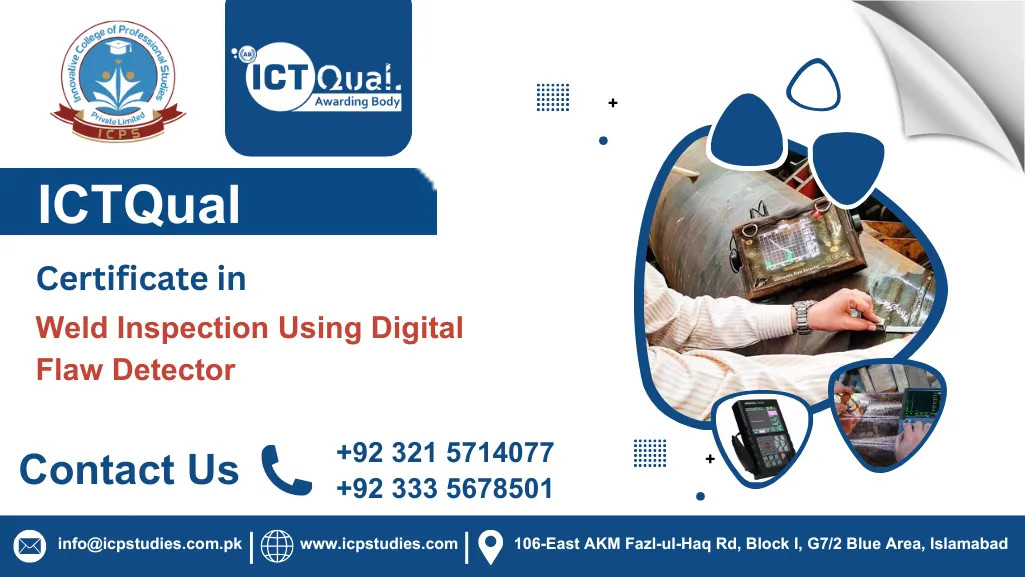
Ensure the highest standards in welding quality and safety with the ICTQual Certificate in Weld Inspection Using Digital Flaw Detector, a specialized program designed for professionals seeking advanced skills in modern non-destructive testing (NDT). This course focuses on the use of digital flaw detection equipment to inspect welds accurately, identify defects, and evaluate material integrity across industrial applications.
Participants will gain hands-on experience with state-of-the-art digital flaw detectors, learning techniques for detecting common weld defects such as cracks, porosity, and incomplete fusion. The course emphasizes calibration, signal interpretation, flaw characterization, and reporting procedures, ensuring inspections meet international standards and codes.
Ideal for welding inspectors, NDT technicians, quality control engineers, and project supervisors, this training program enhances technical competency and prepares participants for critical inspection roles in sectors including oil & gas, fabrication, construction, and manufacturing industries.
By completing the ICTQual Weld Inspection Using Digital Flaw Detector course, participants will strengthen their ability to perform precise inspections, interpret digital signals effectively, and maintain high-quality assurance standards, making it an essential program for professionals committed to excellence, safety, and accuracy in welding inspection.
All About ICTQual Certificate in Weld Inspection Using Digital Flaw Detector
Course Overview
The ICTQual Weld Inspection Using Digital Flaw Detector Course is a 3-day intensive training program designed to enhance the skills of professionals in weld inspection and defect detection using digital flaw detection equipment. The program is divided into six comprehensive units, covering critical topics such as weld inspection principles, equipment calibration, digital signal interpretation, defect identification, reporting procedures, and quality assurance techniques.
Participants will engage in practical, hands-on exercises, applying digital flaw detection methods to real-world weld samples, identifying common defects such as cracks, porosity, incomplete fusion, and lack of penetration. The training emphasizes accuracy, reliability, and adherence to international inspection codes and standards, equipping professionals with the confidence to conduct precise inspections across industrial projects.
Ideal for welding inspectors, NDT technicians, quality control engineers, and project supervisors, this course ensures participants gain updated technical expertise, improve defect detection accuracy, and maintain high standards of quality assurance in fabrication, manufacturing, construction, and oil & gas sectors.
To enroll in the ICTQual Certificate in Weld Inspection Using Digital Flaw Detector, candidates must meet the following requirements:
- Age Requirement:
Participants must be at least 18 years old. - Educational Background:
A minimum of a high school diploma or equivalent is required. Candidates with technical or vocational qualifications in non-destructive testing (NDT), mechanical engineering, welding, or fabrication are preferred. - Experience:
Applicants should have practical experience in welding inspection or NDT inspections. Prior knowledge of weld inspection techniques or certification in NDT methods is highly recommended to benefit fully from the training. - English Language Proficiency:
Learners must have a good command of English, both written and spoken.
The ICTQual Weld Inspection Using Digital Flaw Detector course is designed for professionals seeking to upgrade their skills in weld inspection using modern digital equipment. This course is ideal for:
- Certified welding inspectors and NDT technicians looking to refresh and enhance their digital flaw detection capabilities.
- Quality control and quality assurance engineers responsible for maintaining high standards in fabrication, construction, and industrial manufacturing.
- Project supervisors and inspection managers overseeing critical welding operations and defect detection tasks.
- Industrial engineers and safety officers who ensure weld integrity and compliance with international codes and standards.
- Professionals preparing for advanced NDT roles or maintaining certification competency in oil & gas, pipelines, construction, and manufacturing sectors.
Participants will gain practical hands-on experience, improved defect detection accuracy, and proficiency in digital inspection techniques, enabling them to deliver precise, reliable, and safe weld inspections across industrial applications.
Study Units
This qualification, the ICTQual Certificate in Weld Inspection Using Digital Flaw Detector, consists of 6 mandatory units.
- Introduction to Ultrasonic Testing (UT)
- Digital Flaw Detectors
- Welding Processes and Defects
- Data Interpretation and Analysis
- Standards and Regulations
- Safety and Ethical Considerations
Learning Outcomes:
Learning Outcomes for the Study Units:
Introduction to Ultrasonic Testing (UT):
- Understand Ultrasonic Waves: Describe how ultrasonic waves propagate through materials and interact with defects in welds.
- Principles of UT: Explain the fundamental principles of ultrasonic testing and its application in weld inspection.
- Equipment Familiarity: Demonstrate proficiency in operating basic ultrasonic testing equipment.
Digital Flaw Detectors:
- Equipment Operation: Operate digital flaw detectors effectively, including calibration and adjustment of settings.
- Data Acquisition: Acquire accurate data using digital flaw detectors for weld inspection purposes.
- Troubleshooting: Identify common issues and troubleshoot problems related to digital flaw detection equipment.
Welding Processes and Defects:
- Welding Techniques: Describe various welding processes and their impact on weld quality.
- Defect Identification: Identify and classify common weld defects such as porosity, cracks, lack of fusion, and others.
- Causes and Remediation: Understand the causes of weld defects and methods for prevention and remediation.
Data Interpretation and Analysis:
- Waveform Analysis: Interpret ultrasonic waveforms to differentiate between indications of weld defects and benign features.
- Critical Analysis: Analyze inspection data to make informed decisions regarding weld quality and integrity.
- Reporting: Prepare clear and concise reports documenting inspection findings and recommendations.
Standards and Regulations:
- Industry Standards: Understand relevant international and national standards governing weld inspection and quality assurance.
- Compliance Requirements: Ensure compliance with regulatory requirements and industry standards in weld inspection practices.
- Documentation: Maintain accurate records and documentation in accordance with established standards and regulations.
Safety and Ethical Considerations:
- Safety Protocols: Implement health and safety protocols specific to ultrasonic testing and weld inspection environments.
- Ethical Practices: Adhere to ethical principles in reporting and interpreting inspection results.
- Professional Conduct: Demonstrate professional conduct and integrity in all aspects of weld inspection activities.
FAQs ICTQual Certificate in Weld Inspection Using Digital Flaw Detector