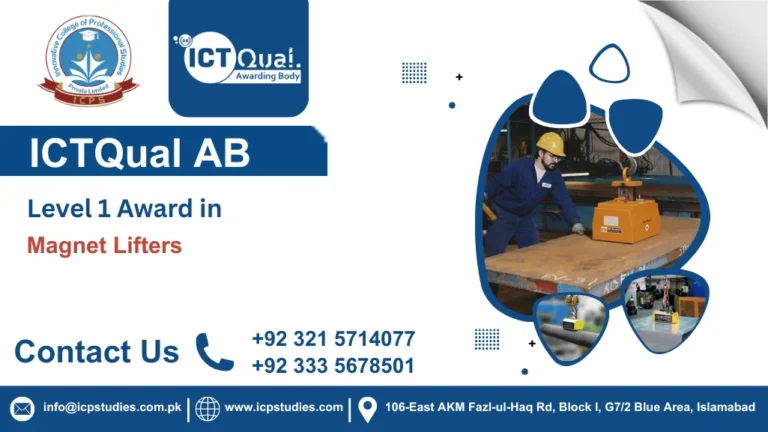
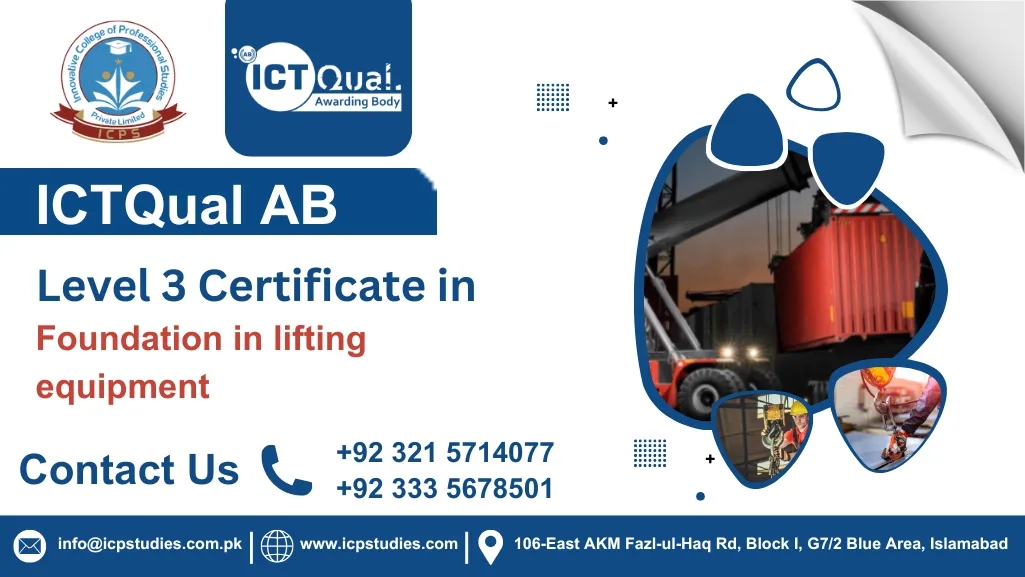
The ICTQual AB Level 3 Certificate in Foundation in Lifting Equipment is an advanced professional qualification designed for individuals responsible for the safe operation, inspection, and management of lifting equipment in industrial, construction, and manufacturing environments. This course provides learners with comprehensive knowledge of lifting equipment types, operational principles, and safety requirements, equipping them to handle complex lifting tasks confidently and efficiently.
Throughout the programme, participants gain in-depth understanding of various lifting machines, including manual and powered lifting devices, cranes, hoists, and gantries. Emphasis is placed on hazard identification, risk assessment, and adherence to industry safety standards to ensure workplace compliance and reduce operational risks. Learners also develop practical skills in pre-use inspections, basic maintenance, and troubleshooting techniques, enabling them to identify potential issues before they impact safety or productivity.
The ICTQual AB Level 3 Certificate in Foundation in Lifting Equipment combines theoretical instruction with practical exercises, offering hands-on experience to reinforce learning and build operational confidence. By completing this course, participants acquire the competence to operate lifting equipment safely, oversee lifting operations, and implement effective safety protocols.
Ideal for lifting equipment operators, riggers, supervisors, and maintenance personnel, this certificate enhances professional development and prepares learners for further advanced training in lifting operations, risk management, and regulatory compliance. It provides a solid foundation for career progression in the lifting and rigging industry.
All About ICTQual AB Level 3 Certificate in Foundation in lifting equipment
Course Overview
The ICTQual AB Level 3 Certificate in Foundation in Lifting Equipment is an intensive ten-day programme designed to equip learners with advanced knowledge and practical skills in the safe operation, inspection, and basic maintenance of lifting equipment. The course is divided into six comprehensive study units, each addressing essential aspects of lifting equipment operations, safety, and compliance with industry regulations.
The programme begins with an introduction to lifting equipment types, including manual and powered machines, cranes, hoists, and gantries, detailing their components, functions, and applications across industrial, construction, and manufacturing settings. Subsequent units focus on operational techniques, safe load handling, and pre-use inspections to ensure efficiency and reduce operational risks.
Additional study units cover hazard identification, risk assessment, workplace safety, and adherence to regulatory standards, providing learners with the knowledge required to implement safe lifting practices. Practical sessions integrated throughout the course allow participants to apply theoretical concepts, conduct basic maintenance checks, and troubleshoot common operational issues under supervision.
By completing the ICTQual AB Level 3 Certificate in Foundation in Lifting Equipment, participants gain the competence, confidence, and professional recognition to manage lifting operations safely, support risk management, and enhance operational efficiency, laying a strong foundation for further advanced training in lifting and rigging.
To enroll in the ICTQual AB Level 3 Certificate in Foundation in Lifting Equipment, learners should meet the following criteria:
- Age Requirement:
Participants must be at least 18 years old. - Educational Background:
A minimum of secondary education or equivalent is recommended to understand technical manuals, safety instructions, and operational procedures. - Experience:
Candidates should have prior experience in lifting operations or industrial environments. Ideally, participants will have completed a Level 1 or Level 2 lifting equipment course, or have equivalent hands-on experience with cranes, hoists, or manual and powered lifting machines. - English Language Proficiency:
Learners must have a good command of English, both written and spoken.
The ICTQual AB Level 3 Certificate in Foundation in Lifting Equipment is designed for professionals who require advanced knowledge and practical skills in lifting equipment operations. This course is particularly suited for:
- Lifting Equipment Operators: Individuals responsible for operating cranes, hoists, gantries, and other lifting machines safely and efficiently.
- Riggers and Lifting Technicians: Personnel involved in load handling, rigging, and supporting lifting operations across industrial and construction environments.
- Supervisors and Site Managers: Professionals overseeing lifting operations and ensuring compliance with workplace safety regulations.
- Maintenance and Engineering Staff: Technicians performing inspections, basic maintenance, and troubleshooting of lifting equipment.
- Safety Officers and Compliance Professionals: Individuals aiming to enhance operational safety, risk management, and adherence to industry standards.
- Career-Oriented Professionals: Learners seeking Level 3 certification to advance their career in lifting and rigging operations and prepare for further advanced training.
By completing this course, participants gain the competence, confidence, and recognized certification needed to manage lifting equipment safely, implement best practices, and support workplace efficiency, while laying a strong foundation for career progression in industrial lifting and rigging.
Study Units
This qualification, the ICTQual AB Level 3 Certificate in Foundation in lifting equipment, consists of 6 mandatory units.
- Advanced Principles of Lifting Equipment: Design, Strength, and Load Calculations
- Planning and Supervision of Complex Lifting Operations
- Detailed Inspection, Testing, and Certification Procedures for Lifting Equipment
- Risk Assessment, Control Measures, and Accident Prevention in Lifting Activities
- Legal, Environmental, and Industry Compliance in Lifting Operations
- Leadership, Supervisory Responsibilities, and Quality Assurance in Lifting Operations
Learning Outcomes:
Here are the learning outcomes for each study unit:
Advanced Principles of Lifting Equipment: Design, Strength, and Load Calculations
• Understand the design principles and load-bearing characteristics of various lifting equipment
• Perform accurate load calculations to ensure safe lifting operations
• Apply technical knowledge to select suitable equipment based on load requirements and operational conditions
Planning and Supervision of Complex Lifting Operations
• Develop detailed lifting plans for complex operations ensuring safety and efficiency
• Coordinate resources, equipment, and personnel for successful lifting tasks
• Supervise lifting activities while ensuring compliance with operational and safety guidelines
Detailed Inspection, Testing, and Certification Procedures for Lifting Equipment
• Conduct thorough inspections to identify defects, wear, and non-conformities in lifting equipment
• Apply appropriate testing methods to verify equipment safety and functionality
• Understand the certification requirements for lifting equipment in various industries
Risk Assessment, Control Measures, and Accident Prevention in Lifting Activities
• Perform comprehensive risk assessments for lifting operations
• Identify potential hazards and implement effective control measures
• Develop and promote safe working practices to prevent lifting-related accidents
Legal, Environmental, and Industry Compliance in Lifting Operations
• Demonstrate knowledge of legal responsibilities in lifting operations
• Ensure environmental considerations are integrated into lifting procedures
• Apply relevant industry standards and codes of practice during lifting tasks
Leadership, Supervisory Responsibilities, and Quality Assurance in Lifting Operations
• Lead and manage teams involved in lifting operations to achieve safe outcomes
• Oversee quality assurance processes to maintain high standards in lifting activities
• Foster a culture of safety, responsibility, and continuous improvement within lifting teams
FAQs ICTQual AB Level 3 Certificate in Foundation in lifting equipment