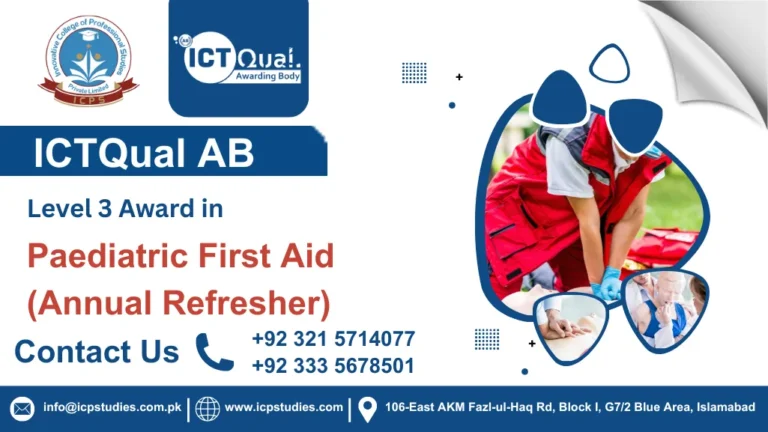
The ICTQual AB Level 2 Diploma in Basic Life Support (BLS) Training is a professionally designed qualification aimed at equipping learners with essential life-saving skills to respond confidently to emergency situations. This course provides foundational knowledge and practical training in Basic Life Support, making it ideal for workplace first aiders, healthcare support staff, and anyone responsible for ensuring safety in professional or community settings.
Participants will gain hands-on experience in key BLS techniques, including cardiopulmonary resuscitation (CPR) for adults, children, and infants, management of choking, and safe use of automated external defibrillators (AEDs). The course emphasizes rapid assessment of emergencies, effective communication, and safe casualty handling to provide immediate support until professional medical help arrives.
Delivered in line with recognized first aid standards, this qualification combines theory with practical exercises, allowing learners to apply life-saving skills in realistic scenarios. The programme also covers legal responsibilities, workplace safety requirements, and best practices for managing emergency situations in a variety of environments.
By completing the ICTQual Level 2 Diploma in BLS Training, learners will enhance their employability, boost confidence in emergency response, and be prepared to act effectively in critical situations. This training is a vital credential for anyone aiming to save lives and maintain safety in workplaces, schools, and community settings.
All About ICTQual AB Level 2 Diploma in Basic Life Support BLS Training
Course Overview
The ICTQual AB Level 2 Diploma in Basic Life Support (BLS) Training is a 20-credit hour programme designed to provide learners with comprehensive knowledge and practical skills in emergency life-saving techniques. The course is structured into 6 study units, each focusing on essential aspects of Basic Life Support to ensure participants are fully prepared to respond effectively in critical situations.
Throughout the programme, learners will cover topics including emergency scene assessment, cardiopulmonary resuscitation (CPR) for adults, children, and infants, management of choking incidents, use of automated external defibrillators (AEDs), and safe casualty handling. Additional units focus on legal responsibilities, workplace safety, and integrating BLS procedures into various professional and community settings.
The course combines interactive theory with hands-on practical exercises, allowing participants to build confidence and competence in performing life-saving interventions under realistic scenarios. Emphasis is placed on rapid assessment, decision-making, and effective communication during emergencies, ensuring learners can provide immediate support until professional help arrives.
By the end of this 20-credit hour programme, participants will have gained the essential skills and qualifications to act confidently in emergency situations, enhancing workplace safety and improving outcomes in medical emergencies. This course is ideal for healthcare support staff, workplace first aiders, and anyone seeking to develop foundational BLS expertise.
To enroll in the ICTQual AB Level 2 Diploma in Basic Life Support (BLS) Training, applicants should meet the following criteria:
- Age Requirement:
Candidates must be at least 16 years old at the time of registration. - Educational Background:
No formal academic qualifications are required, though a basic level of secondary education or equivalent is recommended to help learners understand the course content. - Experience:
No prior first aid or BLS experience is necessary. The course is suitable for beginners as well as individuals seeking foundational life-saving skills. - English Language Proficiency:
Learners must have a good command of English, both written and spoken.
The ICTQual AB Level 2 Diploma in Basic Life Support (BLS) Training is designed for individuals who want to develop foundational life-saving skills for emergencies in workplace, healthcare, or community settings. It is ideal for those responsible for the safety and well-being of others.
This course is suitable for:
- Workplace First Aiders and Safety Officers responsible for employee safety
- Healthcare Support Staff including assistants and care workers
- Teachers, Teaching Assistants, and Childcare Providers caring for children and infants
- Community Workers and Social Care Staff supporting vulnerable populations
- Sports Coaches, Fitness Instructors, and Recreational Leaders overseeing active groups
- Volunteers and Emergency Response Personnel involved in public safety
- Individuals seeking foundational BLS certification to enhance employability and preparedness
This course is particularly beneficial for anyone looking to gain practical skills in CPR, AED use, and emergency response, ensuring they can act confidently and effectively to save lives in critical situations.
Study Units
This qualification, the ICTQual AB Level 2 Diploma in Basic Life Support BLS Training, consists of 6 mandatory units.
- Life Support Techniques for Medical and Trauma Cases
- Advanced CPR, AED, and Oxygen Administration
- Pre-Hospital Care and Transportation
- Neurological Emergencies: Stroke, Seizures, and Head Trauma
- Respiratory and Cardiac Emergency Interventions
- Ethical and Legal Considerations in BLS
Learning Outcomes:
Here are the learning outcomes for each study unit:
Life Support Techniques for Medical and Trauma Cases
- Demonstrate the ability to assess and stabilise patients in medical and trauma emergencies.
- Apply appropriate life support techniques to manage airway, breathing, and circulation in critical situations.
- Identify the key differences between medical and trauma-related life-threatening conditions.
Advanced CPR, AED, and Oxygen Administration
- Perform high-quality cardiopulmonary resuscitation (CPR) on adults, children, and infants.
- Demonstrate the safe and effective use of an automated external defibrillator (AED) in cardiac arrest situations.
- Understand the principles of oxygen therapy and administer oxygen appropriately to support respiratory function.
Pre-Hospital Care and Transportation
- Assess and prioritise patient needs for stabilisation and safe transportation.
- Apply best practices for moving and handling patients to prevent further injury.
- Understand the roles and responsibilities of emergency responders in pre-hospital care settings.
Neurological Emergencies: Stroke, Seizures, and Head Trauma
- Recognise the signs and symptoms of stroke and initiate appropriate first-response interventions.
- Identify different types of seizures and provide immediate care to prevent complications.
- Apply first aid measures for head trauma, ensuring patient stability while awaiting advanced medical support.
Respiratory and Cardiac Emergency Interventions
- Identify and respond to respiratory distress, including asthma attacks, choking, and anaphylaxis.
- Understand the management of cardiac emergencies, including heart attacks and arrhythmias.
- Demonstrate the use of airway management techniques to support breathing in critical cases.
Ethical and Legal Considerations in BLS
- Understand the legal responsibilities and limitations of providing Basic Life Support.
- Apply ethical decision-making in emergency situations while respecting patient rights and consent.
- Recognise the importance of documentation and communication in emergency medical response.
FAQs ICTQual AB Level 2 Diploma in Basic Life Support BLS Training