
OTHM Level 7 International Postgraduate Diploma in Environmental Management for International Learners
Environmental challenges are no longer limited to individual countries or regions. Climate change, pollution, resource depletion, environmental legislation, sustainable development and responsible business practices are affecting organisations across the world. As a result, professionals with advanced knowledge of environmental management are increasingly involved in helping organisations understand environmental risks, improve performance and meet relevant environmental requirements.
For professionals who want to develop advanced knowledge in this field, the OTHM Level 7 International Postgraduate Diploma in Environmental Management provides a structured qualification covering important areas of environmental management, environmental education, ISO 14001 Environmental Management Systems, resource management, pollution control and Environmental Impact Assessment.
The qualification can be relevant to international learners from a wide range of professional and technical backgrounds, particularly those working in environmental management, sustainability, construction, engineering, manufacturing, energy, health and safety, compliance and consultancy.
This guide explains what the OTHM Level 7 International Postgraduate Diploma in Environmental Management is, what learners study, who the qualification is designed for, how it is assessed, the skills it can develop and the career opportunities associated with environmental management.

What Is the OTHM Level 7 International Postgraduate Diploma in Environmental Management?
The OTHM Level 7 International Postgraduate Diploma in Environmental Management is a postgraduate-level qualification focused on advanced environmental management knowledge and practice.
It is designed to help learners develop a structured understanding of environmental issues and the management approaches organisations can use to address them.
The qualification covers several important areas, including environmental awareness, environmental education and training, Environmental Management Systems, ISO 14001, legal compliance, environmental resources, pollution and environmental degradation, and Environmental Impact Assessment.
Rather than focusing on one narrow environmental topic, the qualification provides a broader view of environmental management and its relationship with organisational activities.
For international learners, this broad approach can be particularly relevant because environmental management practices are applied across different sectors and geographical contexts.
What Does Level 7 Mean?
Level 7 represents an advanced level of study within the qualification framework used for comparing levels of education and professional learning.
At this level, learners are generally expected to demonstrate more advanced understanding, analysis, evaluation and application of knowledge.
Environmental management at Level 7 therefore goes beyond simply understanding environmental terminology.
Learners are expected to examine environmental challenges, consider management approaches, understand relevant systems and compliance requirements, and apply environmental management concepts to appropriate organisational or professional situations.
Why Is Environmental Management Important for International Learners?
Environmental management has become an important consideration for organisations operating in different countries and industries.
Businesses, public-sector organisations, infrastructure projects and other institutions may need to consider environmental impacts associated with their activities.
These impacts can include:
- Waste generation
- Air pollution
- Water pollution
- Energy consumption
- Resource use
- Land disturbance
- Emissions
- Biodiversity impacts
- Environmental risks
- Regulatory requirements
- Climate-related considerations
Environmental management provides a structured approach to identifying, understanding and managing these issues.
For international professionals, studying environmental management can therefore provide knowledge that can be applied across a variety of sectors and organisational environments.
What Will International Learners Study?
One of the most important questions prospective learners ask is what they will actually study during the qualification.
The OTHM Level 7 International Postgraduate Diploma in Environmental Management covers six core areas.
1. Environment and Public
The Environment and Public unit examines the relationship between environmental issues and society.
Environmental challenges affect communities, organisations and individuals in different ways. Public awareness and participation can therefore form an important part of effective environmental management.
Learners can explore areas such as:
- Environmental awareness
- Public understanding of environmental issues
- Environmental responsibilities
- Communication of environmental information
- Public involvement
- Environmental attitudes
- Relationships between society and the environment
Understanding the public dimension of environmental management can help professionals communicate environmental issues more effectively.
2. Environment – Education and Training
Environmental management is not only about policies and technical controls.
People working within organisations also need appropriate knowledge and awareness to understand their environmental responsibilities.
The Environment – Education and Training unit considers the role of education and training in environmental management.
Learners can develop an understanding of how environmental knowledge can be communicated and how training can support improved environmental performance.
This can be particularly useful for professionals who are responsible for:
- Staff awareness
- Environmental training
- Organisational communication
- Environmental education
- Workplace environmental responsibilities
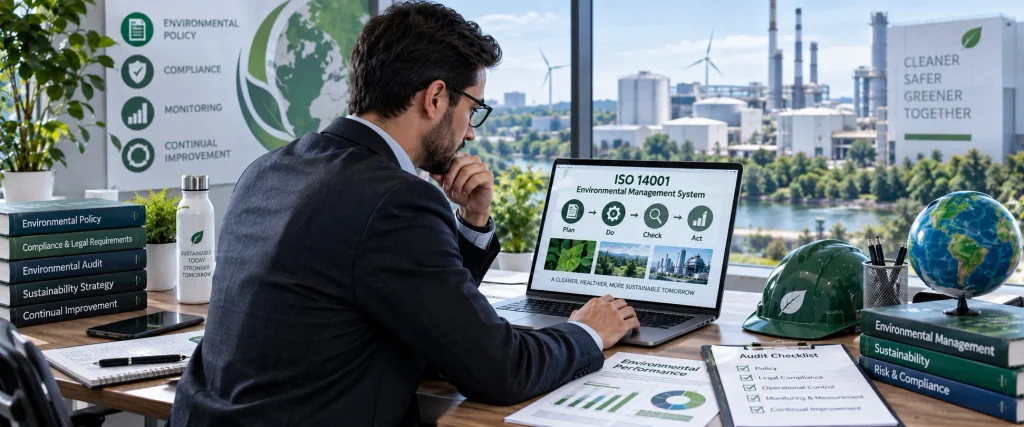
3. ISO 14001 EMS and Its Legal Compliance
ISO 14001 is an internationally recognised standard associated with Environmental Management Systems.
An Environmental Management System provides a structured framework that organisations can use to manage environmental responsibilities and improve environmental performance.
The ISO 14001 EMS and Its Legal Compliance unit introduces learners to important principles associated with environmental management systems and compliance.
Areas of study may include:
- Environmental Management Systems
- Environmental policy
- Environmental aspects and impacts
- Environmental objectives
- Environmental controls
- Legal and regulatory compliance
- Environmental performance
- Continual improvement
Understanding ISO 14001 can be particularly relevant for professionals working in organisations that have implemented, are implementing or interact with Environmental Management Systems.
4. Environmental Resource Management
Natural resources are essential to economic activity, infrastructure, communities and industry.
However, resources are not unlimited.
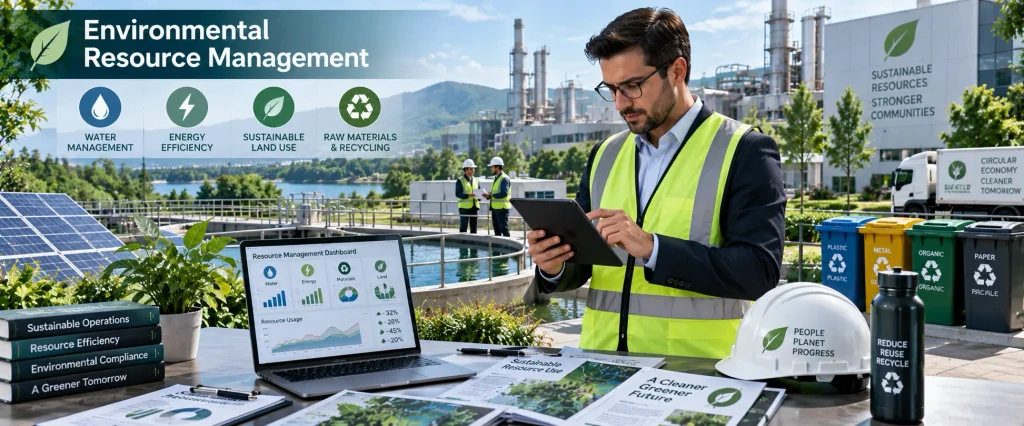
Environmental Resource Management focuses on the management and responsible use of environmental resources.
Learners can explore how organisations can consider resource consumption, efficiency and environmental impacts when making operational and management decisions.
Relevant resources may include:
- Water
- Energy
- Land
- Raw materials
- Biological resources
- Mineral resources
The unit encourages learners to consider how resource management can contribute to environmental protection and sustainable organisational practices.
5. Control of Environmental Degradation and Pollution
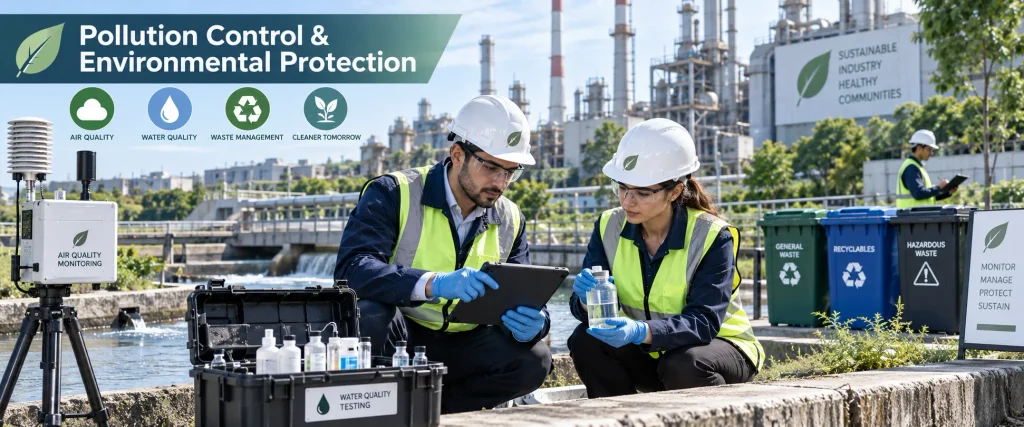
Pollution and environmental degradation can arise from industrial, commercial, agricultural, construction and other activities.
Effective environmental management requires organisations to understand the sources and impacts of pollution and identify appropriate methods of control.
This unit focuses on the management of environmental degradation and pollution.
Learners can examine topics such as:
- Sources of pollution
- Types of pollution
- Environmental impacts
- Pollution prevention
- Pollution control
- Waste-related environmental impacts
- Environmental degradation
- Management measures
The knowledge developed through this unit can be relevant to professionals working in sectors where environmental risks need to be identified and controlled.
6. Environmental Impact Assessment
Environmental Impact Assessment, commonly referred to as EIA, is an important environmental management process associated with assessing potential environmental effects of proposed projects or activities.
EIA can help decision-makers consider environmental impacts before projects are implemented.
The Environmental Impact Assessment unit provides learners with knowledge of the principles and processes associated with environmental assessment.
Topics may include:
- Environmental impacts
- Project-related environmental considerations
- Baseline environmental information
- Impact identification
- Impact assessment
- Mitigation measures
- Environmental monitoring
- Environmental decision-making
This knowledge can be particularly relevant to professionals involved in construction, infrastructure, engineering, planning, consultancy and development projects.
What Skills Can Learners Develop?
The qualification covers a broad range of environmental management concepts and can help learners develop knowledge and skills relevant to professional practice.
Environmental Management Knowledge
Learners develop an understanding of environmental management principles and how environmental issues can be addressed within organisational contexts.
Environmental Compliance Awareness
Understanding environmental legislation and compliance is important for organisations operating in regulated environments.
The qualification introduces learners to legal compliance within the context of environmental management and ISO 14001.
Environmental Risk Awareness
Environmental risks can arise from processes, products, services, projects and resource use.
Understanding how these risks arise can support more structured environmental decision-making.
Resource Management Skills
Learners develop knowledge relating to environmental resources and the importance of responsible resource management.
Pollution Control Knowledge
Understanding pollution sources, impacts and control measures can help professionals contribute to environmental protection initiatives.
Environmental Impact Assessment Knowledge
Learners develop knowledge of the principles and processes associated with Environmental Impact Assessment.
Communication and Environmental Awareness
Environmental management often involves communication with employees, management, communities, regulators and other stakeholders.
The qualification’s focus on environment, public awareness, education and training can support this aspect of professional practice.
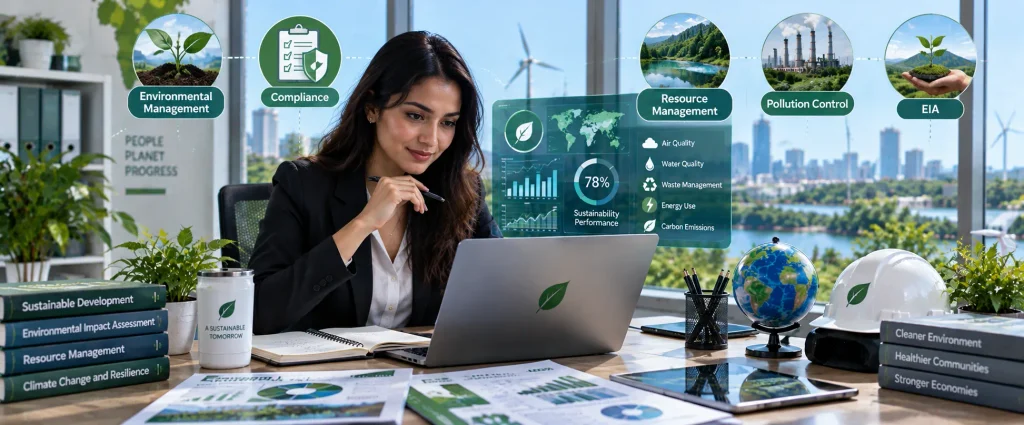
Who Is the OTHM Level 7 Environmental Management Diploma For?
The qualification can be relevant to professionals and learners who want to develop advanced knowledge of environmental management.
Environmental Management Professionals
Existing environmental professionals can use the qualification to develop their understanding of environmental management systems, pollution control, resource management and environmental assessment.
Sustainability Professionals
Professionals involved in sustainability can benefit from broader knowledge of environmental management and organisational environmental responsibilities.
HSE and EHS Professionals
Health, Safety and Environment and Environment, Health and Safety professionals frequently deal with environmental issues alongside occupational health and safety responsibilities.
The qualification can therefore complement existing environmental responsibilities.
Engineers
Engineers working in construction, infrastructure, manufacturing, energy or industrial environments may encounter environmental considerations as part of project and operational activities.
Environmental management knowledge can support their understanding of these considerations.
Construction Professionals
Construction projects can involve land disturbance, waste, resource consumption, emissions, water management and other environmental impacts.
Professionals involved in construction and infrastructure can therefore find environmental management knowledge relevant to their work.
Environmental Consultants
Environmental consultants may work with organisations on environmental assessment, compliance, environmental management systems and environmental improvement initiatives.
Compliance Professionals
Professionals involved in organisational compliance may benefit from understanding environmental requirements and management systems.
Professionals Moving Into Environmental Management
The qualification can also be relevant to professionals who want to expand their responsibilities into environmental management.
Entry Requirements for International Learners
Entry requirements can vary depending on the approved centre and the learner’s individual circumstances.
Prospective international learners should check the specific entry requirements provided by their chosen learning provider before enrolment.
Typical considerations may include:
- Appropriate educational background
- Relevant professional or practical experience where required
- Suitable English language proficiency
- Ability to undertake postgraduate-level study
- Access to appropriate learning resources
- Commitment to completing assignments and independent study
International learners should also confirm whether their previous qualification or professional experience is considered suitable for entry.
How Is the OTHM Level 7 Environmental Management Diploma Assessed?
The qualification is assignment-based.
This means learners are generally required to demonstrate their knowledge and understanding through written assignments and related assessment activities rather than relying solely on traditional examination-based assessment.
Assignments can require learners to:
- Research environmental management topics
- Analyse environmental issues
- Explain environmental management concepts
- Evaluate management approaches
- Apply knowledge to organisational situations
- Discuss environmental legislation and compliance
- Examine environmental impacts
- Develop reasoned conclusions
Learners should follow the assessment requirements and guidance provided by their approved centre.
What Are the Benefits of Studying Environmental Management at Level 7?
There are several potential professional and learning benefits associated with developing advanced environmental management knowledge.
Develop Advanced Environmental Knowledge
The qualification provides structured coverage of environmental management topics, helping learners develop a broader understanding of environmental issues.
Understand Environmental Management Systems
Knowledge of Environmental Management Systems and ISO 14001 can be relevant to professionals working within organisations that manage environmental performance through formal systems.
Build Environmental Compliance Knowledge
Environmental compliance is an important consideration for organisations operating under environmental legislation and regulatory requirements.
Understand Pollution and Environmental Degradation
The qualification addresses pollution and environmental degradation, helping learners understand how environmental impacts can arise and how they can be managed.
Develop Resource Management Knowledge
Responsible management of natural resources is an important part of environmental sustainability.
The qualification provides learners with knowledge relevant to environmental resource management.
Understand Environmental Impact Assessment
EIA knowledge can be relevant to professionals involved in projects where environmental impacts need to be identified and considered.
Support Professional Development
A Level 7 qualification can contribute to a learner’s professional development by demonstrating structured study in environmental management.
However, career progression depends on several factors, including professional experience, employer requirements, job role, location and individual competence.
What Career Opportunities Can Environmental Management Professionals Explore?
Environmental management is relevant to many sectors.
Depending on their existing experience and employer requirements, professionals with environmental management knowledge may explore roles such as:
- Environmental Manager
- Environmental Consultant
- Environmental Advisor
- Environmental Compliance Officer
- Environmental Coordinator
- Sustainability Manager
- Environmental Specialist
- Environmental Project Coordinator
- EHS/HSE Professional with environmental responsibilities
Job titles and responsibilities vary considerably between countries, employers and industries.
Environmental Manager
Environmental Managers may be responsible for coordinating environmental policies, systems, compliance activities and environmental improvement programmes.
Environmental Consultant
Environmental Consultants may provide specialist advice to organisations on environmental issues, assessment, compliance or management.
Environmental Compliance Officer
Environmental Compliance Officers may support organisations in understanding and meeting applicable environmental requirements.
Sustainability Manager
Sustainability Managers may work across environmental, social and organisational sustainability initiatives.
Environmental Advisor
Environmental Advisors can provide guidance on environmental risks, controls, compliance and environmental performance.
Environmental Coordinator
Environmental Coordinators may support the implementation and monitoring of environmental management activities within an organisation or project.
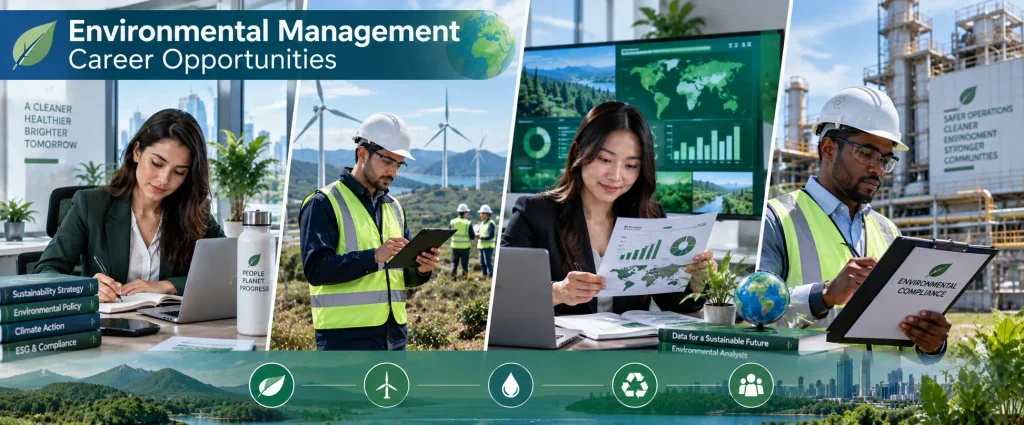
Which Industries Need Environmental Management Professionals?
Environmental management knowledge can be relevant across a wide range of industries.
Construction and Infrastructure
Large construction and infrastructure projects can create environmental impacts involving waste, land, water, materials, energy and emissions.
Environmental professionals can help project teams identify and manage these issues.
Manufacturing
Manufacturing organisations may need to manage waste, emissions, resource consumption, chemicals, energy use and environmental compliance.
Energy
Energy projects can involve significant environmental considerations, making environmental management knowledge relevant to professionals in this sector.
Oil and Gas
Oil and gas operations can involve environmental risks associated with emissions, waste, water, land and operational activities.
Engineering
Engineering professionals may work on projects where environmental impacts and compliance requirements need to be considered.
Environmental Consultancy
Environmental consultancy provides professional services relating to environmental assessment, compliance, management and improvement.
Government and Regulatory Organisations
Environmental management knowledge can also be relevant to roles involving environmental policy, regulation, monitoring and public-sector environmental programmes.
Why Is ISO 14001 Important in Environmental Management?
ISO 14001 is an important topic within the qualification because Environmental Management Systems can provide organisations with a structured way to manage environmental responsibilities.
An Environmental Management System can help an organisation establish processes for identifying environmental aspects, setting objectives, implementing controls, monitoring performance and supporting continual improvement.
For professionals, understanding the relationship between environmental management and organisational systems can be useful when working with environmental policies, procedures, audits, compliance and performance improvement.
The qualification’s focus on ISO 14001 EMS and legal compliance therefore connects environmental theory with an important area of organisational environmental management.
Why Is Environmental Impact Assessment Important?
Environmental Impact Assessment is important because projects and activities can have environmental consequences.
An EIA process can help identify potential impacts and consider measures for avoiding, reducing or managing those impacts.
For example, a major development project may need to consider:
- Effects on land
- Water resources
- Air quality
- Noise
- Biodiversity
- Waste
- Local communities
- Resource consumption
Environmental professionals involved in development and project planning can use EIA knowledge to contribute to more informed environmental decision-making.
How Does Environmental Management Support Sustainable Development?
Sustainable development requires consideration of environmental, social and economic factors.
Environmental management contributes to this objective by helping organisations understand and manage environmental impacts.
Examples include:
- Reducing pollution
- Improving resource efficiency
- Managing waste
- Protecting environmental resources
- Improving environmental performance
- Supporting compliance
- Assessing project impacts
- Increasing environmental awareness
Environmental management therefore forms an important component of broader sustainability practices.
Why Is Environmental Education Important?
Environmental policies and systems are only effective when people understand their responsibilities.
Employees need to know how their activities can affect the environment and what procedures they should follow.
Environmental education and training can help organisations:
- Improve environmental awareness
- Communicate environmental responsibilities
- Support workplace environmental practices
- Encourage responsible resource use
- Improve understanding of environmental policies
- Support environmental objectives
This is why environmental education and training is included as one of the qualification’s core areas.
Can International Learners Apply Environmental Management Knowledge Across Different Countries?
Environmental legislation and regulatory requirements vary between countries.
However, many environmental management principles are applicable across geographical boundaries.
For example, concepts relating to:
- Environmental aspects and impacts
- Pollution prevention
- Resource management
- Environmental awareness
- Environmental assessment
- Environmental management systems
- Continual improvement
can be relevant in many organisational environments.
International learners should nevertheless understand that local legislation, regulatory requirements and professional expectations differ between jurisdictions.
A qualification provides knowledge, but professionals must apply that knowledge in accordance with the requirements applicable to their particular country, organisation and role.
How Can International Learners Benefit From Studying Environmental Management?
International learners may come from different educational, professional and geographical backgrounds.
The broad nature of environmental management makes it relevant to professionals working across multiple sectors.
Learners can use their studies to develop knowledge in areas such as environmental systems, resource management, pollution control, environmental assessment and compliance.
For professionals already working in environmental or related roles, the qualification can also provide a structured framework for consolidating and expanding existing knowledge.
What Should Learners Consider Before Choosing a Study Provider?
Choosing an appropriate study provider is an important part of the learning process.
International learners should consider:
Qualification Information
Check that the provider clearly identifies the qualification title, units, level, credits and assessment approach.
Learner Support
Consider what academic and administrative support is available throughout the programme.
Assessment Guidance
Learners should understand how assignments are structured and what support is available for assessment preparation.
Learning Delivery
Consider whether the provider offers a learning format that suits your professional and personal circumstances.
International Learner Support
International learners may have additional questions about enrolment, documentation, study arrangements, communication and assessment.
A provider should clearly explain its processes before enrolment.
How Can Learners Prepare for Level 7 Environmental Management Study?
Postgraduate-level study requires commitment and organised learning.
Learners can prepare by developing good study habits before starting the qualification.
Useful approaches include:
- Creating a regular study timetable
- Reading environmental management materials
- Following developments in environmental policy
- Reviewing ISO 14001 concepts
- Developing research skills
- Practising academic writing
- Keeping organised assignment notes
- Using reliable information sources
- Relating theoretical concepts to workplace situations
Learners with professional experience can also use relevant workplace examples when assignments allow this.
Is Environmental Management Suitable for Professionals From Different Backgrounds?
Environmental management is not limited to environmental specialists.
Professionals from engineering, construction, manufacturing, energy, health and safety, compliance, facilities management and other sectors may encounter environmental responsibilities in their work.
For example, a construction manager may need to consider environmental impacts on a project.
An engineer may need to understand environmental requirements when developing or operating industrial systems.
An HSE professional may have responsibility for environmental performance alongside occupational health and safety.
A compliance professional may need to understand environmental obligations.
This cross-sector relevance is one reason environmental management can be a useful area of professional study.
OTHM Level 7 Environmental Management and Professional Development
Professional development is increasingly connected with an individual’s ability to understand complex organisational and environmental issues.
Environmental management professionals may need to work with multiple stakeholders, interpret environmental information, understand compliance requirements and contribute to organisational improvement.
A Level 7 qualification can provide a structured learning experience covering these important themes.
However, qualification achievement should be viewed as one part of professional development. Practical experience, technical competence, communication skills and knowledge of local requirements also remain important.
Frequently Asked Questions About OTHM Level 7 International Postgraduate Diploma in Environmental Management
What is the OTHM Level 7 International Postgraduate Diploma in Environmental Management?
It is a Level 7 postgraduate qualification focused on environmental management. It covers areas including environmental awareness, education and training, ISO 14001 Environmental Management Systems, legal compliance, environmental resource management, pollution control and Environmental Impact Assessment.
How many credits does the qualification have?
The qualification carries 120 credits.
How many units are included?
There are six mandatory units.
What are the units in the qualification?
The units are Environment and Public; Environment – Education and Training; ISO 14001 EMS and Its Legal Compliance; Environmental Resource Management; Control of Environmental Degradation and Pollution; and Environmental Impact Assessment.
How is the qualification assessed?
The qualification is assignment-based, with learners demonstrating their knowledge and understanding through the required assessment activities.
Who can study the qualification?
It can be relevant to environmental professionals, sustainability professionals, HSE/EHS professionals, engineers, construction professionals, environmental consultants, compliance professionals and others seeking advanced environmental management knowledge, subject to the applicable entry requirements.
What is ISO 14001 EMS?
ISO 14001 relates to Environmental Management Systems. It provides a framework for organisations to manage environmental responsibilities and work towards improving environmental performance.
What is Environmental Impact Assessment?
Environmental Impact Assessment is a structured process for identifying and assessing potential environmental effects associated with proposed projects or activities.
Can international learners study environmental management?
International learners can study environmental management where they meet the relevant admission requirements and enrol through an appropriate study provider.
What careers can environmental management professionals pursue?
Depending on their qualifications, experience and employer requirements, professionals may work in roles such as Environmental Manager, Environmental Consultant, Environmental Advisor, Environmental Compliance Officer, Sustainability Manager or Environmental Coordinator.
Is environmental management relevant to construction?
Yes. Construction projects can involve environmental impacts related to land, waste, water, materials, emissions and resource use. Environmental management knowledge can therefore be relevant to construction professionals.
Is the qualification useful for HSE professionals?
Environmental management is closely connected with the environmental component of HSE/EHS responsibilities. Professionals whose roles include environmental duties may find the subject areas relevant to their work.
What industries use environmental management?
Environmental management is relevant to construction, infrastructure, manufacturing, energy, oil and gas, engineering, consultancy, utilities, government and many other sectors.
Final Thoughts
Environmental management is an increasingly important professional field for organisations operating across different industries and countries.
The OTHM Level 7 International Postgraduate Diploma in Environmental Management provides structured coverage of important environmental management areas, including Environment and Public, environmental education and training, ISO 14001 Environmental Management Systems and legal compliance, environmental resources, pollution and environmental degradation, and Environmental Impact Assessment.
For international learners, the qualification can provide an opportunity to develop advanced environmental management knowledge within a structured Level 7 programme.
Its relevance extends across environmental management, sustainability, construction, engineering, manufacturing, energy, consultancy, compliance and HSE/EHS-related roles.
Ultimately, the value of environmental management study comes from how learners combine formal knowledge with practical experience, professional development and an understanding of the environmental requirements applicable to their particular country and industry.
For professionals seeking to strengthen their understanding of environmental management, this qualification provides a broad academic foundation covering many of the environmental issues organisations need to consider in today’s increasingly sustainability-focused business environment.