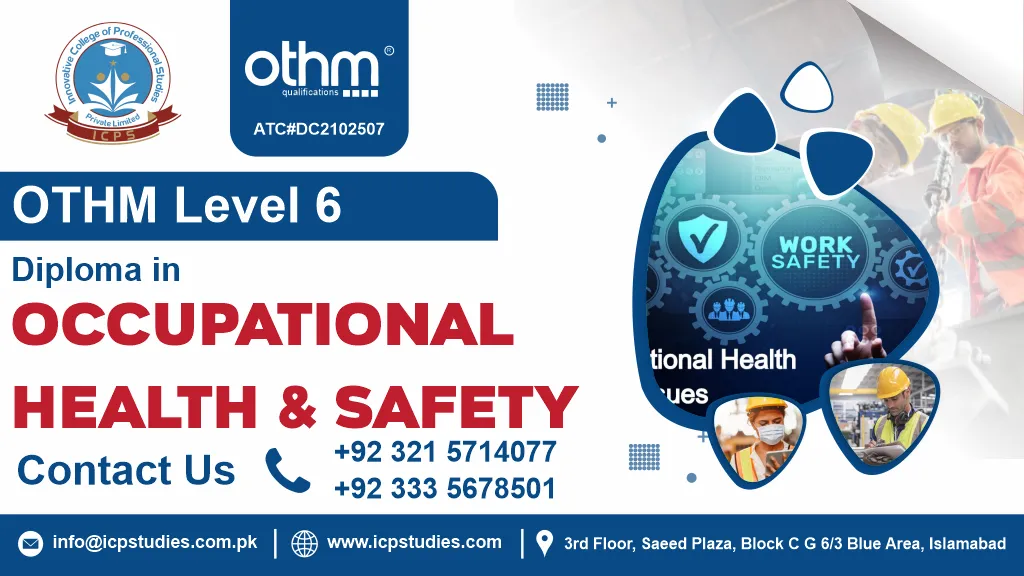
The OTHM Level 6 Diploma in Occupational Health and Safety is a comprehensive qualification designed to develop advanced knowledge and practical skills required to manage workplace health and safety effectively. In modern industries, organisations must maintain safe working environments while complying with strict regulations and international safety standards. This diploma provides the theoretical understanding and practical competencies needed to identify hazards, assess risks, and implement effective safety management systems across various workplace settings.
The programme explores key areas such as health and safety legislation, risk management strategies, incident investigation, workplace safety culture, and organisational safety policies. It also emphasises the importance of proactive safety planning, leadership in health and safety practices, and the development of preventive measures to minimise workplace accidents and occupational hazards.
By integrating strategic thinking with practical application, this qualification helps professionals strengthen their ability to promote safe working environments, ensure regulatory compliance, and contribute to the long-term sustainability and productivity of organisations.
Innovative College of Professional Studies (Private) Limited is approved training centre of Organisation for Tourism and Hospitality Management (OTHM). ICPS OTHM ATC Number is DC2102507
All About OTHM Level 6 Diploma in Occupational Health and Safety
Key Takeaways
Course Overview
The OTHM Level 6 Diploma in Occupational Health and Safety is an advanced qualification designed to provide in-depth knowledge and professional skills required to manage workplace health and safety systems effectively. The programme focuses on developing a strong understanding of occupational risk management, safety leadership, workplace hazard control, and compliance with health and safety legislation. It equips participants with the ability to identify potential workplace risks, design preventive strategies, and implement safety management frameworks that protect employees, visitors, and organisational assets. The course also emphasises the development of analytical and decision-making skills necessary for maintaining safe, compliant, and productive working environments across a wide range of industries.
This qualification includes 7 Mandatory Units with a total of 60 Credit Hours, ensuring comprehensive coverage of essential occupational health and safety practices. The programme features 600 hours Total Qualification Time (TQT) and 220 Guided Learning Hours (GLH) to support structured and applied learning. With a flexible course duration of 6 to 8 months, the diploma awarded by OTHM (UK) provides a strong academic and professional pathway for individuals seeking career advancement in occupational health and safety management or further study in related professional qualifications.
To successfully enroll in the OTHM Level 6 Diploma in Occupational Health and Safety, applicants must meet the following criteria:
- Age Requirement: Applicants should be 18 years of age or older at the time of enrollment.
- Educational Background: Applicants should hold a Level 5 qualification or equivalent diploma/degree in occupational health and safety, environmental management, or a related field.
- Experience: Relevant work experience in health and safety, risk management, or workplace compliance roles is recommended to support understanding of course content.
- Language Proficiency: Applicants should possess sufficient English language proficiency to understand course materials, participate in discussions, and complete written assessments effectively.
Mandatory Units
Learning Outcomes
The learning outcomes for the OTHM Level 6 Diploma in Occupational Health and Safety are as follows:
1. Health and Safety Management Principles and Policy
- Understand the fundamental principles of health and safety management within organizations, including risk assessment, hazard control, and compliance strategies.
- Develop knowledge of the key components of health and safety policies, their objectives, and their importance in ensuring workplace safety and regulatory compliance.
- Evaluate the roles and responsibilities of management, supervisors, and employees in implementing effective health and safety strategies and promoting a safety-first culture.
- Analyze the alignment between organizational goals, operational processes, and health and safety policy frameworks to ensure integrated risk management.
- Examine international, national, and industry-specific standards, regulations, and guidelines that govern health and safety management systems (OHSMS).
2. Health and Safety Management Practice
- Apply practical strategies to implement effective health and safety management systems in the workplace.
- Develop and document procedures to control workplace hazards, maintain compliance, and enhance overall occupational health and safety performance.
- Monitor and review operational health and safety practices to identify gaps, implement corrective measures, and ensure continuous improvement.
- Coordinate with cross-functional teams to ensure adherence to health and safety procedures and best practices across all organizational levels.
- Demonstrate effective communication and leadership skills in conveying health and safety instructions, protocols, and emergency procedures to employees.
3. Risk and Incident Management
- Conduct comprehensive workplace risk assessments to identify potential hazards and evaluate their impact on employees and operations.
- Prioritize risks using established methodologies and implement mitigation strategies to reduce workplace accidents and incidents.
- Develop and enforce control measures to prevent incidents, injuries, and occupational illnesses in line with health and safety legislation.
- Investigate workplace incidents, accidents, and near-misses to determine root causes and prevent recurrence.
- Record, report, and analyze incidents accurately to comply with regulatory requirements and enhance the effectiveness of the organization’s health and safety management system.
4. Promoting a Positive Health and Safety Culture
- Understand the concept of organizational culture and its direct impact on workplace safety, employee engagement, and risk awareness.
- Implement strategies to encourage employee participation in health and safety initiatives, including training, workshops, and safety campaigns.
- Promote proactive behavior, continuous improvement, and safety-first practices in everyday workplace operations.
- Recognize the role of leadership in modeling and reinforcing a positive health and safety culture at all levels of the organization.
- Develop programs to raise awareness, educate staff on health and safety policies, and embed safe working practices throughout the organization.
5. Maintaining a Safe Workplace Environment
- Identify and assess workplace hazards associated with physical, chemical, biological, and ergonomic factors affecting employee health.
- Implement control measures, safe working procedures, and risk reduction strategies to maintain a secure and healthy work environment.
- Conduct regular inspections, audits, and workplace evaluations to ensure compliance with occupational health and safety standards.
- Encourage employee participation in safety programs, hazard reporting, and ongoing workplace safety initiatives.
- Evaluate the effectiveness of safety measures, recommend improvements, and ensure the continuous enhancement of health and safety management systems.
6. Health and Safety Law, Regulation and Influence
- Understand key health and safety legislation, statutory obligations, and regulatory frameworks applicable to different industries and work environments.
- Examine how legal requirements and regulations influence workplace safety practices and organizational compliance strategies.
- Evaluate the role of industry standards, codes of practice, and guidance in shaping health and safety procedures and policies.
- Interpret legal requirements to develop and implement compliant health and safety policies, risk assessments, and operational procedures.
- Assess the role of regulators, enforcement bodies, and professional organizations in promoting compliance and advancing workplace safety culture.
7. Development of the Health and Safety Practitioner
- Develop the professional knowledge, skills, and competencies required to excel as a health and safety practitioner in diverse work environments.
- Understand the ethical, legal, and professional responsibilities of occupational health and safety practitioners.
- Engage in continuous professional development to stay current with emerging health and safety trends, technologies, and regulatory changes.
- Apply strategic thinking and problem-solving skills to address complex workplace safety challenges and risk management issues.
- Demonstrate leadership, influence, and advocacy in promoting health and safety excellence and embedding a proactive safety culture across organizations.
The OTHM Level 6 Diploma in Occupational Health and Safety is ideal for professionals seeking to enhance their expertise in managing workplace health and safety. It is designed for individuals who want to lead safety initiatives, ensure compliance, and develop effective risk management strategies in diverse organisational settings.
- Professionals aiming to develop advanced skills in occupational health and safety management.
- Individuals looking to lead and implement workplace safety policies and procedures.
- Learners who want to conduct risk assessments and hazard evaluations confidently.
- Professionals seeking to analyse and improve organisational safety performance.
- Individuals aiming to manage accident investigations and reporting processes effectively.
- Learners who want to ensure compliance with local and international health and safety regulations.
- Professionals planning to develop safety training programmes for staff and teams.
- Individuals interested in enhancing decision-making skills related to workplace safety.
- Learners aiming to apply strategic thinking to prevent workplace hazards and incidents.
Successful completion of Level 6 Occupational Health and Safety qualifications provides learners with the knowledge, understanding, and skills to be competent in a range of Occupational Health and Safety roles. Individuals who achieve the diploma qualification will be eligible to apply for Certified level of membership Cert IOSH.
Those eligible for Certified membership can then undertake a period of Initial Professional Development which will require students to provide evidence of their practice skills in a skills development portfolio (IPD). At the end of this period, there will be a professional review interview. After successful completion of this IPD process, students will then be eligible for Chartered membership of IOSH (CMIOSH).
FAQs Related to OTHM Level 6 Diploma in Occupational Health and Safety