
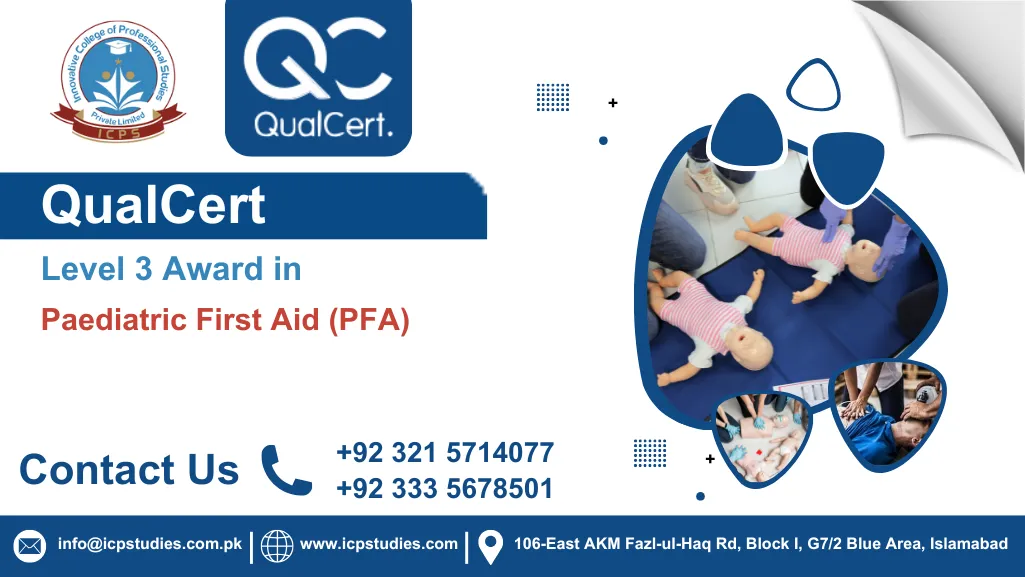
The QualCert Level 3 Award in Paediatric First Aid (PFA) is designed to provide learners with essential knowledge and practical skills required to respond effectively to medical emergencies involving infants and children. This course emphasizes the importance of immediate and appropriate action in critical situations, ensuring participants gain confidence in handling incidents such as choking, bleeding, fractures, burns, and respiratory distress. Delivered in a structured and learner-friendly format, the program combines theoretical understanding with hands-on practice, making it suitable for individuals working in childcare, education, and community settings.
This qualification is not Ofqual regulated, but it remains a credible and recognized training option for those seeking to enhance their professional competence in paediatric care. Learners benefit from a curriculum that aligns with industry standards and focuses on real-world application. Successful completion of the course demonstrates a commitment to safeguarding children and maintaining high standards of safety. In addition, participants may choose to expand their expertise by pursuing further certifications and diplomas in areas such as health and safety, infection prevention, or workplace first aid, strengthening their career prospects and professional development.
The QualCert Level 3 Award in Paediatric First Aid (PFA) stands out as a valuable certification for individuals who wish to build confidence and competence in emergency response. By completing this course, learners not only gain practical skills but also establish a foundation for continuous growth in professional training. The program supports career advancement by complementing other certifications and diplomas, enabling participants to broaden their knowledge base and enhance their employability. With its clear focus on paediatric emergencies, the course ensures learners are well-prepared to protect and care for children in diverse environments, reinforcing their role as responsible and capable professionals.
All About QualCert Level 3 Award in Paediatric First Aid (PFA)
Course Overview
The QualCert Level 3 Award in Paediatric First Aid (PFA) provides learners with essential knowledge and practical skills to manage emergencies involving infants and children. This structured program ensures participants gain confidence in responding to incidents such as choking, bleeding, burns, fractures, and respiratory distress through effective training and practice.
This qualification offers 6 Credits, requiring a Total Qualification Time (TQT) of 30 hours. Out of this, 18 Guided Learning Hours (GLH) are dedicated to interactive sessions, demonstrations, and supervised practice. The balance allows learners to consolidate their understanding through independent study, reflection, and application of paediatric first aid principles.
The course emphasizes real-world application, preparing learners to act quickly and responsibly in childcare, education, and community settings. By combining theoretical knowledge with hands-on practice, participants develop both competence and confidence. This ensures they are well-prepared to safeguard children’s health and safety in diverse environments where emergencies may occur.
Successful completion of the QualCert Level 3 Award in Paediatric First Aid (PFA) demonstrates professional commitment to child welfare and emergency preparedness. Learners may also choose to expand their expertise by pursuing further certifications and diplomas in health, safety, or workplace first aid, strengthening career prospects while enhancing their ability to contribute to safer communities.
To enroll in the QualCert Level 3 Award in Paediatric First Aid (PFA), learners should meet the following entry requirements:
- Age Requirement: Participants must be at least 16 years old to ensure maturity and responsibility in handling paediatric emergencies.
- Educational Background: A basic level of secondary education is recommended. Prior completion of related diplomas or certificates such as Health and Safety, Infection Prevention, or Workplace First Aid is advantageous.
- Language Proficiency: Learners should have a good command of English to understand instructions, participate in discussions, and complete assessments effectively.
- Work Experience: While not mandatory, prior experience in childcare, education, or healthcare environments can enhance learning outcomes.
These requirements ensure that learners are prepared to engage fully with the course content and apply their skills in real-world settings.
The QualCert Level 3 Award in Paediatric First Aid (PFA) is designed for individuals who want to develop practical skills and knowledge to respond effectively to emergencies involving infants and children.
Childcare Professionals
- Nursery staff responsible for young children’s safety
- Daycare workers managing daily health risks
- Childminders ensuring safe environments
- Preschool assistants supporting early years education
- Babysitters seeking professional credibility
Education Sector Staff
- Teachers working with young learners
- Classroom assistants supporting children’s needs
- School administrators overseeing safety policies
- Playground supervisors managing outdoor activities
- After-school program coordinators ensuring safe practices
Healthcare and Community Workers
- Healthcare assistants supporting paediatric care
- Community volunteers working with children
- Social workers managing child welfare cases
- Youth workers supporting vulnerable groups
- First responders in community settings
Parents and Guardians
- Parents wanting confidence in emergency response
- Foster carers ensuring safe family environments
- Guardians responsible for child supervision
- Family members supporting childcare duties
- Individuals preparing for adoption processes
Workplace Safety Roles
- Safety officers in child-focused organizations
- HR staff managing employee training needs
- Managers overseeing compliance standards
- Supervisors ensuring safe working practices
- Coordinators of health and safety programs
Professional Development Seekers
- Individuals aiming to enhance career prospects
- Learners pursuing further certifications or diplomas
- Professionals expanding health and safety knowledge
- Employees seeking employer-recognized training
- Career changers entering childcare or health sectors
Study Units
- Understanding the Role and Responsibilities of the Paediatric First Aider
- Assessing an Emergency Situation and Providing Appropriate Response
- Administering CPR and Using an Automated External Defibrillator (AED)
- Providing First Aid to an Unresponsive Infant or Child
- Managing Illnesses, Injuries, and Medical Conditions in Children
- Managing Acute Medical Emergencies and Reporting Procedures
Learning Outcomes
Learning Outcomes of QualCert Level 3 Award in Paediatric First Aid (PFA):
Understanding the Role and Responsibilities of the Paediatric First Aider
- Importance of acting safely and promptly in an emergency
- Understanding workplace and legal responsibilities (including EYFS and Ofsted)
- Awareness of infection control and first aider limitations
- Importance of accurate incident reporting and record keeping
Assessing an Emergency Situation and Providing Appropriate Response
- Conducting a scene assessment (ensuring safety for self and others)
- Performing a primary survey (DRABC approach)
- Prioritising treatment for life-threatening conditions
- Understanding the recovery position and its appropriate use
Administering CPR and Using an Automated External Defibrillator (AED)
- Performing CPR on infants and children in accordance with Resuscitation Council UK guidelines
- Safe and correct use of an AED on children
- Coordination with emergency services during resuscitation
Providing First Aid to an Unresponsive Infant or Child
- Identifying levels of consciousness
- Placing infants and children in the recovery position
- Ongoing monitoring and reassessment until professional help arrives
Managing Illnesses, Injuries, and Medical Conditions in Children
- Treating wounds, external bleeding, and burns
- Recognising and managing head injuries and fractures
- Treating bites, stings, nosebleeds, sprains, and other common injuries
- First aid for chronic conditions such as asthma, diabetes, and epilepsy
Managing Acute Medical Emergencies and Reporting Procedures
- Recognising signs of serious illness (e.g., meningitis, febrile convulsions, allergic reactions)
- Administering appropriate first aid for anaphylaxis (including use of auto-injectors)
- Understanding reporting requirements, parental notification, and safeguarding responsibilities
- Supporting the emotional needs of children post-incident
FAQs About QualCert Level 3 Award in Paediatric First Aid (PFA)