
How to Design an Effective Education and Training Programme
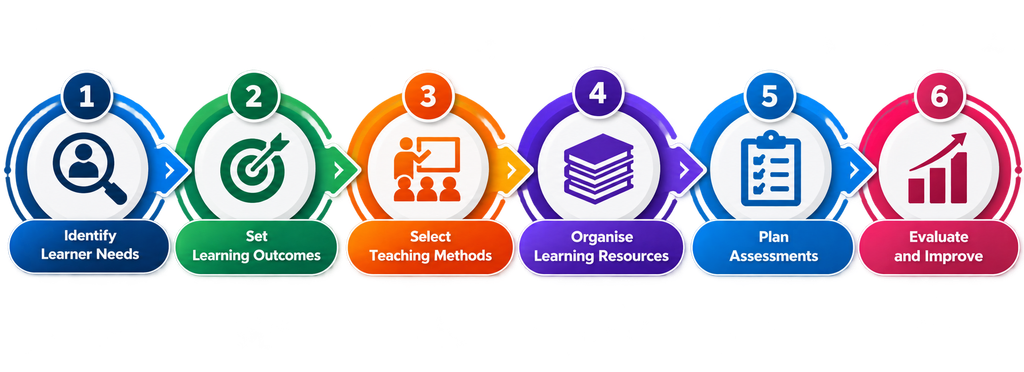
Designing an effective education and training programme requires more than preparing lesson notes or arranging training sessions. It involves understanding Learners’ needs, establishing clear learning outcomes, selecting appropriate teaching methods, organising resources and evaluating whether the programme achieves its intended objectives.
An effective education and training programme provides a structured learning experience that connects educational objectives with the knowledge, skills and competencies Learners need to develop. It also considers accessibility, learner engagement, assessment requirements and opportunities for continuous improvement.
Whether you are a teacher, vocational trainer, education manager or training coordinator, understanding how to design an effective education and training programme can help you improve learning experiences and make better use of educational resources.
The process begins with identifying what Learners need to learn and why. From there, educators can develop measurable learning outcomes, organise relevant content, select suitable teaching strategies and establish appropriate methods of assessment. Finally, feedback and evaluation help determine whether the programme should be maintained or improved.
This guide explains the essential steps involved in designing an education and training programme, with practical examples, planning advice and recommendations for creating inclusive, engaging and outcome-focused learning experiences.
What is an Education and Training Programme?
An education and training programme is a structured plan of learning activities designed to help Learners develop specified knowledge, skills, understanding or competencies.
An education programme may focus on academic knowledge, professional development or broader personal learning. A training programme often concentrates on developing practical skills and capabilities needed for a particular role, task or professional environment.
Both require careful planning to ensure that learning activities support the intended outcomes.
A well-designed programme normally includes:
- A clearly defined purpose and set of objectives.
- An analysis of Learners’ existing knowledge and learning needs.
- Measurable learning outcomes.
- A structured curriculum or sequence of topics.
- Appropriate teaching and learning methods.
- Suitable learning materials, equipment and resources.
- Assessment activities that measure achievement.
- Support arrangements for Learners with different needs.
- A system for collecting feedback and evaluating results.
For example, a training provider developing a programme for new workplace supervisors might identify communication, task delegation, team coordination and problem-solving as essential competencies. The provider could then design learning sessions around realistic workplace situations, role-play activities, group discussions and practical assessments.
This approach helps ensure that the programme addresses a genuine learning need rather than simply delivering information without a defined purpose.
Why is Effective Programme Design Important?
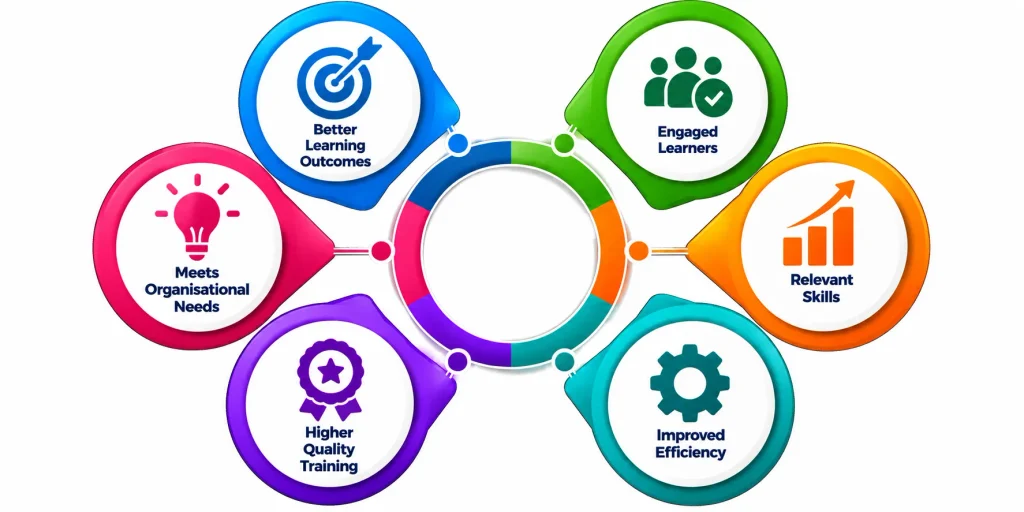
Effective programme design ensures that teaching activities, learning resources and assessments are aligned with Learners’ needs and intended outcomes. Without proper planning, a training programme may include irrelevant content, unsuitable teaching methods or ineffective assessments. A well-structured programme helps educators deliver meaningful learning experiences and achieve educational objectives.
The main benefits of effective programme design include:
1. Establishes Clear Learning Objectives
Clear learning objectives help educators and Learners understand what the programme aims to achieve.
- Define specific and measurable learning outcomes.
- Establish clear expectations for knowledge, skills and competencies.
2. Improves Learner Engagement
Relevant content and interactive activities encourage Learners to participate actively and apply their knowledge.
- Include discussions, demonstrations and case studies.
- Connect learning activities with Learners’ interests and practical needs.
3. Supports Effective Assessment
Appropriate assessment methods help educators measure Learner progress and determine whether learning outcomes have been achieved.
- Align assessment methods with learning outcomes.
- Use practical demonstrations when assessing practical competence.
4. Promotes Inclusion and Accessibility
Inclusive programme design considers differences in Learners’ abilities, experience, language proficiency and access to technology.
- Provide accessible learning materials and clear instructions.
- Arrange appropriate support to address individual learning needs.
5. Improves Resource Management
Advance planning helps organisations use their time, staff and educational resources efficiently.
- Allocate suitable teaching hours, equipment and learning materials.
- Plan staffing requirements and assessment workloads.
6. Encourages Continuous Improvement
Regular evaluation helps educators identify weaknesses and improve programme effectiveness.
- Review Learner feedback and assessment results.
- Update teaching methods, resources and assessment activities where necessary.
By incorporating these principles, educators can develop structured, inclusive and effective training programmes that support Learner achievement and continuous professional development.
Step-by-Step Guide to Designing an Effective Education and Training Programme
Step 1: Identify the Purpose and Training Needs
The first step is to establish why the programme is needed.
Educators should identify the problem, knowledge gap, skill requirement or development objective the programme is intended to address. This ensures that the content and activities are relevant to the people who will participate.
A training needs analysis can help establish the difference between current performance and the expected level of knowledge or competence.
How to conduct a learner needs analysis
A practical needs analysis may involve:
- Reviewing existing performance data or assessment results.
- Consulting Learners about their challenges and expectations.
- Speaking with employers, managers or other relevant stakeholders.
- Reviewing professional standards and role requirements where applicable.
- Identifying existing knowledge and skills.
- Considering language, accessibility and additional support needs.
- Establishing the priority areas that require development.
For example, a training organisation may discover that newly appointed supervisors understand workplace procedures but struggle to provide constructive feedback. The programme should therefore prioritise communication and feedback skills rather than devoting excessive time to procedures the Learners already understand.
It is also important to distinguish between a learning problem and a problem caused by other factors. Poor performance may result from inadequate equipment, unclear instructions or organisational processes rather than a lack of training.
Training is most useful when it addresses a genuine learning need.
Step 2: Define Clear and Measurable Learning Outcomes
After identifying the training needs, establish what Learners should achieve.
Learning outcomes describe the knowledge, understanding or skills that Learners are expected to demonstrate by the end of a lesson, unit or programme.
Effective outcomes are specific, observable and appropriate to the intended level of learning.
Avoid vague statements such as:
- Understand communication.
- Learn about leadership.
- Know the importance of teamwork.
Although these statements identify relevant subjects, they do not clearly explain how achievement will be demonstrated.
More useful outcomes include:
- Explain three principles of effective workplace communication.
- Demonstrate how to provide constructive feedback in a simulated supervision meeting.
- Identify appropriate methods for resolving a workplace disagreement.
- Develop a team communication plan for a specified workplace scenario.
These outcomes provide a clearer basis for selecting learning activities and assessment methods.
Align outcomes with assessment
Every important learning outcome should have an appropriate method of assessment.
If Learners must explain a concept, a written response or oral questioning may be suitable. If they must demonstrate a practical skill, an observed activity or practical demonstration may provide stronger evidence.
A useful planning table is shown below.
| Learning outcome | Teaching and learning activity | Assessment method |
|---|---|---|
| Explain communication principles | Tutor explanation and group discussion | Written questions |
| Apply feedback techniques | Demonstration and role-play | Observed role-play |
| Identify solutions to workplace problems | Case study and group activity | Scenario-based assignment |
| Develop a communication plan | Guided workshop | Completed plan and supporting rationale |
This alignment helps ensure that teaching activities prepare Learners for the assessment requirements.
Step 3: Understand the Learners and Their Starting Points
A programme should be designed around the people who will take part in it.
Learners may differ in age, educational background, professional experience, confidence, language proficiency and familiarity with digital learning tools. They may also have different reasons for joining the programme.
Some may be entering a subject for the first time, while others may already possess relevant experience.
Educators should consider:
- What Learners already know.
- Which skills they have developed.
- What motivates them to participate.
- Which barriers could affect their progress.
- How they prefer to access learning materials.
- Whether they need additional explanations or learning support.
- Whether they have access to the required technology and equipment.
Initial questionnaires, diagnostic activities, discussions and short knowledge checks can help establish Learners’ starting points.
However, educators should avoid making assumptions about individuals based solely on age, background or a preferred learning-style label. The emphasis should be on understanding actual needs and providing appropriate learning opportunities.
For example, a digital training programme may include experienced professionals who understand the subject but have limited confidence using the learning platform. A short orientation session could help them access resources, submit assignments and participate in online discussions.
Understanding Learners at the beginning allows educators to plan support before difficulties affect achievement.
Step 4: Develop a Structured Curriculum
A curriculum provides the overall structure of the programme. It identifies the subjects to be covered, the order in which they will be introduced and the learning outcomes associated with each section.
A well-organised curriculum moves logically from foundational concepts to more complex applications.
Organise content into manageable units
Begin with the essential knowledge Learners need before progressing to more advanced topics.
For example, a programme on workplace supervision could follow this sequence:
- Introduction to supervisory responsibilities.
- Principles of communication.
- Team coordination and task allocation.
- Providing feedback and managing performance.
- Problem-solving and conflict resolution.
- Application through an integrated workplace scenario.
This sequence gives Learners opportunities to develop foundational understanding before applying several skills together.
Estimate the time required
The programme timetable should allow sufficient time for explanation, practice, feedback, assessment and independent study.
When estimating duration, consider:
- The complexity of the subject.
- Learners’ existing knowledge.
- The number of learning outcomes.
- Opportunities for practical application.
- Assessment requirements.
- Breaks and accessibility considerations.
- Time needed for revision and additional support.
A programme should not be shortened simply to fit a convenient timetable if doing so prevents Learners from achieving the intended outcomes.
Likewise, additional content should not be included merely to increase programme length. Every topic should contribute to the learning objectives.
Step 5: Select Appropriate Teaching and Learning Methods
Teaching methods should reflect the learning outcomes, subject matter, available resources and needs of the Learners.
No single teaching method is suitable for every situation. Effective educators select methods according to what Learners need to understand or demonstrate.
Common teaching methods
| Teaching method | Best suited to | Example |
|---|---|---|
| Tutor-led explanation | Introducing concepts and principles | Explaining educational management responsibilities |
| Group discussion | Exploring ideas and developing reasoning | Discussing barriers to effective learning |
| Demonstration | Showing how a task is performed | Demonstrating assessment software |
| Role-play | Practising interpersonal or professional skills | Simulating a feedback meeting |
| Case study | Applying knowledge to realistic situations | Analysing why a training programme failed |
| Practical workshop | Developing applied skills | Creating a lesson or training plan |
| Online learning | Providing flexible access to structured content | Completing digital learning activities |
| Reflective activity | Reviewing experience and identifying improvements | Evaluating personal teaching practice |
A blended approach may combine tutor-led sessions, independent study, online materials and practical activities.
For example, Learners studying assessment planning might first review an explanation of assessment principles, analyse a sample assessment, develop their own assessment activity and receive feedback on their work.
This sequence provides opportunities to understand, apply and review the relevant concepts.
Step 6: Plan Learning Resources and Facilities
Learning resources help educators explain concepts, guide activities and support independent study.
Depending on the programme, resources may include:
- Learner handbooks and study guides.
- Presentation slides and worksheets.
- Practical equipment and demonstration materials.
- Case studies and scenario-based exercises.
- Videos, diagrams and digital learning resources.
- Assessment briefs and marking criteria.
- Online learning platforms.
- Reference books and credible online sources.
Resources should be accurate, accessible, current and appropriate to the subject.
Educators should also consider copyright, data protection, information security and any applicable organisational policies when selecting and distributing materials.
Before delivery, check that equipment works, digital links are accessible and Learners understand how to use the required systems.
If a programme depends on online learning, provide clear instructions and consider what alternatives or support may be available to Learners who experience technical difficulties.
Step 7: Design Inclusive Learning Experiences
An effective education and training programme recognises that Learners may require different forms of support to participate successfully.
Inclusive design involves identifying potential barriers and making reasonable, appropriate arrangements so that Learners can engage with learning activities and demonstrate their achievement.
Practical measures may include:
- Using clear language and explaining unfamiliar terminology.
- Providing accessible documents and readable learning materials.
- Offering alternative formats where appropriate.
- Providing instructions before complex activities.
- Using examples that reflect different professional and social contexts.
- Allowing suitable opportunities for questions and clarification.
- Considering accessibility when choosing rooms, equipment and digital platforms.
- Providing appropriate support in line with applicable requirements and organisational policies.
For example, a trainer delivering an online programme could provide written instructions alongside a recorded demonstration. Learners could revisit the written guidance when practising independently.
Inclusive design does not mean removing essential learning requirements. It means considering how Learners can access the learning experience and demonstrate the required outcomes appropriately.
Step 8: Plan Assessment and Feedback
Assessment determines whether Learners have achieved the intended learning outcomes.
It should be planned during programme development rather than added as an afterthought.
Two common assessment approaches are formative and summative assessment.
Formative assessment
Formative assessment takes place during learning. It helps educators identify misunderstandings, monitor progress and provide guidance before final assessment.
Examples include:
- Short quizzes.
- Question-and-answer activities.
- Draft assignments.
- Practical exercises.
- Peer review.
- Tutor observations.
- Informal knowledge checks.
Summative assessment
Summative assessment evaluates achievement at the end of a defined learning period or programme.
Depending on the outcomes and assessment requirements, it may include:
- Written assignments.
- Examinations.
- Presentations.
- Practical demonstrations.
- Projects.
- Portfolios of evidence.
- Structured workplace scenarios.
Assessment methods must be appropriate to the outcomes and any formal qualification requirements.
Provide useful feedback
Effective feedback explains what the Learner has done well, where improvement is needed and what steps could help achieve the required standard.
For example, instead of writing, “Your training plan needs improvement”, a tutor could explain that the plan contains relevant topics but does not link each activity to a measurable learning outcome. The tutor could recommend adding an assessment method for each outcome and reviewing whether the available time is sufficient.
Feedback should be constructive, understandable and provided in time for Learners to use it.
Step 9: Prepare a Delivery Plan
A delivery plan turns the programme design into an organised schedule of learning activities.
It helps educators understand what will happen during each session, which resources are required and how progress will be monitored.
A delivery plan may include:
- Session titles and dates.
- Learning outcomes.
- Teaching activities.
- Required resources.
- Assessment activities.
- Time allocations.
- Tutor or facilitator responsibilities.
- Opportunities for Learner questions and feedback.
- Contingency arrangements.
For example, a 90-minute training session might begin with a short review of previous learning, introduce a new concept, include a tutor demonstration, provide time for group practice and finish with a knowledge check.
The timing should remain flexible enough to respond to Learners’ needs. If an important concept is not understood, the educator may need to provide another explanation or practice opportunity before progressing.
Step 10: Evaluate the Programme and Make Improvements
Programme evaluation determines whether the education and training provision is meeting its objectives and where improvements may be required.
Evaluation should consider more than whether Learners enjoyed the sessions. Positive feedback is useful, but satisfaction alone does not prove that learning outcomes have been achieved.
A balanced evaluation examines different forms of evidence.
What should be evaluated?
Learner achievement: Did Learners demonstrate the required knowledge and skills?
Learner feedback: Did participants find the content, activities and resources useful and accessible?
Teaching effectiveness: Were the teaching methods appropriate for the intended outcomes?
Programme organisation: Were the timetable, resources and support arrangements adequate?
Application of learning: Where relevant and feasible, are Learners applying their new knowledge or skills in practice?
Organisational objectives: Did the programme address the learning need that originally justified its development?
Use evidence to improve future delivery
Evaluation methods may include questionnaires, assessment results, tutor observations, discussions and reviews of programme records.
For example, an evaluation might show that Learners achieved strong results in written assessments but struggled to apply the concepts during practical activities.
The training provider could respond by adding demonstrations, guided practice and realistic scenarios to future sessions.
A simple improvement cycle is:
- Identify an issue through feedback or performance evidence.
- Investigate possible causes.
- Select a suitable improvement.
- Implement the change.
- Review the results.
- Record any further action required.
This process supports continuous improvement and helps prevent the same problems from recurring.
Example of an Effective Education and Training Programme
Consider a training provider developing a programme to help new trainers plan and deliver effective learning sessions.
The provider has identified a need to improve trainers’ ability to establish learning outcomes, organise teaching activities and assess Learner progress.
A possible programme structure is shown below.
| Programme element | Proposed design |
|---|---|
| Programme purpose | Improve trainers’ ability to plan and deliver structured learning sessions |
| Target Learners | New trainers and professionals with limited training-design experience |
| Initial needs analysis | Questionnaire, discussion and review of existing lesson plans |
| Learning outcome 1 | Write clear, measurable learning outcomes |
| Learning outcome 2 | Select teaching methods suitable for specified outcomes |
| Learning outcome 3 | Develop an appropriate assessment activity |
| Teaching methods | Tutor explanation, case studies, group activities and practical workshops |
| Learning resources | Planning templates, example lesson plans and assessment checklists |
| Assessment | Review of a completed training plan and observed delivery of a short session |
| Evaluation | Learner feedback, assessment results and tutor reflection |
The programme begins by establishing Learners’ existing experience. It then introduces key principles, provides examples and allows Learners to practise developing their own training plans.
During assessment, Learners submit a plan and demonstrate how they would deliver a short session. The tutor evaluates the work against the stated outcomes and provides feedback.
After delivery, the provider reviews assessment results and participant feedback to identify improvements for the next cohort.
This example demonstrates how learner needs, outcomes, teaching methods, assessment and evaluation can be connected within one coherent programme.

Common Mistakes to Avoid When Designing a Training Programme
Designing an effective training programme requires careful planning, clear objectives and an understanding of Learners’ needs. Overlooking important elements can reduce engagement, limit learning outcomes and affect programme effectiveness. Educators should identify potential problems early and develop strategies to prevent them.
The following are common mistakes to avoid when designing a training programme:
1. Ignoring Learner Needs
Designing a programme without understanding Learners’ existing knowledge, skills and development requirements can result in irrelevant content.
- Conduct a learner needs analysis before planning the programme.
- Identify knowledge gaps and prioritise relevant learning activities.
2. Setting Unclear Learning Outcomes
Vague outcomes make it difficult to measure Learner progress and determine whether the programme has achieved its objectives.
- Use clear, specific and measurable learning outcomes.
- Describe what Learners should explain, produce, identify or demonstrate.
3. Choosing Inappropriate Teaching Methods
Teaching methods that do not support the intended outcomes may limit Learners’ understanding and practical competence.
- Select methods that match the learning objectives.
- Include suitable discussions, demonstrations, practical exercises and case studies.
4. Including Too Much Content
Overloading a programme with excessive topics can leave insufficient time for practice, feedback and understanding.
- Prioritise essential content according to the needs analysis.
- Allocate sufficient time for teaching, practice and assessment.
5. Neglecting Assessment Planning
Assessment methods that do not align with learning outcomes may fail to provide reliable evidence of Learner achievement.
- Plan assessments alongside the curriculum.
- Use appropriate assessment methods to measure knowledge, understanding and practical skills.
6. Overlooking Inclusion and Accessibility
Inaccessible resources and unclear instructions can create unnecessary barriers to learning.
- Provide clear instructions and accessible learning materials.
- Consider Learners’ different needs and appropriate support arrangements.
7. Relying Only on Learner Feedback
Positive feedback does not necessarily demonstrate that Learners have achieved the required knowledge and skills.
- Review assessment results and Learner progress.
- Combine feedback with observations and other relevant performance evidence.
8. Failing to Review the Programme
Changes in Learner needs, technology and professional practices may make existing training materials less effective over time.
- Review the programme regularly.
- Use evaluation findings to update content, teaching methods and assessment activities.
Avoiding these mistakes helps educators develop structured, relevant and inclusive training programmes. Regular evaluation and continuous improvement ensure that learning activities remain aligned with Learner needs and intended outcomes.
How Does Education and Training Management Support Programme Design?
Education and training management plays an important role in designing, delivering and improving effective learning programmes. It ensures that educational activities align with organisational objectives, Learner needs and quality standards. Effective management also helps educators create structured, inclusive and engaging learning experiences.
Key responsibilities of education and training management include:
- Programme planning: Developing structured learning programmes with clear objectives and outcomes.
- Resource allocation: Organising teaching staff, learning materials, equipment and facilities.
- Quality assurance: Monitoring teaching standards, assessment practices and programme effectiveness.
- Learner development: Promoting inclusive teaching, engagement and continuous improvement.
- Evaluation and feedback: Reviewing Learner progress and identifying areas for improvement.
- Professional development: Supporting educators in improving their knowledge and teaching skills.
The Education and Training Foundation’s professional standards provide useful guidance for teachers and trainers working in England’s further education and training sector. Professionals seeking to develop their expertise can also explore the OTHM Level 4 Diploma in Education and Training Management, which covers education and training provision design, learner engagement, work planning, evaluation and professional development. Learners should check the current qualification specification and the delivering centre’s information for details of the curriculum, assessment arrangements and entry requirements.
Checklist for Designing an Effective Education and Training Programme
Before delivering a programme, use this checklist to review its readiness.
- The purpose of the programme is clearly defined.
- Learner needs have been identified and analysed.
- Existing knowledge and skills have been considered.
- Learning outcomes are clear and measurable.
- Curriculum content is relevant to the outcomes.
- Teaching methods support the intended learning.
- Learning resources are suitable and accessible.
- Assessment methods align with the learning outcomes.
- Feedback arrangements have been established.
- Session timings and responsibilities are documented.
- Accessibility and additional support needs have been considered.
- Relevant quality, safety and organisational requirements have been reviewed.
- Evaluation methods are in place.
- A process exists for reviewing feedback and improving future delivery.
Completing this checklist can help identify gaps before the programme begins. It should be used alongside any applicable qualification specifications, organisational procedures and regulatory requirements.
Conclusion
Designing an effective education and training programme involves identifying Learners’ needs, establishing clear learning outcomes, selecting suitable teaching methods and planning appropriate assessments. A structured and inclusive approach helps create engaging learning experiences and develop essential knowledge, skills and competencies.
Regular evaluation and constructive feedback enable educators to improve programme quality and achieve better learning outcomes. By reviewing teaching practices, assessment results and Learner progress, educators can ensure that training programmes remain relevant, effective and aligned with educational objectives.