
Career Paths in Education and Training Management: Roles and Skills
Education and training management offers diverse career opportunities for individuals who want to improve learning experiences, coordinate educational programmes, develop professional skills and lead training teams. Career options include education administrator, academic coordinator, training manager, learning and development specialist, curriculum developer, instructional designer and education consultant. With relevant knowledge, practical experience and strong leadership skills, professionals can progress into senior management and strategic leadership positions.
The most suitable career path depends on an individual’s interests, previous experience, professional qualifications and preferred working environment. Some professionals focus on academic administration, while others specialise in staff development, digital learning, curriculum planning or organisational training.
Understanding these career paths helps aspiring professionals identify suitable roles, recognise the skills employers value and plan their long-term development.
Key Takeaways
- Education and training management covers academic administration, learning programme coordination, staff development and educational leadership.
- Entry-level opportunities include education administrator, training coordinator and learning support officer.
- Experienced professionals may progress into training management, academic leadership, curriculum management or consultancy.
- Communication, leadership, organisation, digital literacy and analytical thinking are important across many roles.
- Practical experience, continuing professional development (CPD) and relevant qualifications can strengthen career prospects.
- Job titles, entry requirements and responsibilities vary between employers and educational settings.
What is Education and Training Management?
Education and training management involves planning, organising, delivering, monitoring and improving learning activities. It brings together educational knowledge, administrative processes, leadership, resource management and quality improvement to help institutions and organisations achieve their learning objectives.
Professionals working in this field may manage academic schedules, coordinate teaching teams, monitor learner progress, develop training materials, evaluate programmes or oversee professional development initiatives.
The scope of the role depends on the organisation. In an educational institution, responsibilities may focus on academic operations, curriculum delivery and learner support. In a business or training organisation, the emphasis may be on employee development, skills assessment, training delivery and performance improvement.
Why is Education and Training Management Important?
Effective management helps ensure that educational and professional development activities meet clearly defined objectives. It supports:
- Consistent planning and delivery of learning programmes.
- Effective coordination between educators, trainers, administrators and managers.
- Appropriate allocation of staff, budgets, learning materials and technology.
- Monitoring of learner progress and training outcomes.
- Continuous improvement in teaching, assessment and programme quality.
- Better alignment between learning activities and organisational needs.
Education and training management therefore combines operational responsibilities with opportunities to influence the quality, accessibility and effectiveness of learning.

Career Paths in Education and Training Management
There is no single career route within this field. Professionals can specialise in administration, academic coordination, training delivery, curriculum development, digital education or strategic leadership.
The following roles illustrate common career options. They are not a guaranteed progression sequence, as individual opportunities depend on experience, employer requirements and the structure of each organisation.
1. Education Administrator
Education administrators help educational institutions operate efficiently by managing records, coordinating schedules and supporting everyday academic activities.
This position can provide a starting point for individuals interested in the administrative and organisational aspects of education.
Key responsibilities include:
- Maintaining learner records, attendance information and administrative documents.
- Organising meetings, appointments and academic schedules.
- Responding to enquiries from learners, educators and other stakeholders.
- Supporting admissions, enrolment and registration processes.
- Preparing reports and maintaining accurate documentation.
- Coordinating communication between academic and administrative departments.
Essential skills include attention to detail, organisation, written communication, confidentiality and digital record management.
With relevant experience, education administrators may progress into senior administrative positions, admissions management, academic coordination or wider institutional operations.
2. Training Coordinator
Training coordinators organise learning activities and help ensure that training programmes run according to schedule. They may work for educational providers, professional training organisations, businesses or departments responsible for employee development.
Their responsibilities often involve both administration and communication.
Typical duties include:
- Scheduling training sessions, workshops and professional development activities.
- Coordinating trainers, participants, venues and online learning arrangements.
- Preparing training materials and distributing relevant information.
- Maintaining attendance records and training documentation.
- Collecting learner feedback and assisting with programme evaluations.
- Monitoring completion rates and reporting administrative issues.
A successful training coordinator needs time management, problem-solving, teamwork and communication skills. Familiarity with spreadsheets, learning management systems (LMS) and online meeting platforms can also be beneficial.
This role may provide a pathway towards training officer, learning and development specialist, training manager or programme coordinator positions.
3. Academic Coordinator
Academic coordinators support the planning and organisation of educational programmes. They often work closely with educators, department heads, learners and administrative teams to maintain consistent programme delivery.
The precise responsibilities depend on the institution and the level of education involved.
Common duties include:
- Coordinating timetables, teaching activities and academic calendars.
- Supporting curriculum implementation and reviewing learning materials.
- Communicating academic expectations to educators and learners.
- Monitoring assessment schedules and academic progress.
- Helping departments maintain appropriate educational procedures.
- Supporting programme reviews and quality improvement initiatives.
Academic coordinators require strong organisational skills, professional communication, attention to detail and an understanding of teaching and learning processes.
Experience in teaching, administration or programme support may be helpful. Further progression can include senior academic coordination, programme management, departmental leadership or academic administration management.
4. Education Manager
Education managers oversee educational operations, programmes or departments. Their work may involve coordinating staff, monitoring performance, managing resources and ensuring that educational activities align with institutional priorities.
Depending on the organisation, an education manager may be responsible for a single department, several programmes or wider institutional operations.
Key responsibilities include:
- Developing operational plans and setting programme priorities.
- Supervising administrative staff, educators or programme teams.
- Managing budgets, schedules and educational resources.
- Reviewing programme performance and learner feedback.
- Supporting staff development and performance improvement.
- Monitoring compliance with relevant institutional policies and procedures.
- Identifying operational challenges and implementing improvements.
Leadership, decision-making, financial awareness, stakeholder management and strategic planning are particularly valuable in this role.
Employers may expect relevant experience in education, administration or team supervision. Previous responsibility for managing programmes or staff can strengthen an application.
Experienced education managers may progress into senior institutional management, director-level positions or specialist consultancy.
5. Training Manager
Training managers plan, coordinate and evaluate professional learning programmes designed to develop the knowledge and capabilities of individuals or teams.
Unlike a training coordinator, who often focuses on day-to-day organisation, a training manager usually has greater responsibility for strategy, budgets, performance and programme effectiveness.
Typical responsibilities include:
- Identifying organisational skills gaps and training needs.
- Developing training plans aligned with business or institutional objectives.
- Managing trainers, facilitators and external training providers.
- Allocating resources and monitoring training expenditure.
- Evaluating learning outcomes and the practical application of new skills.
- Reviewing training feedback and recommending improvements.
- Reporting on programme effectiveness to senior management.
Training managers need leadership, project management, analytical thinking, budgeting and communication skills. They should also understand how to select suitable learning methods and evaluate whether training produces meaningful results.
Relevant experience in training delivery, programme coordination or learning and development can support progression into this role.
Experienced training managers may move into head of learning and development, organisational development management or senior people-development leadership.
6. Learning and Development Specialist
Learning and development (L&D) specialists help individuals and organisations identify learning needs and develop the knowledge, skills and behaviours required for improved performance.
Their work often combines learning design, programme delivery, consultation and evaluation.
Responsibilities may include:
- Conducting learning needs analyses.
- Designing workshops, training sessions and development programmes.
- Supporting coaching, mentoring and workplace learning.
- Developing resources for face-to-face, online and blended learning.
- Advising managers on staff development priorities.
- Evaluating training effectiveness and identifying areas for improvement.
- Encouraging continuous professional development.
Useful skills include adult learning principles, instructional communication, coaching, facilitation, analytical thinking and digital learning design.
Depending on their interests, specialists may develop into L&D managers, learning consultants, talent development specialists or heads of learning and development.
7. Curriculum Developer
Curriculum developers design, review and improve the content and structure of learning programmes. Their objective is to ensure that educational materials align with intended learning outcomes, learner needs and relevant programme requirements.
They may work with subject specialists, educators, assessors, instructional designers and quality assurance teams.
Typical duties include:
- Developing curriculum plans and learning objectives.
- Structuring course content into logical modules or units.
- Selecting suitable teaching and assessment approaches.
- Reviewing learning materials for accuracy, clarity and relevance.
- Incorporating feedback from educators and learners.
- Updating content when professional practices or requirements change.
- Supporting the alignment of learning outcomes with assessment activities.
Curriculum developers need research skills, subject knowledge, written communication, critical thinking and an understanding of instructional design.
Experience in teaching, assessment, training delivery or educational content development can be advantageous.
Possible progression routes include senior curriculum developer, curriculum manager, learning design lead or educational programme consultant.
8. Instructional Designer and Digital Learning Specialist
Instructional designers create structured learning experiences that help learners understand information, develop skills and demonstrate their knowledge. Digital learning specialists may focus on online courses, interactive resources, multimedia content and virtual learning environments.
These roles are increasingly relevant to organisations delivering flexible, technology-supported education and training.
Key responsibilities can include:
- Analysing learner needs and defining learning objectives.
- Designing online lessons, interactive activities and assessments.
- Developing presentations, videos, simulations and digital resources.
- Organising content within learning management systems.
- Collaborating with subject experts and technical teams.
- Reviewing usability, accessibility and learner engagement.
- Using feedback and performance data to improve digital learning.
Important skills include instructional design, digital content development, accessibility awareness, problem-solving and familiarity with relevant educational technologies.
Professionals may progress into senior instructional design, digital learning management, e-learning consultancy or learning technology leadership.
9. Education Consultant
Education consultants advise educational institutions, training providers or organisations on improving learning systems, programme delivery, administration and educational quality.
Some specialise in curriculum design, staff development or assessment, while others focus on institutional strategy and operational improvement.
Responsibilities may involve:
- Reviewing existing educational processes and identifying weaknesses.
- Advising on curriculum development and programme design.
- Supporting quality improvement and performance evaluation.
- Helping organisations implement new learning approaches.
- Delivering workshops or professional development sessions.
- Preparing recommendations and reports for decision-makers.
Consultants require analytical thinking, professional writing, communication, problem-solving and stakeholder management.
This career generally benefits from substantial practical experience and evidence of successful projects. Some consultants work independently, while others are employed by consultancy firms or educational organisations.
10. Academic Manager or Head of Department
Academic managers and heads of department lead teaching teams, coordinate academic activities and support the achievement of educational objectives.
These positions generally involve greater responsibility for staff performance, programme quality and departmental planning.
Typical duties include:
- Leading academic teams and allocating responsibilities.
- Coordinating curriculum delivery and assessment activities.
- Supporting educator recruitment, induction and professional development.
- Monitoring learner achievement and programme performance.
- Reviewing teaching practices and recommending improvements.
- Managing departmental resources and operational priorities.
- Communicating with senior leaders, learners and other stakeholders.
Successful academic managers combine educational knowledge with leadership, conflict resolution, planning and performance management.
Experience in teaching, academic coordination or programme management may be expected. Progression can lead to senior academic management, director of education or institutional leadership roles.
11. Quality Assurance and Compliance Officer
Quality assurance professionals help educational and training organisations maintain consistent standards across programme delivery, assessment, documentation and administrative processes.
The scope of the role varies according to the organisation’s responsibilities and applicable requirements.
Common tasks include:
- Reviewing programme documentation and administrative records.
- Checking whether internal procedures are followed consistently.
- Supporting internal audits and programme reviews.
- Identifying gaps and recommending corrective actions.
- Monitoring assessment processes and record-keeping practices.
- Preparing quality reports and maintaining evidence of improvement.
- Supporting staff understanding of relevant policies and procedures.
Attention to detail, analytical thinking, report writing, professional judgement and an understanding of quality management are important.
With experience, professionals may progress into senior quality assurance, compliance management, quality leadership or educational standards consultancy.
12. Education and Training Consultant or Independent Trainer
Experienced professionals may establish independent training or consultancy services, delivering specialist programmes to individuals, businesses or educational organisations.
This route offers flexibility but also involves responsibilities beyond teaching and training.
Activities may include:
- Identifying client needs and developing suitable programmes.
- Designing proposals, learning materials and delivery schedules.
- Facilitating workshops or online sessions.
- Evaluating participant feedback and learning outcomes.
- Maintaining professional relationships with clients.
- Managing contracts, budgets, invoicing and business administration.
- Developing services in response to changing client requirements.
Independent practitioners need subject expertise, presentation skills, client relationship management, commercial awareness and self-management.
Relevant experience, a strong professional reputation and a clear service offering can help establish a sustainable consultancy or training business.
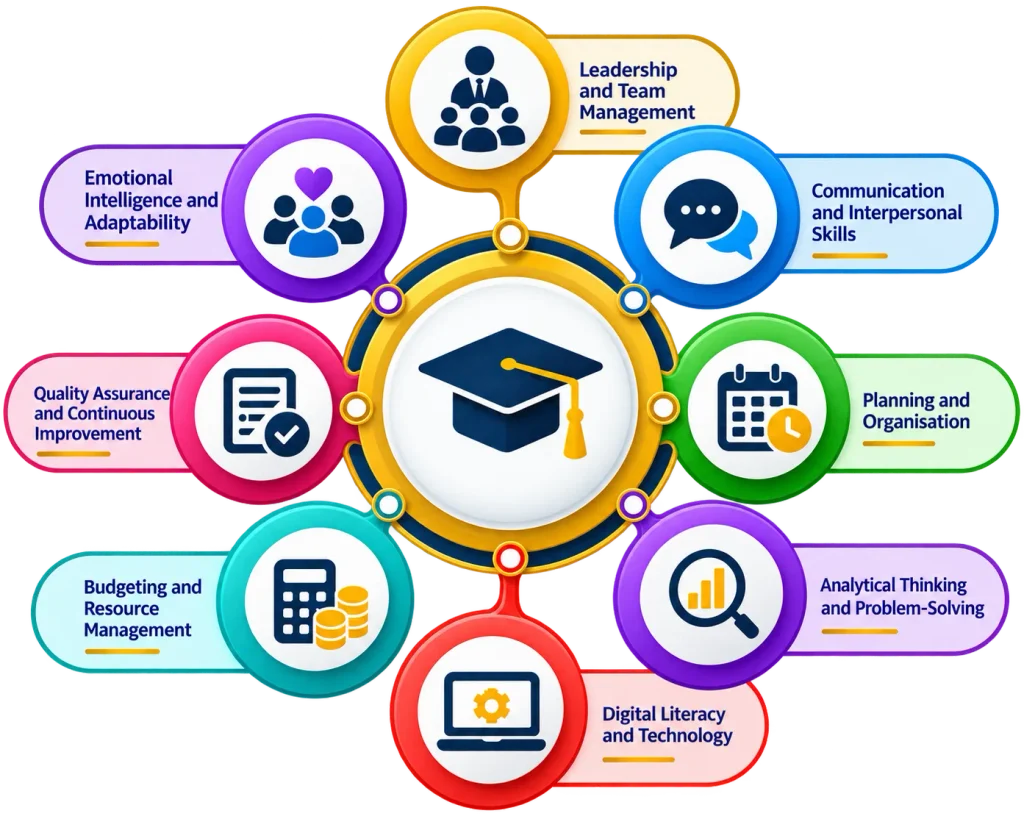
Essential Skills for a Successful Career in Education and Training Management
A successful career in education and training management requires a combination of leadership, communication, organisational and technical skills. These competencies help professionals manage educational programmes, support educators, coordinate resources and improve learning outcomes. Developing these skills can also prepare individuals for greater responsibilities and career progression.
1. Leadership and Team Management
Leadership involves guiding teams, setting objectives and ensuring that educational activities run effectively. Strong leadership helps professionals motivate staff, manage challenges and maintain a productive working environment.
Essential leadership skills include:
- Setting clear objectives and delegating responsibilities.
- Motivating staff and encouraging teamwork.
- Resolving conflicts professionally.
- Supporting staff development and performance.
- Making informed decisions and managing challenges.
2. Communication and Interpersonal Skills
Effective communication helps education and training professionals share information, explain procedures and maintain positive relationships with learners, educators and stakeholders. Good interpersonal skills also support collaboration and constructive feedback.
Important communication skills include:
- Writing clear reports, emails and administrative documents.
- Listening actively and responding to feedback.
- Delivering presentations and facilitating discussions.
- Communicating respectfully with diverse individuals.
- Building professional relationships with colleagues and stakeholders.
3. Planning and Organisational Skills
Education and training management involves coordinating schedules, staff, resources and deadlines. Strong organisational skills help professionals complete tasks efficiently, maintain accurate records and ensure the smooth delivery of learning programmes.
Key organisational skills include:
- Preparing schedules and realistic work plans.
- Monitoring deadlines and programme progress.
- Maintaining accurate records and documentation.
- Prioritising tasks and managing multiple responsibilities.
- Allocating resources according to programme requirements.
4. Analytical Thinking and Problem-Solving
Education and training managers must identify challenges, evaluate information and develop appropriate solutions. For example, if learners experience difficulties with an assessment, a manager may review the learning materials, teaching methods and assessment instructions to identify areas for improvement.
Effective problem-solving involves:
- Identifying the problem.
- Gathering relevant information.
- Evaluating possible solutions.
- Implementing appropriate changes.
- Monitoring results and reviewing effectiveness.
Critical thinking, data interpretation and evidence-based decision-making are particularly valuable in these situations.
5. Digital Literacy and Technology Skills
Digital technology supports modern education through online learning platforms, digital assessments and administrative systems. Professionals who understand these tools can manage information more efficiently and support flexible learning arrangements.
Useful digital skills include:
- Using learning management systems (LMS).
- Managing learner records and digital documentation.
- Preparing online learning materials and presentations.
- Using spreadsheets and reporting tools.
- Supporting online and blended learning.
- Applying artificial intelligence tools responsibly.
6. Budgeting and Resource Management
Management positions may require professionals to allocate resources, monitor expenditure and ensure that educational programmes operate within available budgets. Effective resource management supports efficiency without compromising learning quality.
Important skills include:
- Preparing and monitoring budgets.
- Allocating staff, equipment and learning materials.
- Controlling unnecessary expenditure.
- Maintaining accurate financial records.
- Evaluating programme costs and resource utilisation.
7. Quality Assurance and Continuous Improvement
Quality assurance helps educational organisations maintain consistent standards and improve programme delivery. Professionals may review documentation, monitor performance, collect feedback and recommend corrective actions.
Essential quality assurance skills include:
- Reviewing educational records and procedures.
- Monitoring programme delivery and assessment processes.
- Analysing learner feedback and performance information.
- Identifying weaknesses and improvement opportunities.
- Preparing reports and maintaining evidence.
- Evaluating the effectiveness of corrective actions.
8. Emotional Intelligence and Adaptability
Education and training professionals work with people who have different experiences, abilities and learning needs. Emotional intelligence helps them manage relationships, understand others’ perspectives and respond constructively to challenging situations. Adaptability enables professionals to respond effectively to changing technologies, organisational priorities and learner expectations.
Professionals can develop these competencies by:
- Learning from experience and continuously improving performance.
- Practising active listening and empathy.
- Managing emotions and workplace stress professionally.
- Responding positively to feedback.
- Adjusting communication styles to different situations.
- Remaining open to new technologies and working methods.
Education Management Careers Compared: Roles, Skills and Progression
The following table summarises several career options and the competencies commonly associated with them.
| Career role | Main responsibilities | Important skills | Possible progression |
|---|---|---|---|
| Education administrator | Records, schedules and administrative support | Organisation, accuracy and communication | Senior administrator or academic coordinator |
| Training coordinator | Training schedules and programme logistics | Planning, teamwork and digital literacy | Training officer or training manager |
| Academic coordinator | Academic schedules and programme coordination | Educational knowledge, communication and organisation | Senior coordinator or academic manager |
| Learning and development specialist | Learning needs and staff development | Facilitation, coaching and evaluation | L&D manager or learning consultant |
| Curriculum developer | Curriculum planning and learning materials | Research, instructional design and analysis | Curriculum manager or learning design lead |
| Instructional designer | Digital lessons and structured learning experiences | Technology, design and learner engagement | Senior designer or digital learning manager |
| Quality assurance officer | Process reviews and quality documentation | Analysis, accuracy and report writing | Quality manager or compliance lead |
| Education manager | Programme operations and team supervision | Leadership, budgeting and decision-making | Senior manager or director |
| Training manager | Training strategy and programme effectiveness | Leadership, project management and evaluation | Head of learning and development |
| Education consultant | Educational advice and improvement projects | Research, communication and problem-solving | Senior consultant or independent practitioner |
These progression routes are illustrative rather than automatic. Employers may require relevant experience, specialist expertise, professional development or additional qualifications before appointing candidates to senior positions.
What Qualifications and Experience Can Support Career Progression?
Career opportunities in education and training management depend on the type of role, the employer and the responsibilities involved. Some administrative positions may accept candidates with general education and transferable skills, while specialist or senior positions may require relevant professional qualifications and substantial experience.
Relevant Educational Qualifications
Qualifications related to education management, training, leadership, business administration, human resource development or instructional design may help candidates build relevant knowledge.
The most suitable option depends on the intended career direction.
For example:
- Individuals interested in academic administration may benefit from studying educational management and programme coordination.
- Aspiring training managers may focus on learning and development, leadership and project management.
- Curriculum developers may benefit from knowledge of curriculum design, assessment and learning theory.
- Digital learning specialists may pursue professional development in instructional design and educational technology.
- Quality assurance professionals may develop knowledge of auditing, documentation and continuous improvement.
Before enrolling, candidates should check the qualification’s content, level, assessment requirements and relevance to their intended role.
A qualification can support professional development, but it does not guarantee employment, promotion or acceptance by a particular employer.
The Importance of Practical Experience
Practical experience helps professionals demonstrate that they can apply their knowledge to real workplace situations.
Relevant experience might include supporting an educational programme, coordinating training sessions, maintaining learner records, assisting with curriculum development or contributing to a quality improvement project.
Individuals who are new to the field can build experience through suitable entry-level positions, supervised responsibilities or relevant projects.
Maintaining a record of completed projects, responsibilities and measurable improvements can also help demonstrate professional competence during recruitment and performance reviews.
Continuing Professional Development
Continuing professional development (CPD) helps professionals maintain their knowledge and develop skills as responsibilities change.
Useful CPD activities include:
- Attending workshops, seminars and professional conferences.
- Completing relevant short courses.
- Participating in mentoring or coaching.
- Studying current educational practices and research.
- Developing digital and data analysis skills.
- Reviewing feedback and identifying personal learning needs.
- Taking part in professional networks and knowledge-sharing activities.
A practical CPD plan should identify current strengths, areas for improvement, specific development objectives and realistic timescales.
How to Build a Career in Education and Training Management
A structured approach can help aspiring professionals choose a suitable direction and prepare for future opportunities.
Step 1: Identify Your Preferred Career Area
Start by identifying the responsibilities that match your interests, strengths and professional goals. Understanding your preferred career area can help you focus on developing the right skills and gaining relevant experience.
Consider the following career options:
- Educational administration for organising records and coordinating activities.
- Academic coordination for supporting educators and improving learning programmes.
- Curriculum development for designing and reviewing educational content.
- Learning and development for supporting employee skills and professional growth.
- Training management for leading teams and coordinating training programmes.
Step 2: Review Job Descriptions
Research vacancies related to your preferred roles to understand what employers expect from candidates. Reviewing several job descriptions can help you identify common requirements and recognise areas where you may need further development.
Pay attention to the following factors:
- Required qualifications and professional certifications.
- Relevant work experience and practical competencies.
- Digital tools and administrative systems.
- Leadership and team management responsibilities.
- Specialist knowledge and communication skills.
Step 3: Develop Relevant Skills
Once you understand the requirements of your target role, create a development plan to address any gaps in your current abilities. Focus on skills that are directly relevant to your chosen career path and that can improve your professional effectiveness.
For example, you may need to develop:
- Scheduling, communication and record management for training coordination.
- Leadership, budgeting and staff supervision for education management.
- Programme planning and performance evaluation for senior roles.
- Digital literacy for managing learning platforms and administrative systems.
- Problem-solving and analytical skills for improving organisational performance.
Step 4: Gain Relevant Experience
Practical experience helps you apply your knowledge, build confidence and demonstrate your ability to manage educational or training activities. Look for opportunities within your current workplace or through suitable volunteering, internships and entry-level positions.
You can strengthen your experience by:
- Assisting with the organisation of training programmes.
- Coordinating educational events and learning activities.
- Contributing to curriculum reviews and quality improvement projects.
- Supporting the introduction of new administrative procedures.
- Recording achievements and measurable outcomes to demonstrate your contribution.
These experiences can strengthen your professional profile and help prepare you for greater responsibilities in education and training management.
Step 5: Build a Professional Portfolio
A portfolio can provide evidence of your capabilities and achievements.
Depending on your role, it may include:
- Project plans and schedules.
- Training materials or curriculum samples that you are permitted to share.
- Examples of programme evaluation reports.
- Records of relevant CPD activities.
- Evidence of process improvements.
- Reflective notes describing lessons learned.
Ensure that portfolio materials respect confidentiality, intellectual property and data protection requirements.
Step 6: Prepare for Career Advancement
As you gain professional experience, look for opportunities to develop your leadership skills and take on greater responsibilities. Demonstrating initiative, teamwork and decision-making abilities can help prepare you for senior roles in education and training management.
To strengthen your career prospects, consider:
- Supervising projects and coordinating team activities.
- Mentoring colleagues and supporting their professional development.
- Managing multiple training programmes or educational activities.
- Contributing to organisational planning and improvement initiatives.
- Developing leadership, resource management and strategic decision-making skills.
These experiences can demonstrate your readiness for positions with greater responsibility and help you progress towards management and leadership roles.

Career Opportunities in Different Working Environments
Education and training management skills are valuable across various professional settings. Understanding these environments can help individuals identify suitable career paths based on their interests, qualifications and experience.
Educational Institutions
Schools, colleges, universities and other educational providers require professionals to manage academic administration, programme delivery, quality assurance and institutional operations. These roles help ensure that educational activities are organised effectively and meet established standards.
Potential career opportunities include:
- Education Administrator
- Academic Coordinator
- Programme Manager
- Quality Assurance Officer
- Academic Manager
Corporate Learning and Development Departments
Businesses invest in employee training to improve workplace performance, develop leadership skills and address changing workforce requirements. Professionals in this environment help identify skills gaps and organise learning initiatives that support organisational objectives.
Common career opportunities include:
- Training Coordinator
- Learning and Development Specialist
- Training Manager
- Organisational Development Practitioner
- Employee Development Manager
Vocational and Professional Training Providers
Vocational and professional training organisations deliver programmes that develop practical knowledge and occupational competencies. Professionals help coordinate training activities, maintain quality standards and support effective communication between trainers, assessors, employers and Learners.
Relevant roles include:
- Training Administrator
- Programme Coordinator
- Curriculum Developer
- Assessment Coordinator
- Training Quality Manager
Online Learning and Educational Technology
The growth of digital education has created opportunities for professionals who understand learning management and educational technology. These roles focus on developing accessible online resources, managing digital platforms and improving the overall learning experience.
Potential career paths include:
- Instructional Designer
- E-learning Developer
- Learning Management System Administrator
- Digital Learning Coordinator
- Online Training Manager
Consultancy and Independent Practice
Experienced professionals may work independently or provide consultancy services to educational institutions, training providers and businesses. Their work can involve reviewing learning programmes, improving administrative systems and recommending strategies to enhance training quality.
Consultancy opportunities may include:
- Curriculum and Programme Consultant
- Education Management Consultant
- Staff Development Adviser
- Training Evaluation Specialist
- Quality Improvement Consultant
Successful independent practice generally requires relevant expertise, practical experience, professional credibility and effective business management skills.

Emerging Trends Shaping Education and Training Management Careers
Education and training management continues to develop as organisations adopt new technologies, respond to workforce changes and introduce flexible approaches to learning. Understanding these trends can help professionals prepare for future responsibilities and identify opportunities for professional development.
Artificial Intelligence and Digital Learning
Artificial intelligence is increasingly being used to support educational activities, including the preparation of learning materials, development of practice questions and analysis of selected learning data. However, educational professionals must review AI-generated content to ensure its accuracy, relevance and suitability.
Important considerations include:
- Checking the accuracy and quality of AI-generated materials.
- Protecting Learners’ personal information and privacy.
- Considering copyright, accessibility and potential bias.
- Using digital tools responsibly to support teaching and learning.
- Maintaining appropriate human oversight in educational decisions.
Professionals who combine educational knowledge with digital skills and sound judgement can help organisations implement technology-supported learning effectively.
Data-Informed Decision-Making
Educational organisations use performance data to monitor Learner progress, assessment results, programme completion and training effectiveness. Managers need to interpret this information carefully to identify problems, evaluate performance and recommend improvements.
Effective data-informed management involves:
- Monitoring relevant performance indicators.
- Identifying patterns and areas requiring improvement.
- Reviewing Learner and staff feedback.
- Evaluating the effectiveness of training programmes.
- Using evidence alongside professional judgement when making decisions.
Data should support decision-making rather than replace professional experience or consideration of the wider educational context.
Personalised and Flexible Learning
Learners have different levels of prior knowledge, professional experience, learning preferences and accessibility requirements. Education and training professionals must therefore consider how programmes can accommodate individual needs while maintaining appropriate learning outcomes.
Approaches that support flexible learning include:
- Blended learning that combines online and face-to-face activities.
- Accessible digital learning materials.
- Differentiated learning activities suited to varying abilities.
- Regular feedback and opportunities for improvement.
- Flexible learning schedules where appropriate.
These approaches can improve accessibility, engagement and the overall learning experience.
Continuous Skills Development
Professional requirements change as organisations introduce new technologies, systems and working practices. Education and training managers must identify emerging skills gaps and ensure that learning programmes remain relevant to organisational and industry needs.
Key responsibilities include:
- Identifying current and future skills requirements.
- Developing suitable staff training initiatives.
- Reviewing changes in professional practices.
- Encouraging continuous professional development.
- Evaluating training outcomes and identifying further improvements.
The ability to assess skills gaps, plan relevant learning activities and measure their effectiveness is valuable for professionals pursuing careers in education management, training coordination and learning and development.
Conclusion
A successful career in education and training management requires a combination of professional knowledge, leadership abilities, communication skills and practical experience. By developing these competencies, gaining relevant qualifications and understanding industry trends, individuals can prepare themselves for a range of opportunities across educational institutions, corporate training departments and professional training organisations.
Continuous professional development, adaptability and a commitment to improving learning outcomes are essential for long-term career growth. By following a structured career development plan and embracing new technologies and management practices, professionals can strengthen their expertise and progress towards rewarding leadership positions in education and training management.