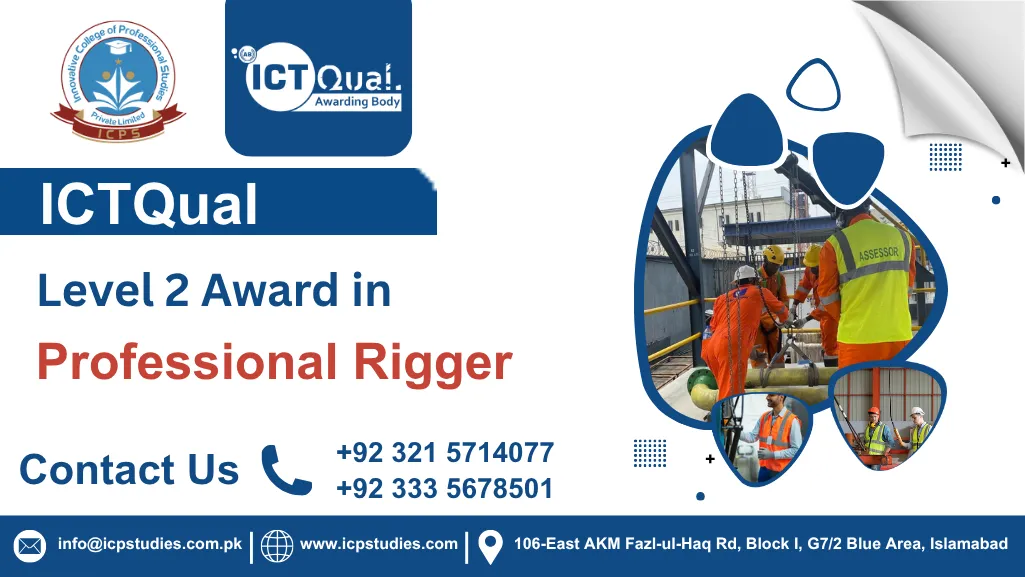
The ICTQual Level 2 Award in Professional Rigger is a comprehensive and industry-focused qualification designed to equip individuals with the essential skills and knowledge required for safe and efficient rigging operations. This course serves as a strong foundation for those looking to enter or progress within the lifting and rigging sector, particularly in industries such as construction, oil and gas, manufacturing, and heavy engineering.
Throughout this programme, participants will develop a clear understanding of rigging principles, including the selection and inspection of lifting equipment, basic load calculations, communication techniques, and adherence to health and safety regulations. The course emphasises practical competence, ensuring that learners are capable of performing rigging tasks in real-world environments while minimising risks and maintaining operational efficiency.
The ICTQual Level 2 Award is ideal for beginners as well as those with limited experience who wish to formalise their skills with a recognised qualification. By completing this course, individuals can enhance their employability, demonstrate compliance with industry standards, and build a pathway toward more advanced rigging certifications and supervisory roles.
All About ICTQual Level 2 Award in Professional Rigger
Course Overview
The ICTQual Level 2 Award in Professional Rigger is a structured and practical training programme designed to develop core rigging competencies within a short and intensive timeframe. This qualification consists of 6 comprehensive study units and is delivered over 2 days (6 hours total training), making it ideal for individuals seeking fast-track skill development without compromising on quality and safety standards.
This course focuses on building a solid understanding of rigging operations, including the safe use of lifting equipment, identification of rigging gear, basic load handling techniques, and effective communication methods used during lifting activities. Participants will also gain insight into industry regulations and best practices to ensure compliance with workplace health and safety requirements.
The training combines theoretical knowledge with practical applications, enabling candidates to confidently perform routine rigging tasks under supervision. Each unit is carefully designed to address essential aspects of professional rigging, ensuring a well-rounded learning experience aligned with current industry demands.
Upon completion, candidates will possess the foundational skills required to support lifting operations safely and efficiently, while also preparing for higher-level rigging qualifications and career advancement in sectors such as construction, engineering, and industrial operations.
To enrol in the ICTQual Level 2 Award in Professional Rigger, candidates should meet the following requirements:
- Age Requirement:
Applicants must be at least 18 years old at the time of registration to ensure they can safely participate in training and practical activities. - Educational Background:
Candidates should have a minimum of basic secondary education or equivalent. Basic literacy and numeracy skills are important for understanding safety instructions, simple load calculations, and workplace communication. - Experience:
No formal experience is required; however, basic knowledge of construction, lifting operations, or manual handling can be beneficial. This course is suitable for beginners as well as individuals with limited exposure to rigging tasks. - English Language Proficiency:
Learners must have a good command of English, both written and spoken.
The ICTQual Level 2 Award in Professional Rigger is ideal for individuals who are starting their journey in rigging or looking to develop foundational skills in lifting operations. This course is suitable for:
- Beginners and Entry-Level Candidates
Individuals with little or no prior experience who want to gain essential rigging knowledge and start a career in the field. - Construction and Industrial Workers
Personnel working in construction, manufacturing, oil & gas, or engineering sectors who are involved in basic lifting and handling tasks. - Slingers and General Operatives
Workers assisting in lifting operations who want to improve their understanding of rigging equipment and safe practices. - Technicians and Apprentices
Individuals undergoing technical training or apprenticeships who need practical rigging skills as part of their role. - Health & Safety Assistants
Those supporting workplace safety who want to understand the fundamentals of rigging operations and risk control. - Career Changers
Individuals looking to enter the lifting and rigging industry and gain a recognised qualification to enhance employability.
This course is designed for anyone seeking to build a strong foundation in safe rigging practices and improve their career prospects in industries involving lifting operations.
Study Units
This qualification, the ICTQual Level 2 Award in Professional Rigger, consists of 6 mandatory units.
- Rigging Principles
- Rigging Equipment and Gear
- Rigging Techniques and Procedures
- Safety in Rigging Operations
- Load Calculations and Weight Distribution
- Rigging Inspections and Documentation
Learning Outcomes:
Learning Outcomes for the Study Units:
Advanced Rigging Principles
- Develop an in-depth understanding of complex rigging concepts, including advanced load dynamics and mechanical principles.
- Analyse the impact of centre of gravity, load stability, and balancing techniques in intricate lifting operations.
- Apply advanced planning methods to ensure efficient and safe rigging procedures.
- Understand specialised terminology and symbols used in engineering and rigging documentation.
- Evaluate the suitability of different rigging systems and methods for specific industrial environments.
- Integrate technical calculations to enhance operational precision in complex lifting tasks.
Specialized Rigging Equipment and Gear
- Identify and operate a wide range of advanced rigging equipment, including specialised slings, hoists, shackles, and lifting machinery.
- Understand the capacity, limitations, and safety standards of advanced rigging gear.
- Perform rigorous pre-use inspections and maintenance procedures to ensure equipment reliability.
- Select appropriate equipment for complex and high-risk lifting operations.
- Recognise hazards associated with improper or worn equipment and implement corrective actions.
- Develop skills in equipment documentation and compliance reporting for audits and inspections.
Complex Rigging Techniques and Procedures
- Execute advanced slinging, hitching, and load attachment techniques for complex lifts.
- Apply methods to control load movement, prevent swinging, and ensure stability during lifts.
- Coordinate and supervise multi-stage lifting operations safely and effectively.
- Integrate technical calculations to determine safe load distribution and angles.
- Demonstrate problem-solving skills to adapt rigging techniques in challenging or unexpected scenarios.
- Develop proficiency in team coordination and signalling during complex rigging tasks.
Safety Leadership and Supervision
- Lead and supervise rigging teams, ensuring compliance with safety protocols.
- Conduct risk assessments and hazard identification for all rigging activities.
- Implement and monitor health and safety management systems in industrial environments.
- Develop skills to mentor junior riggers and promote a culture of safety-first practices.
- Evaluate and improve safety procedures to minimise incidents and operational risks.
- Ensure effective communication, reporting, and documentation of safety practices within teams.
Rigging Planning and Risk Assessment
- Plan and schedule rigging operations considering load, environment, and resource constraints.
- Conduct comprehensive risk assessments for complex lifts and industrial projects.
- Analyse operational hazards, including structural, mechanical, and environmental factors.
- Develop contingency plans to mitigate risks and manage emergencies.
- Apply technical calculations to plan safe load handling and lifting strategies.
- Integrate planning with regulatory compliance and organisational safety standards.
Legislation and Regulatory Compliance
- Understand and apply relevant local and international rigging regulations and industry standards.
- Ensure rigging operations comply with health, safety, and environmental legislation.
- Develop skills to audit and inspect rigging procedures for legal and operational compliance.
- Maintain documentation, reporting, and record-keeping for regulatory purposes.
- Advise teams on legal obligations and best practices in rigging operations.
- Promote adherence to industry codes of practice and continuous professional development.
FAQs ICTQual Level 2 Award in Professional Rigger